


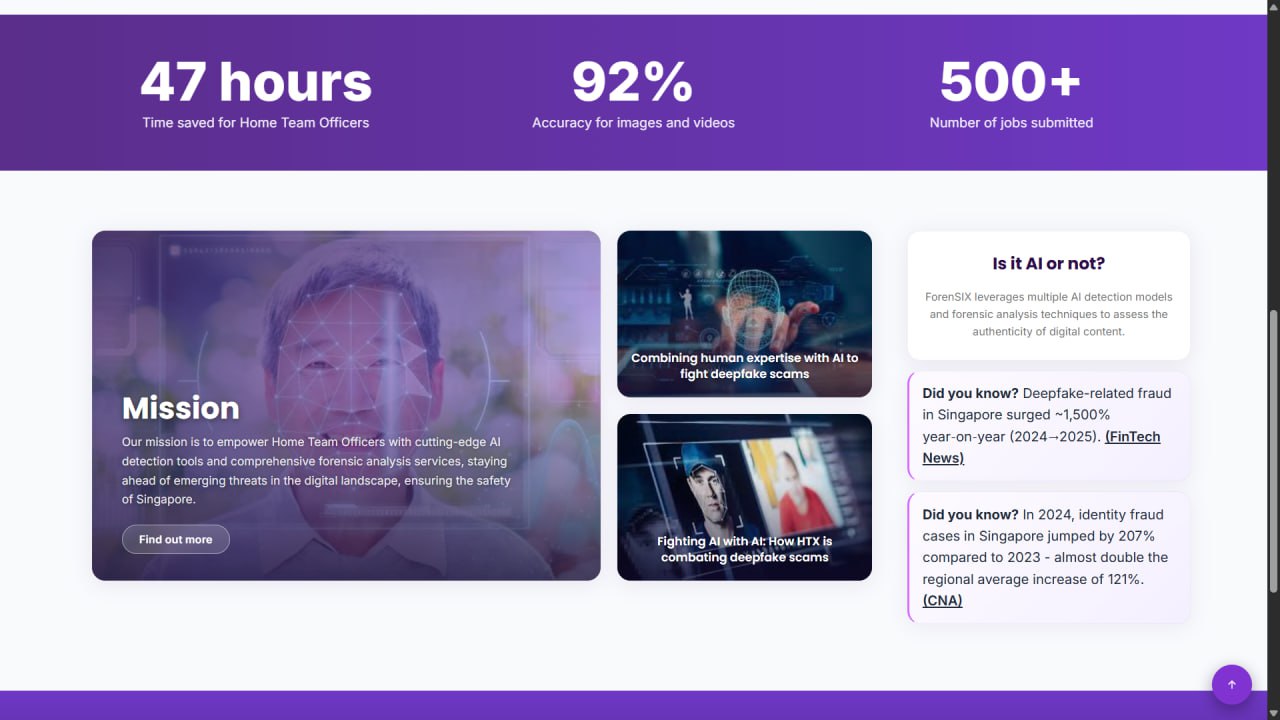
Introducing ...

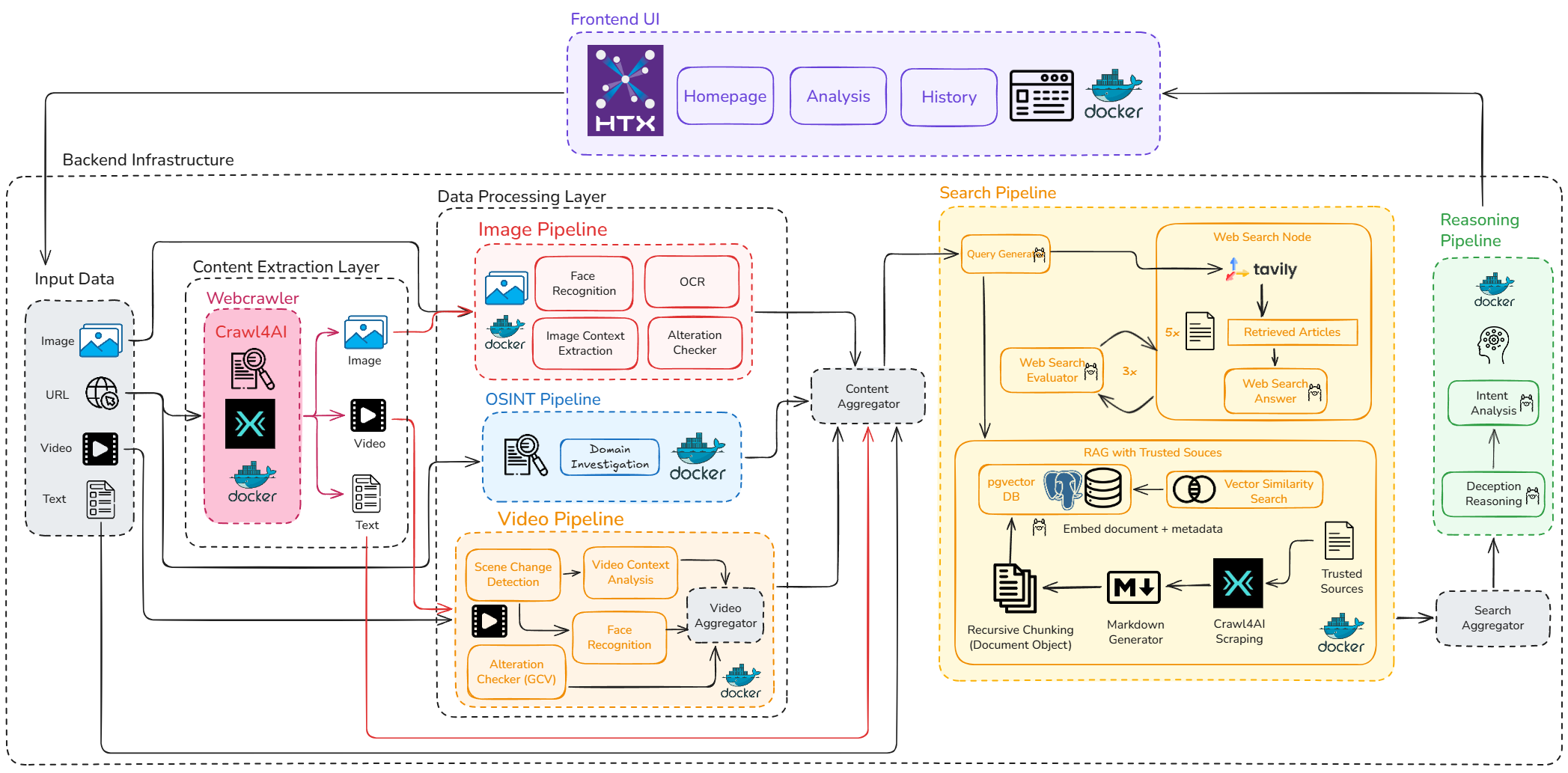
A state of the art deepfake detection software
Built against AI, with AI



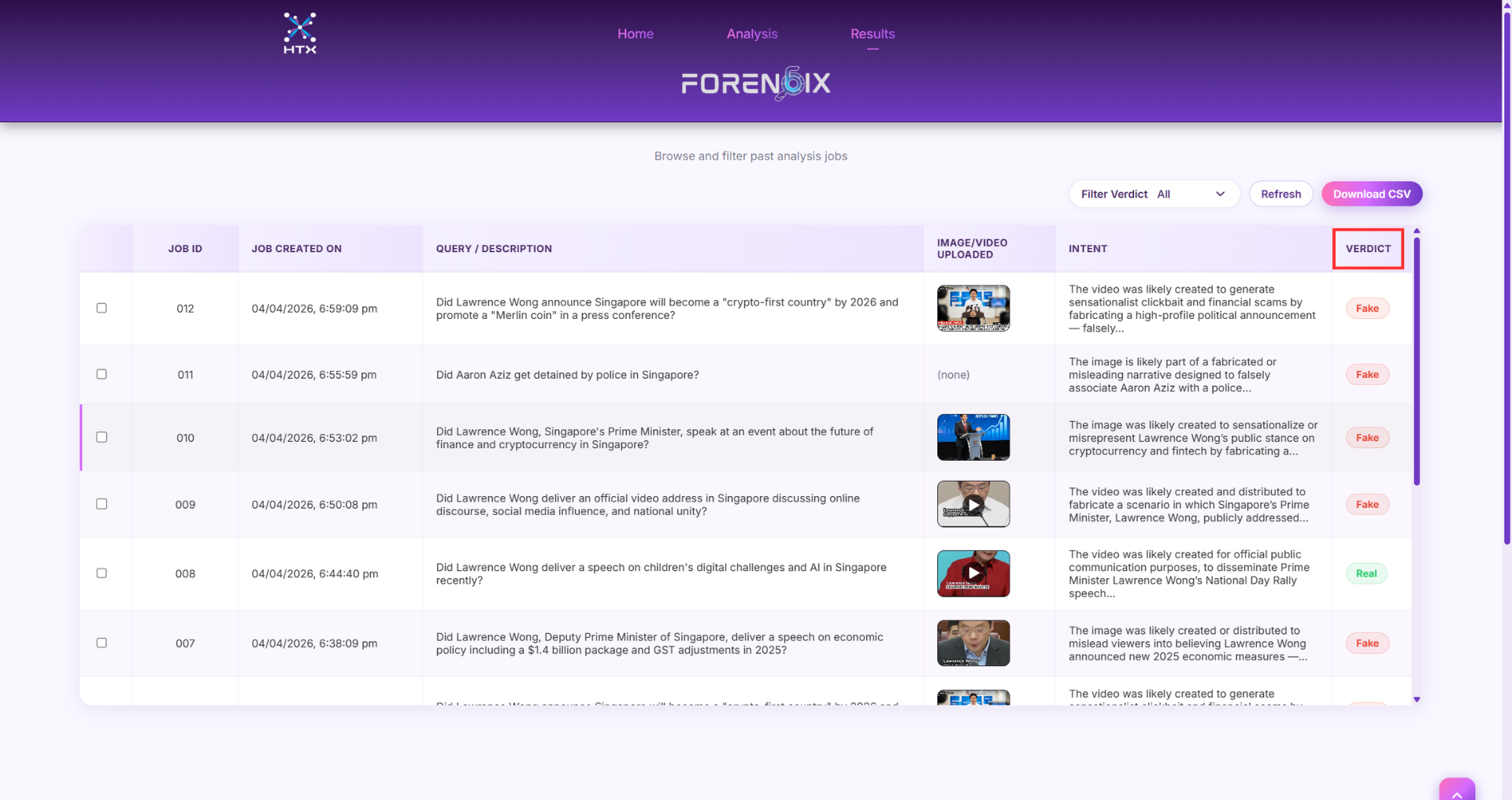
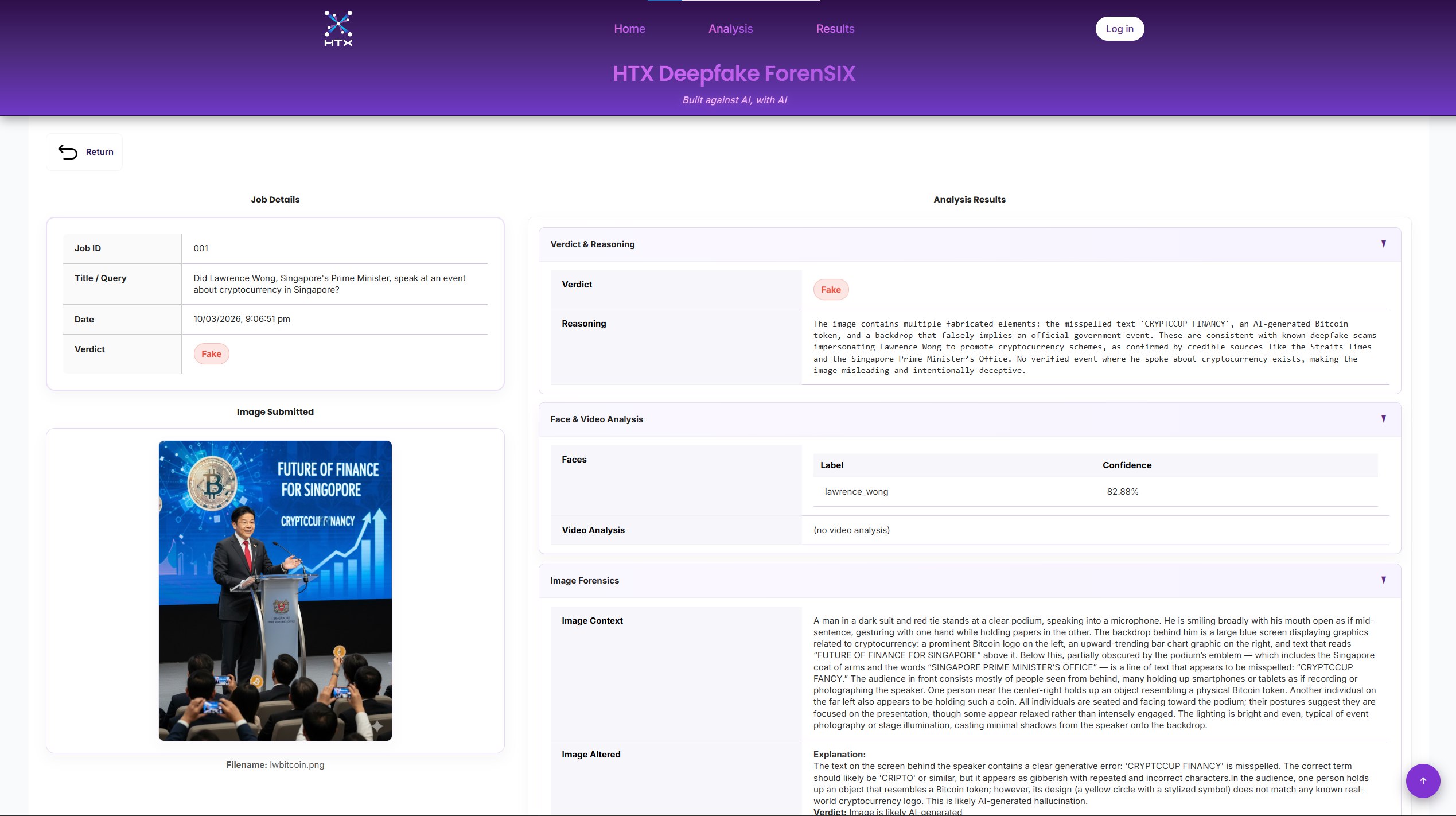
Verdict represents the LLM’s classification of the input content as Real or Fake, indicating whether the information is deemed truthful or misleading.
Reasoning provides the explanation behind the Verdict, based on the results of relevant forensics and analysis methods used (Image Forensics, Video Forensics, Domain Investigation, Web Crawling, Web Search).

Face Recognition analyses facial features in an image or video to verify a person’s identity and detect inconsistencies. By comparing facial patterns across frames or with known images, it helps identify signs of manipulation that may indicate the media is fake.
Video Analysis examines visual and temporal patterns within a video to detect signs of manipulation or synthetic generation. It analyses elements such as frame consistency, motion patterns, lighting, and visual artefacts to identify anomalies that may indicate the video has been altered or fabricated.
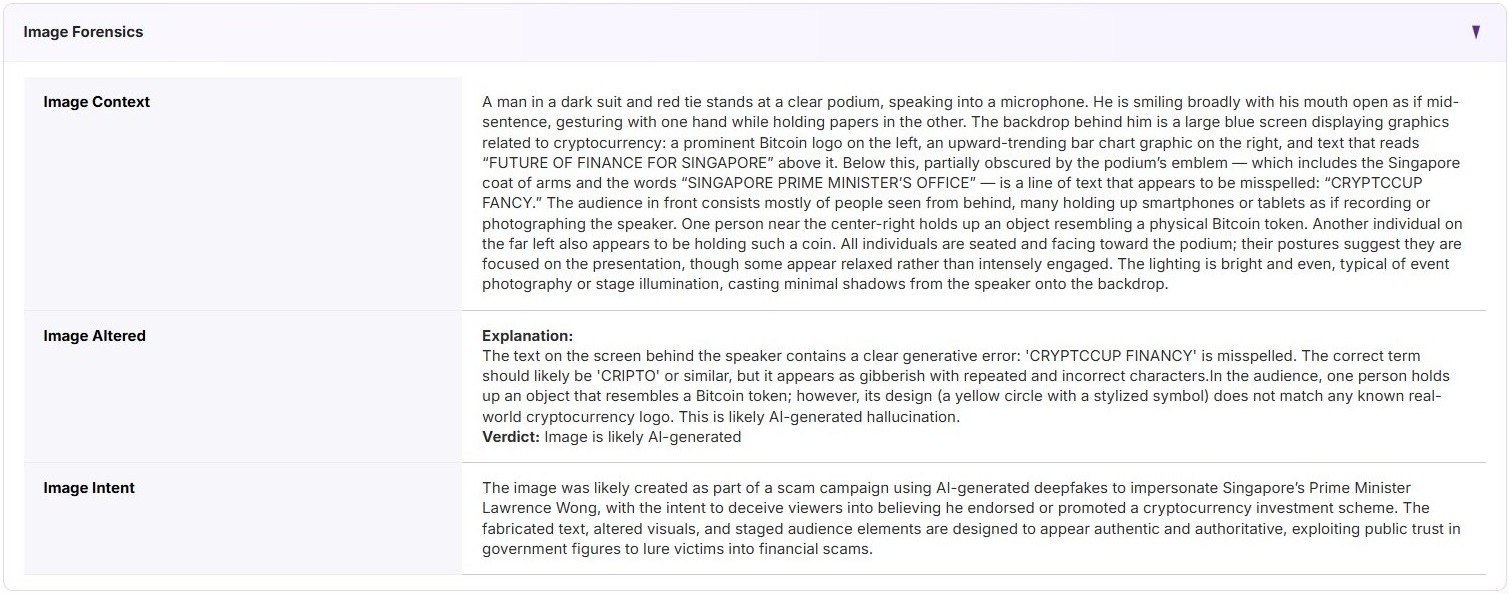
Image Context is the LLM’s description of the visual content it interprets from the input image.
Image Altered indicates whether the input image appears to have been modified or manipulated, based on detected visual inconsistencies or signs of editing.
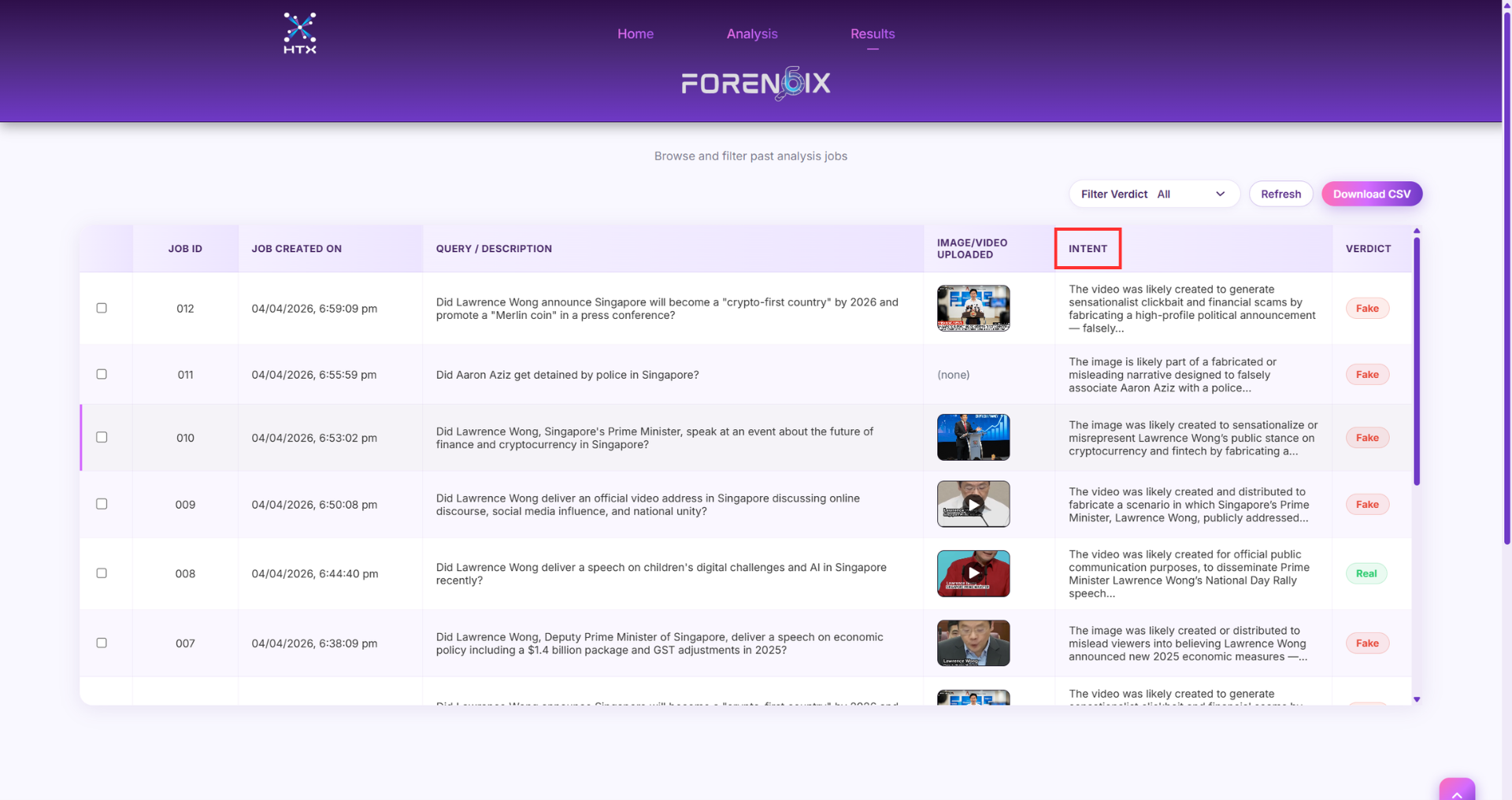
Image Intent describes the likely purpose or message conveyed by the image, based on the visual elements and context interpreted by the LLM.
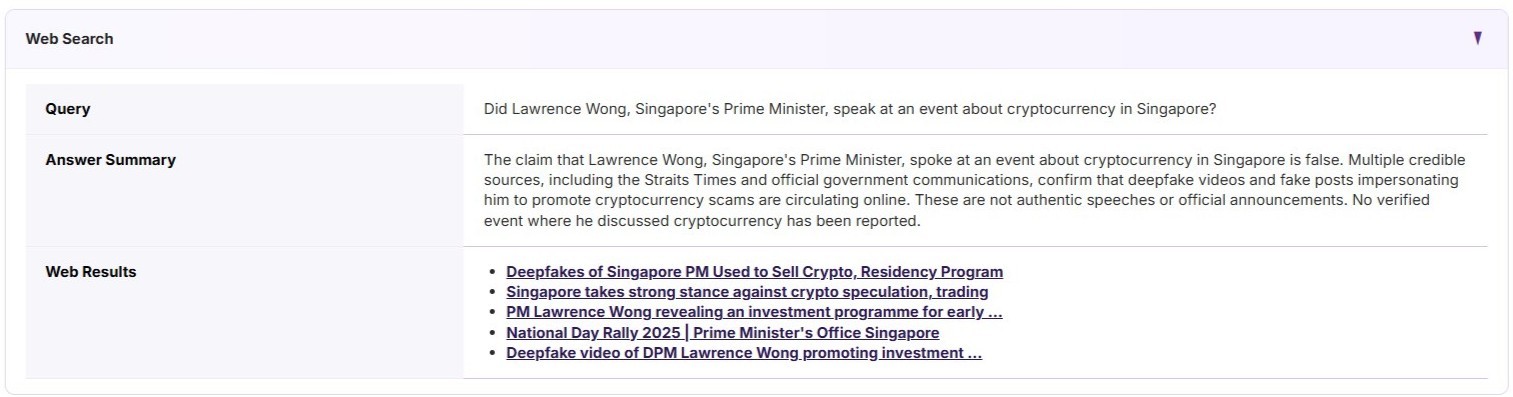
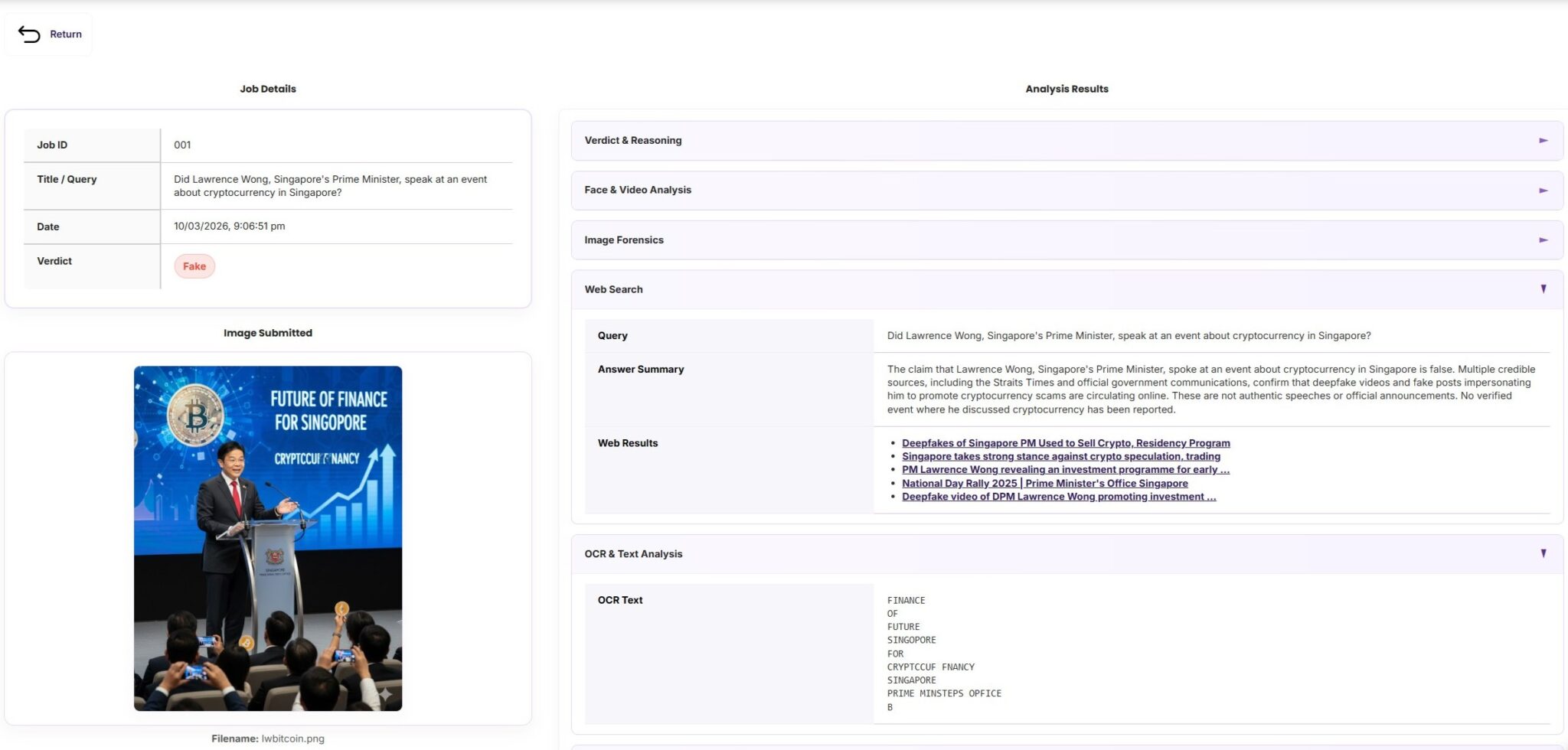
The LLM generates a Query based on information gathered by earlier analyses, to check if the narrative of the input content is factual by querying the web.
From the Web Results, the LLM determines whether the input content is true or false, and explains why with an Answer Summary.
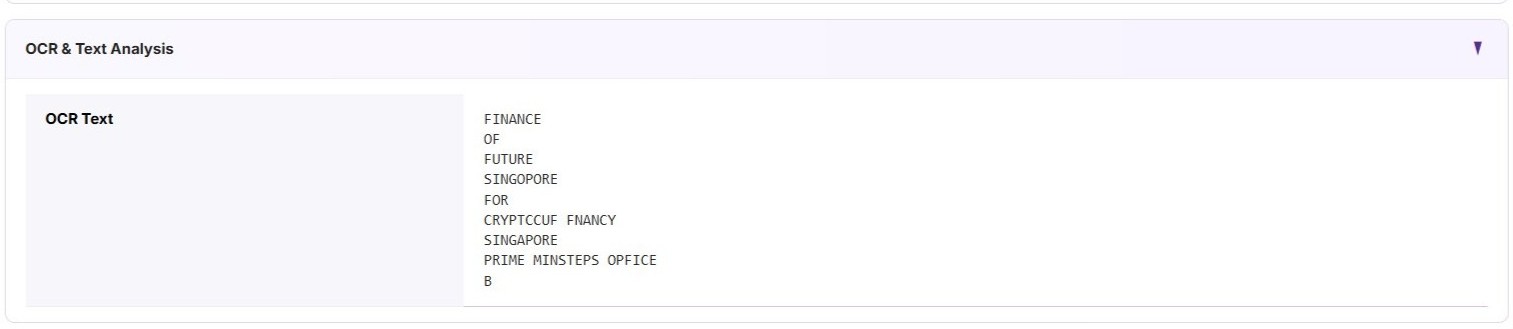
OCR extracts and converts any text found within the input image into machine-readable text, allowing the system to analyse written content present in the image.
It helps determine if an image is real or fake by analysing the extracted text for inconsistencies, manipulations, or misleading content.