A.R.I.A. – Automated Road Inspection and Analysis

In collaboration with Changi Airport Group

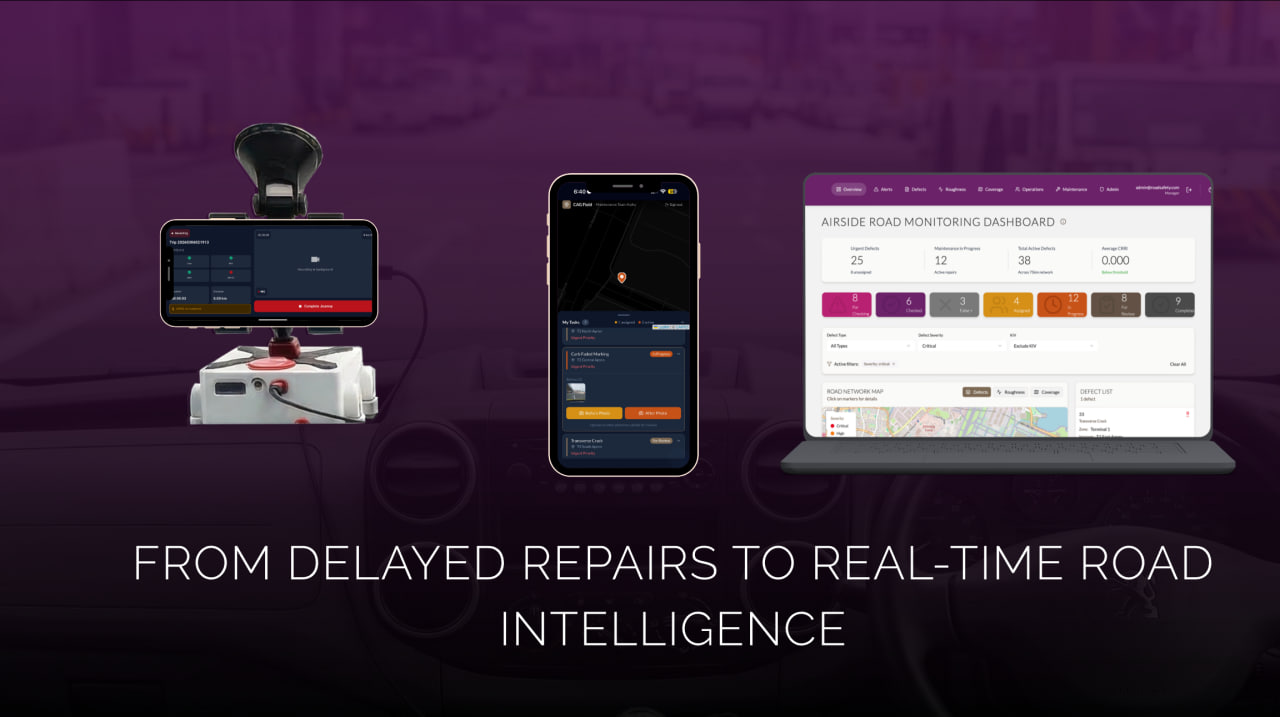
ARIA delivers a smart road inspection system that combines frequent mobile sensing, cloud-based analysis, and a centralized dashboard to detect road defects earlier and assess their severity faster.

In partnership with Changi Airport Group, operator of one of the world’s leading airports, ARIA aims to enhance the road inspection system by streamlining workflows and improving defect reporting. The objective is to elevate roadway quality across airport operations, enabling safer, smoother, and more efficient ground movement.

Team members

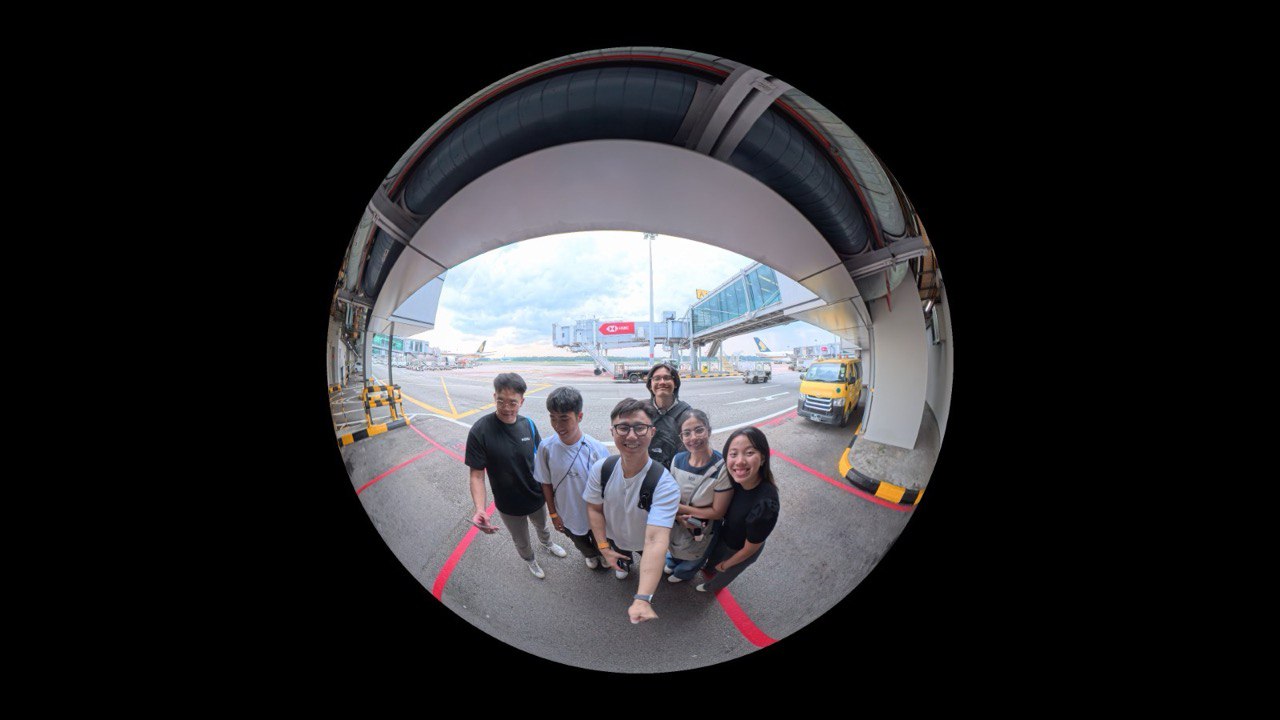
Sam Siong Yahn Sean (EPD), Muhammad Asyraf Bin Omar (ISTD), Phon Avitra (ISTD), Adelaine Ruth Hanako Suhendro (ISTD), Eugenie Alana Florencia (EPD), Tan Yih Reng (ISTD), Tan Soon Kang, William (ASD)

Instructors:

  • Sumbul Khan

  • Anariba Franklin Edwin

Writing Instructors:

  • Belinda Seet

THE ISSUE, BROKEN DOWN

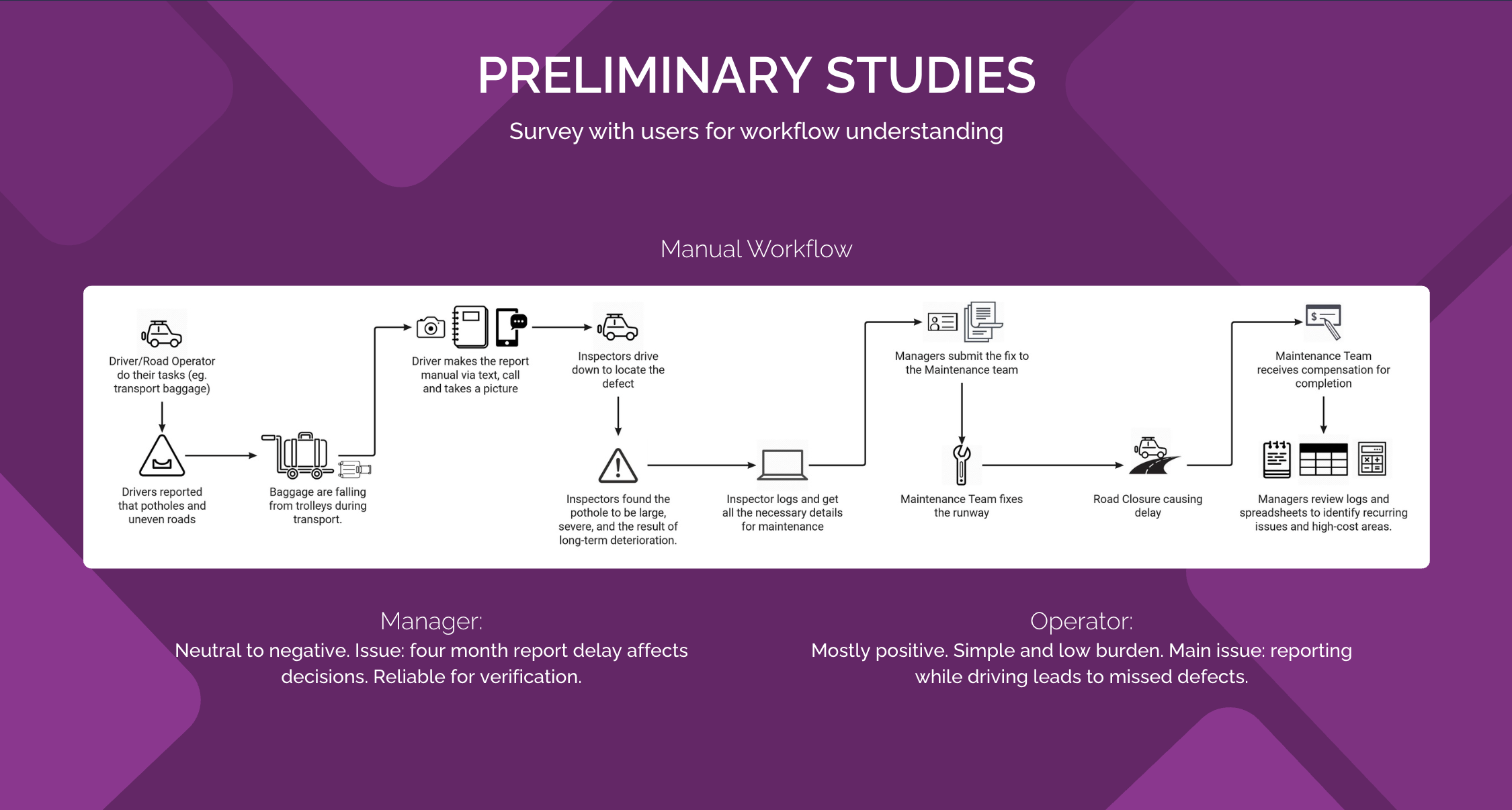
A Gap Between Current Capabilities and Operational Needs

Inspection Frequency

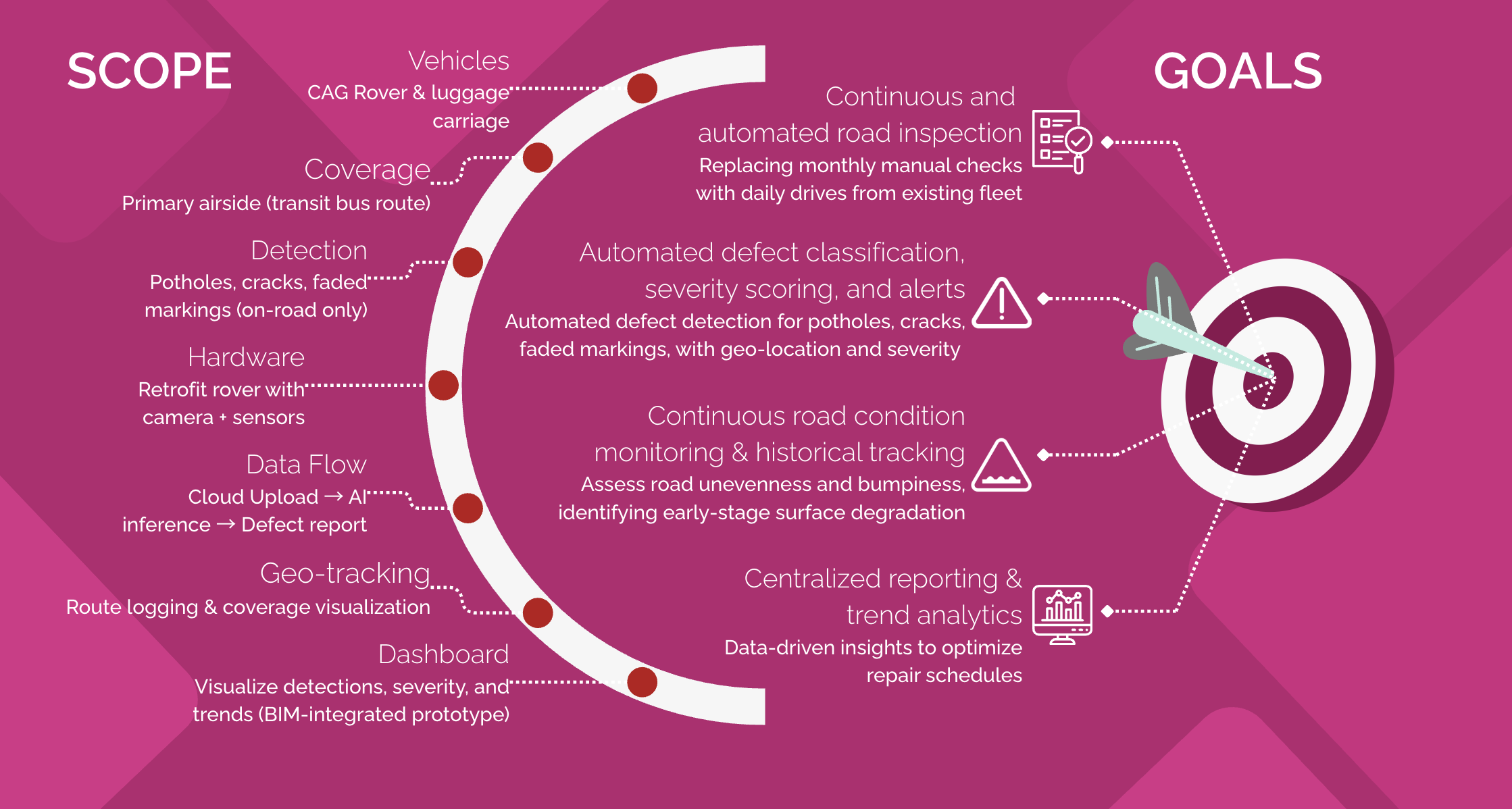
Current workflows rely on infrequent inspections, allowing defects to worsen unnoticed. CAG requires near-daily data collection for timely detection.

Integration & Scalability

Current solutions operate in silos with limited integration. A scalable, end-to-end system is needed to support fleet-wide monitoring and coordinated maintenance.
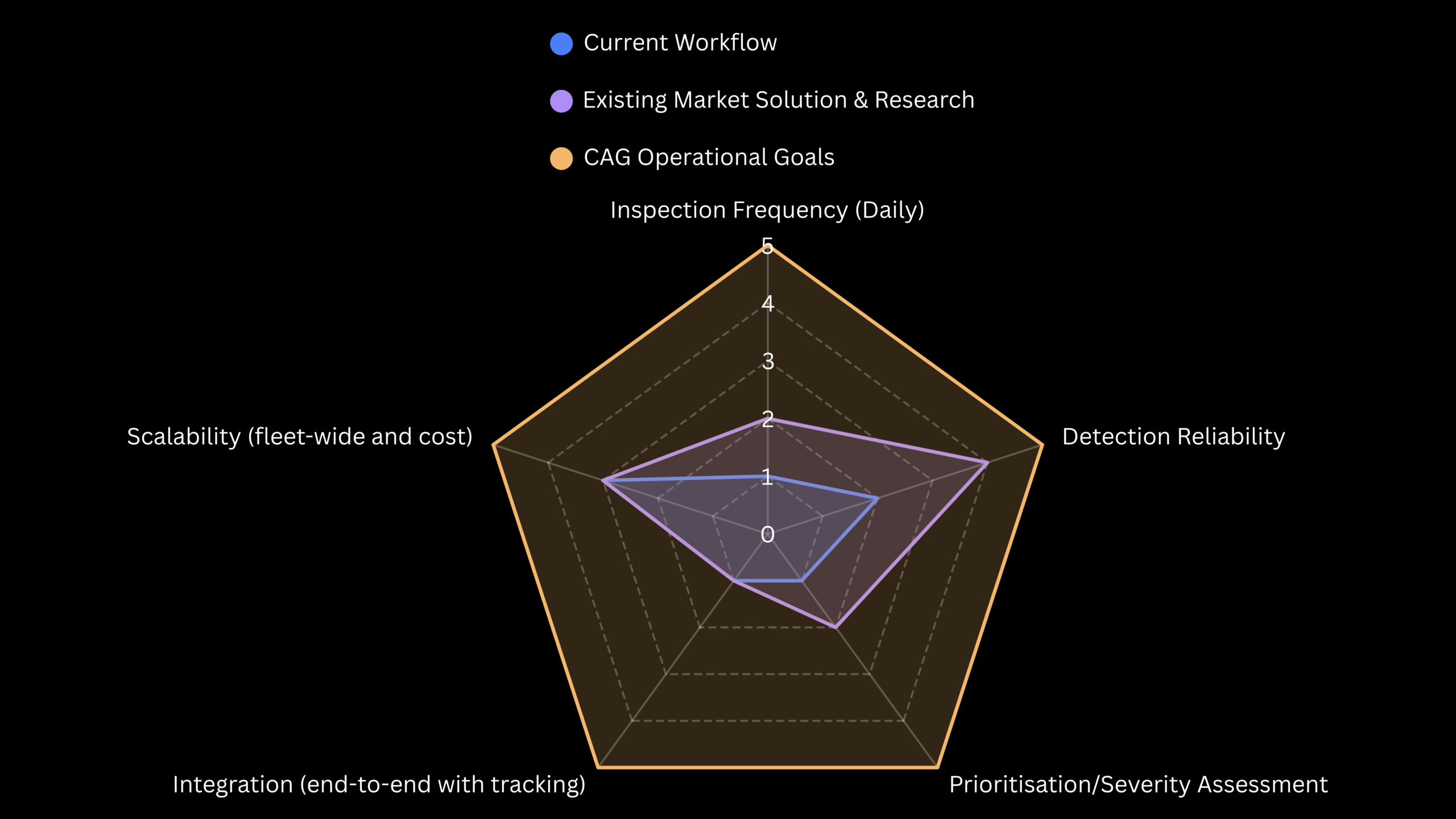
Detection Reliability

Manual inspections are inconsistent and prone to human error. More reliable, data-driven detection is needed to ensure accuracy across the network.

Maintenance Prioritization

Existing approaches lack clear severity assessment, making it difficult to prioritise repairs. CAG needs systems that translate defects into actionable maintenance tasks.
THE SOLUTION

CAPTURE

ANALYSE

MAINTAIN

INPUT
VIDEO, GPS & IMU
PROCESSING
YOLO11 & SENSOR FUSHION
OUTPUT
Dashboard & Revit

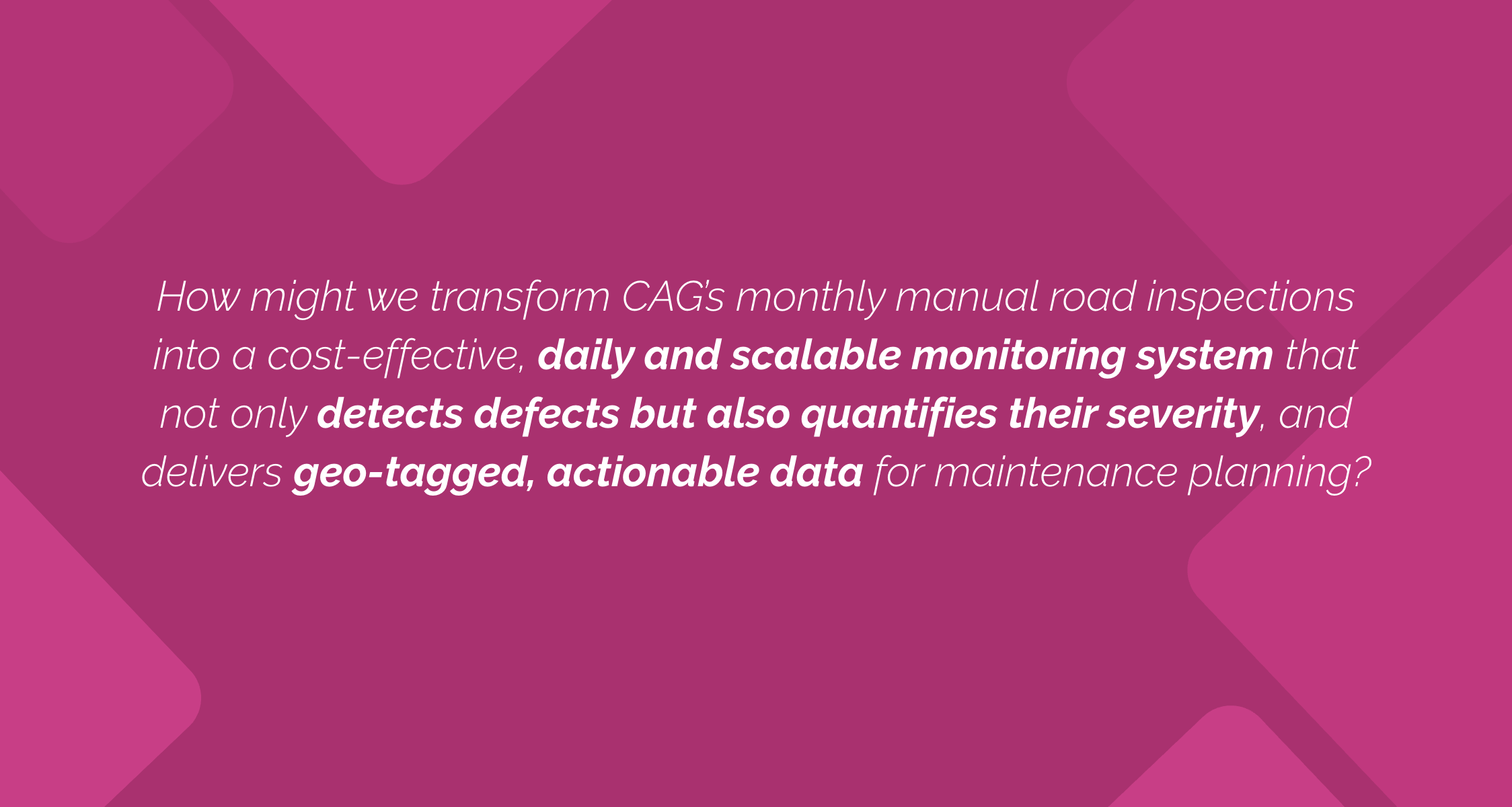
A COST-EFFECTIVE SCALABLE SYSTEM FOR DAILY ROAD MONITORING

Detecting defects, quantifying severity, and delivering geo-tagged insights for proactive maintenance.

Enhanced Detection Reliability

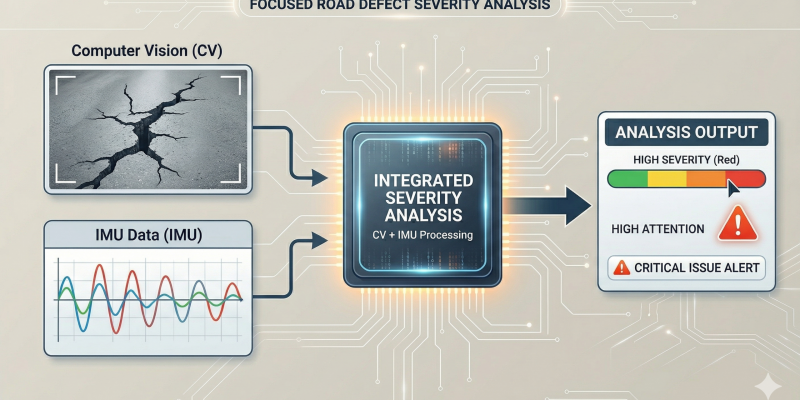
Sensor fusion (vision + IMU + GPS) improves consistency beyond vision-only models (~70% baseline), with contextual severity validation.

Monthly → Daily Monitoring

Transition from periodic inspections to continuous, data-driven road condition tracking.

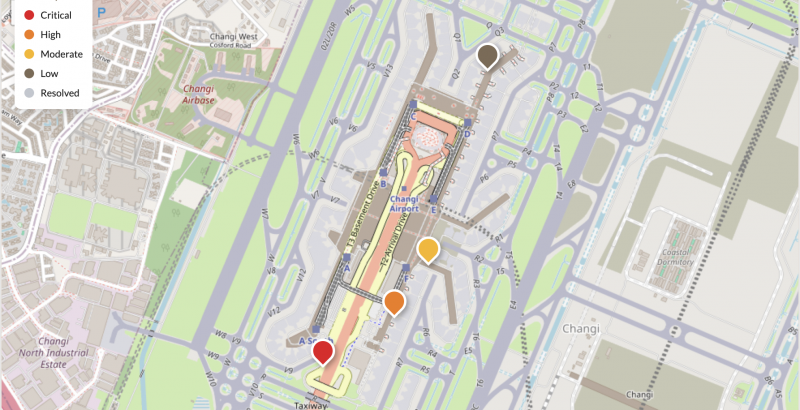
75+ km Airside Network Mapped

Scalable coverage across multiple zones, with capability to expand to additional road networks.

Cost Reduction vs Outsourced Inspections

Eliminates reliance on external vendors and reduces reporting delays, enabling faster and more cost-efficient maintenance cycles.

WHAT USERS SAY

SEE THE SYSTEM IN ACTION

EXPLORE THE TECHNOLGY

Deep dive into each component of our solution—from AI models to hardware sensors, dashboard analytics, and BIM integration.

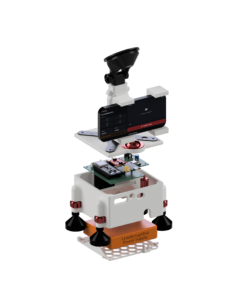
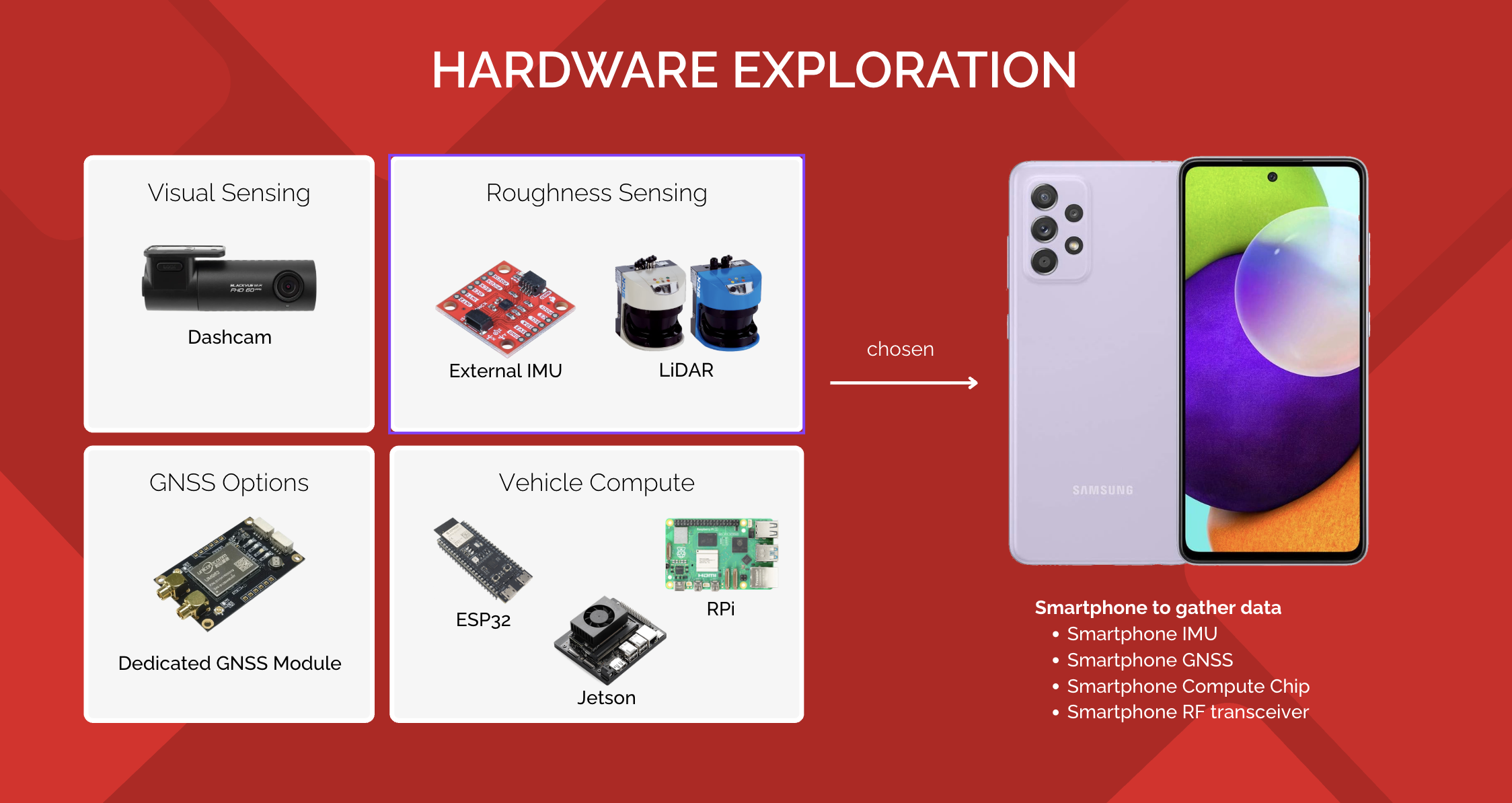
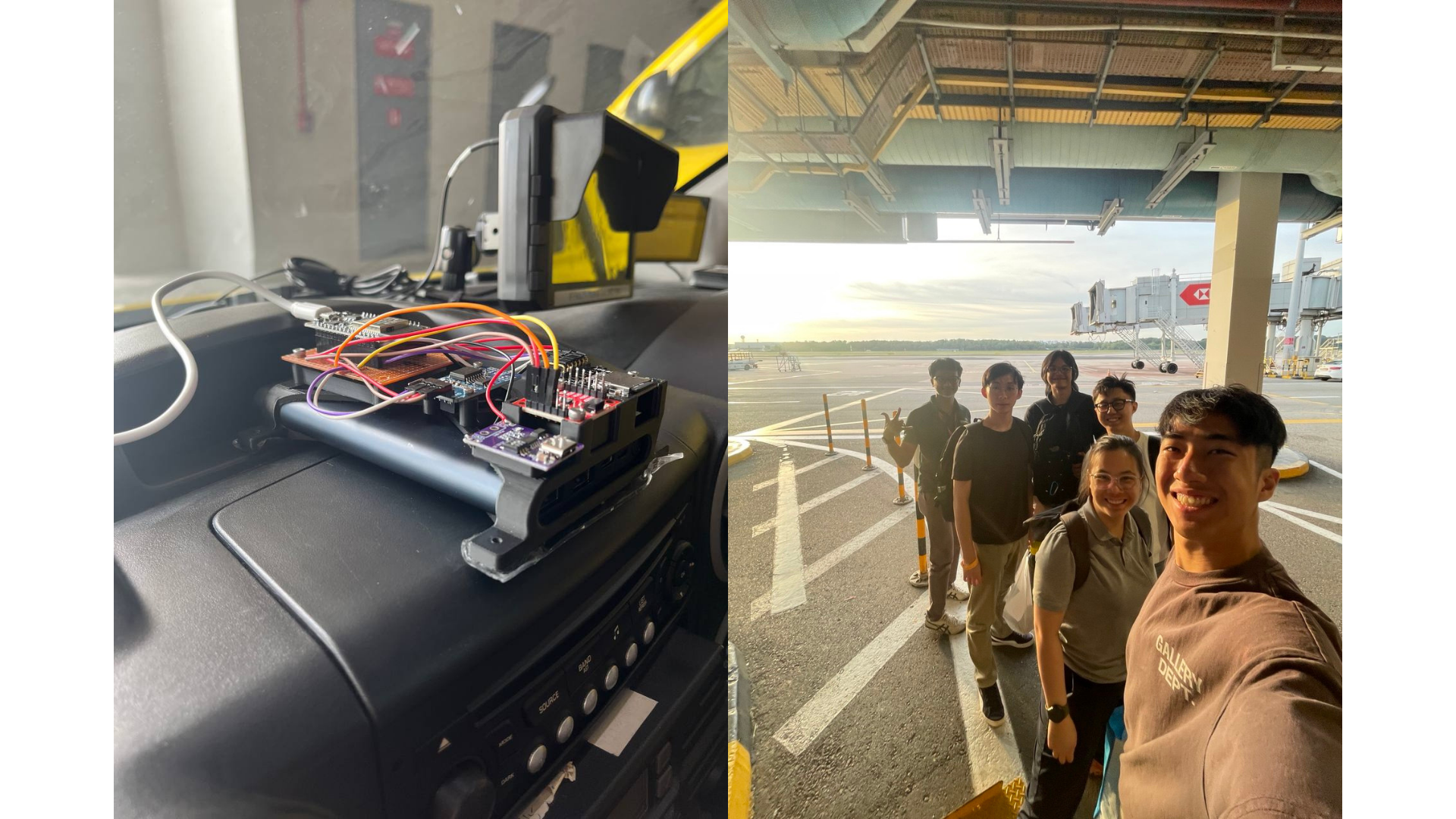
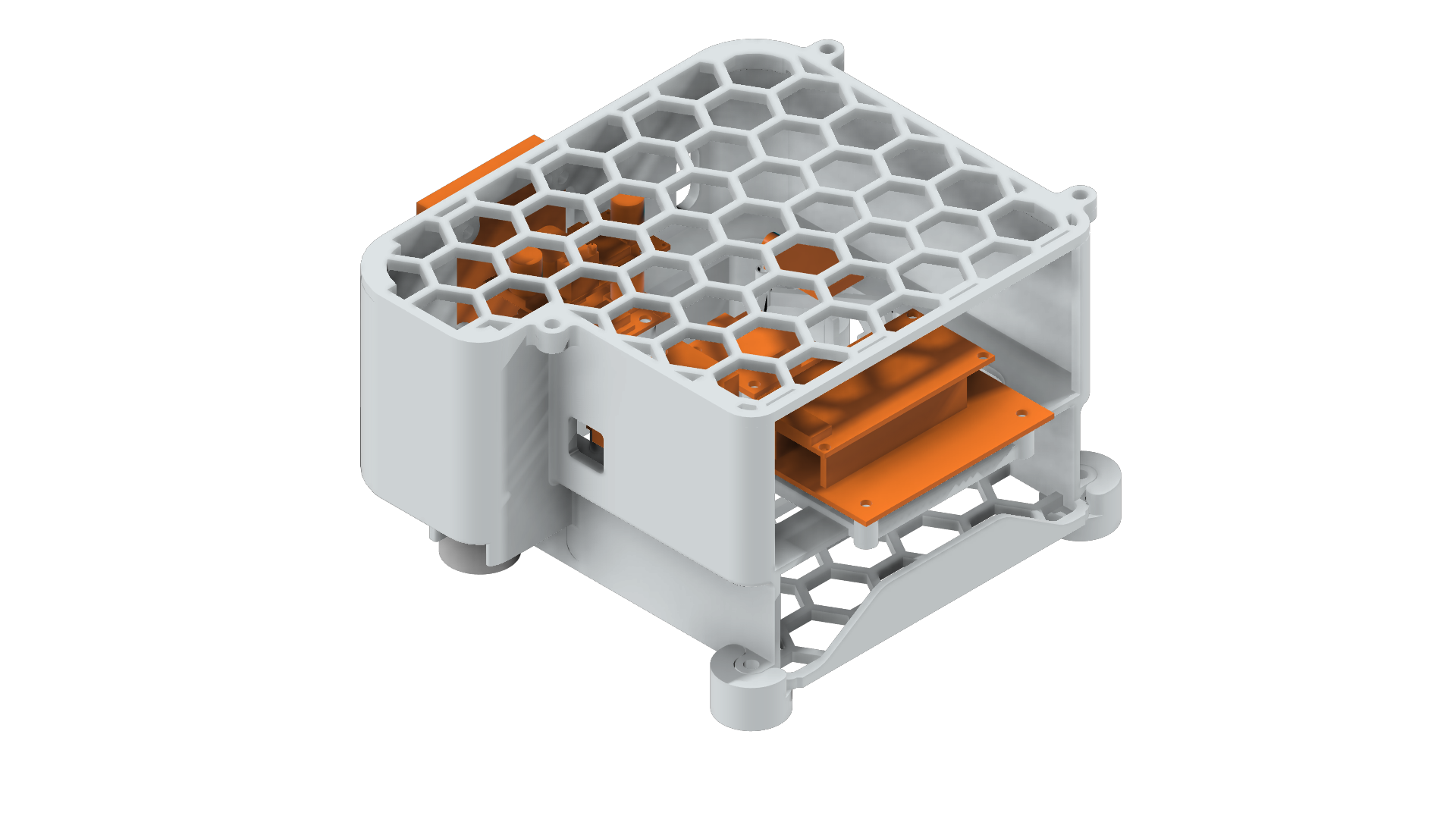
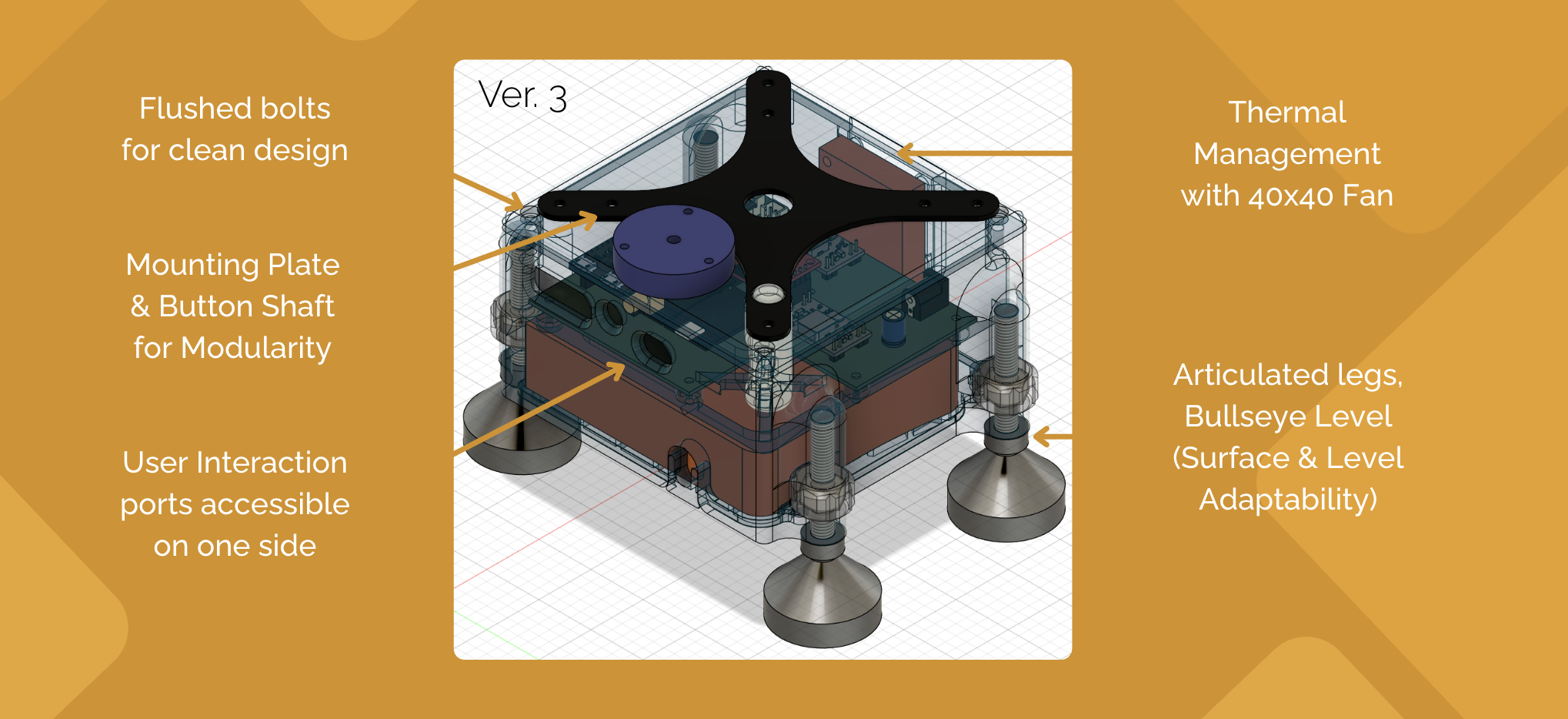
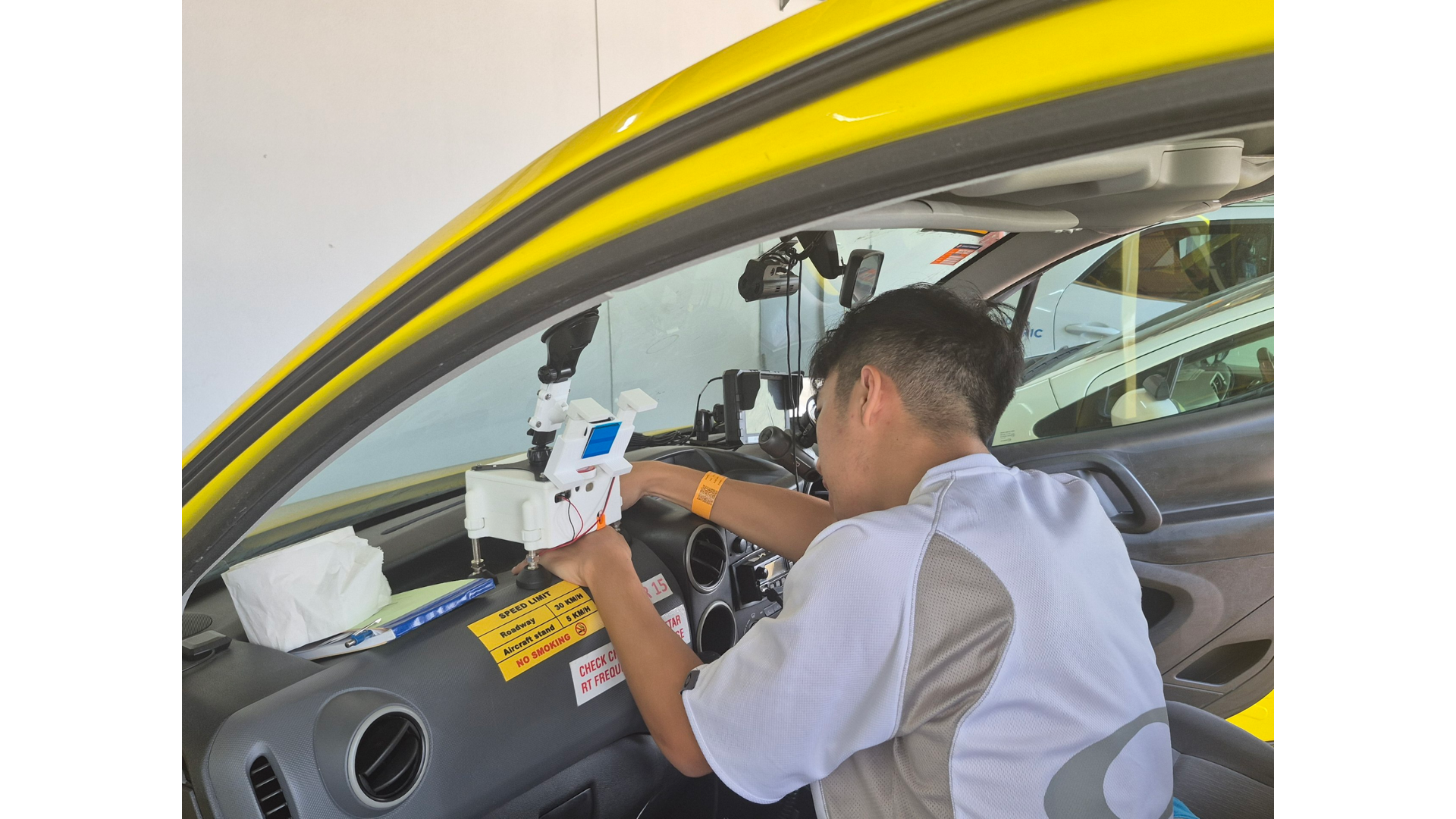
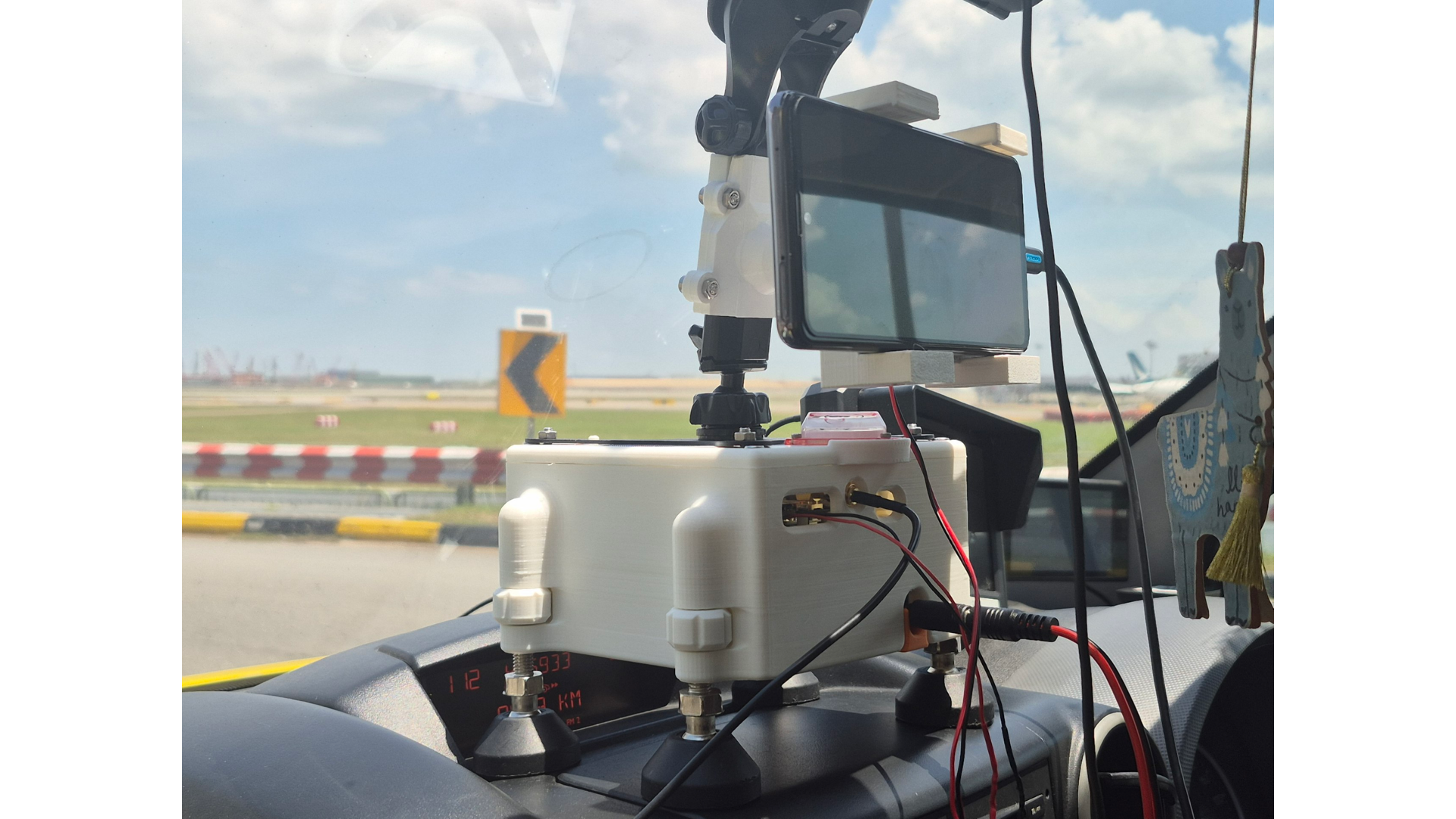
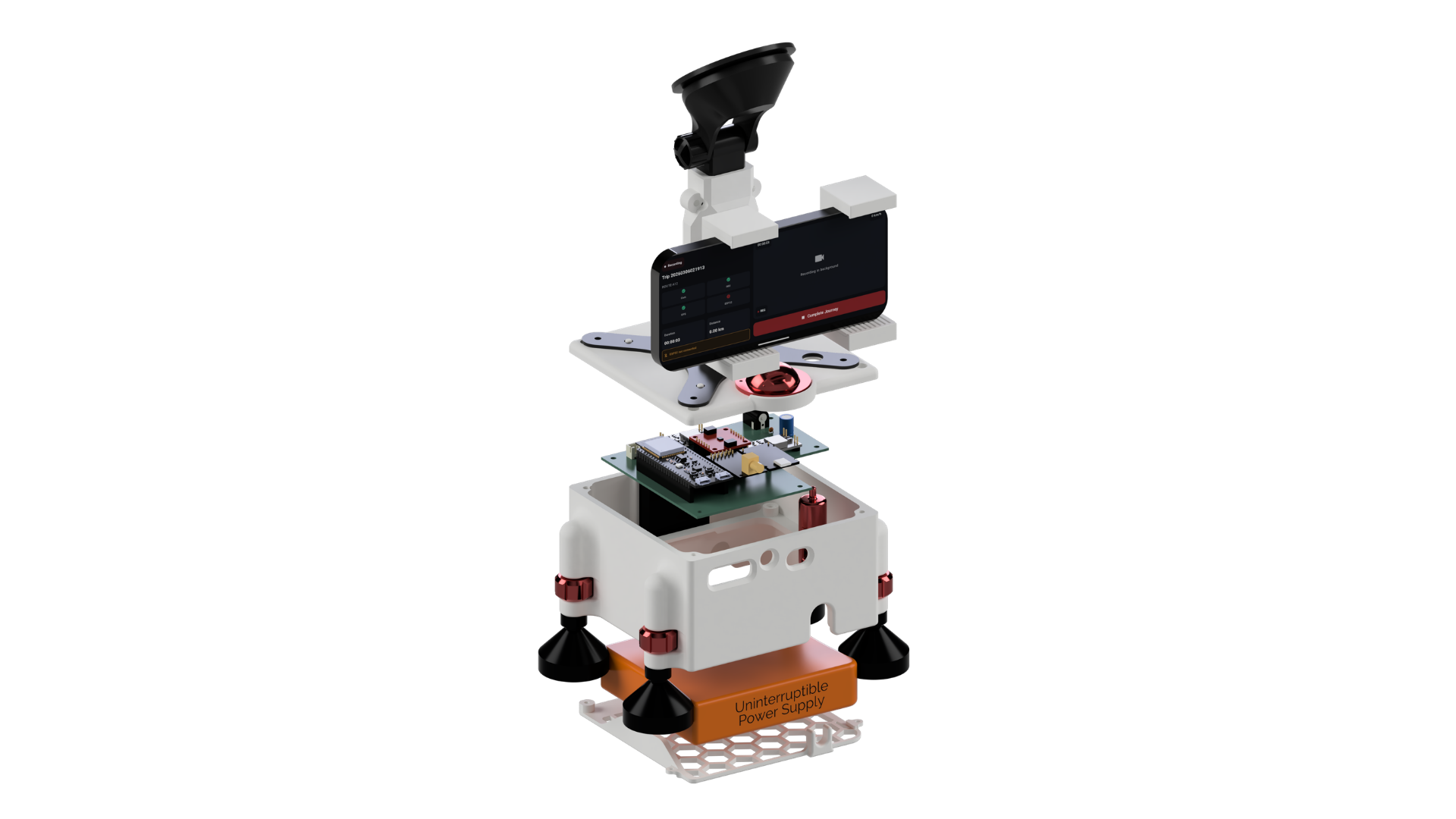
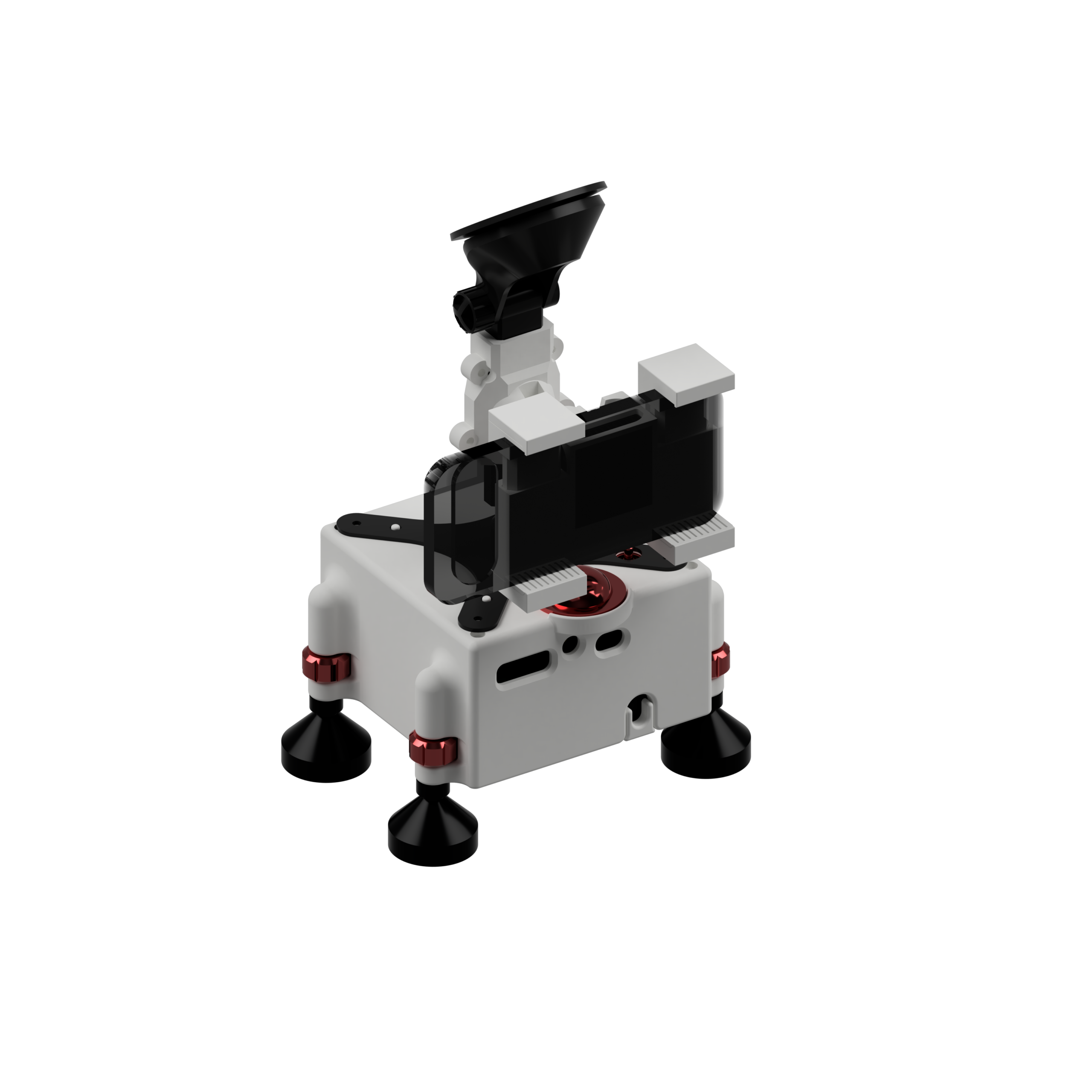
Physical Sensor Mount

A precision-engineered PCB featuring GPS, IMU, and environmental sensors that capture high-frequency telemetry synchronized with video frames for accurate defect geotagging.

  • 10Hz GPS with SBAS correction for sub-meter accuracy
  • 6-axis IMU detecting vertical acceleration spikes
  • Bluetooth Low Energy sync with mobile app
  • Custom PCB with active cooling and UPS backup

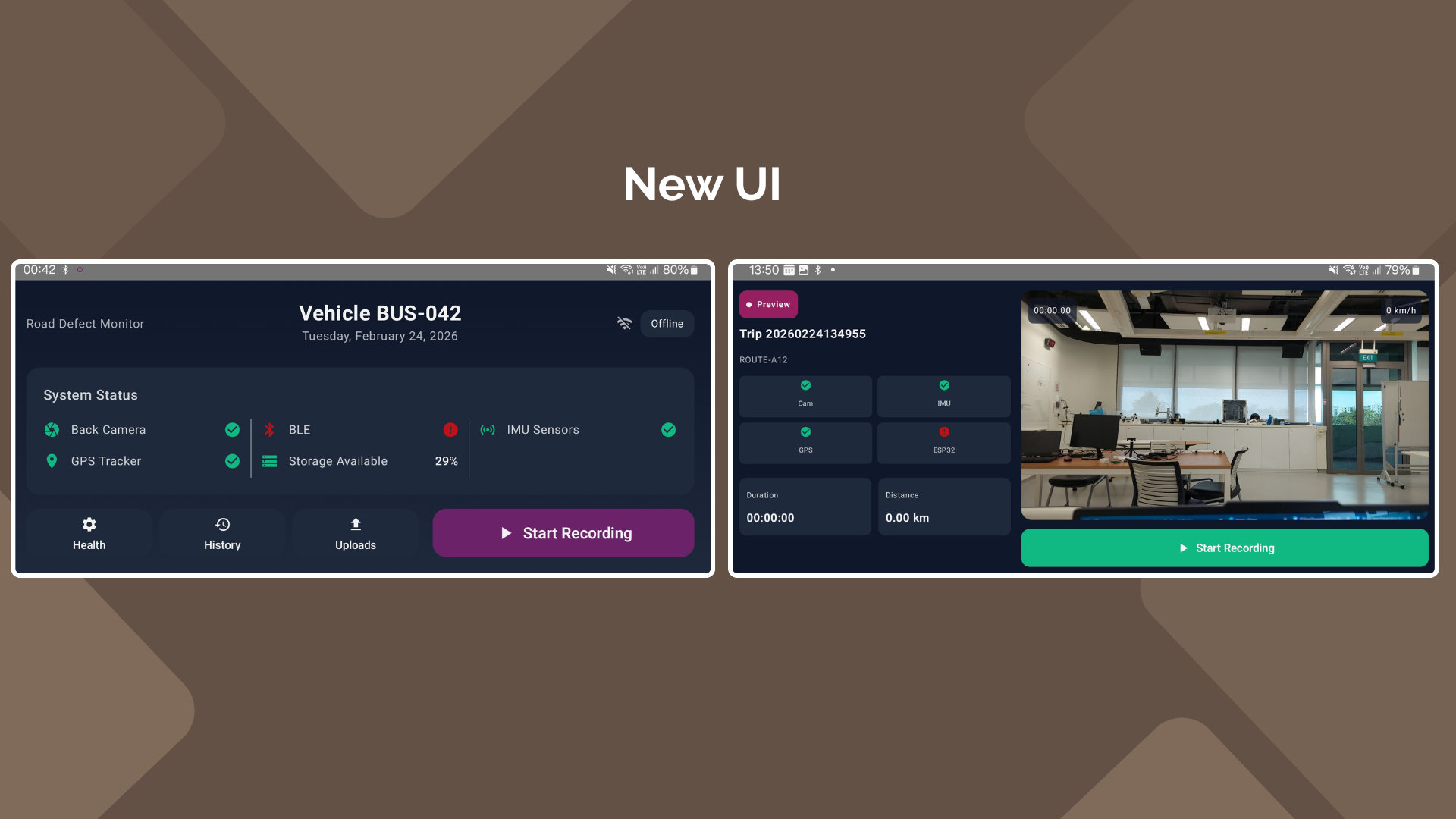
Edge Capture App

Our custom Android application connects directly to the ESP32 hardware via Bluetooth to verify sensor status, initiate recordings, and sync journey data to the cloud.

Screenshot 2026-04-01 at 9.36.32 PM

Computer Vision & Spatial Mapping

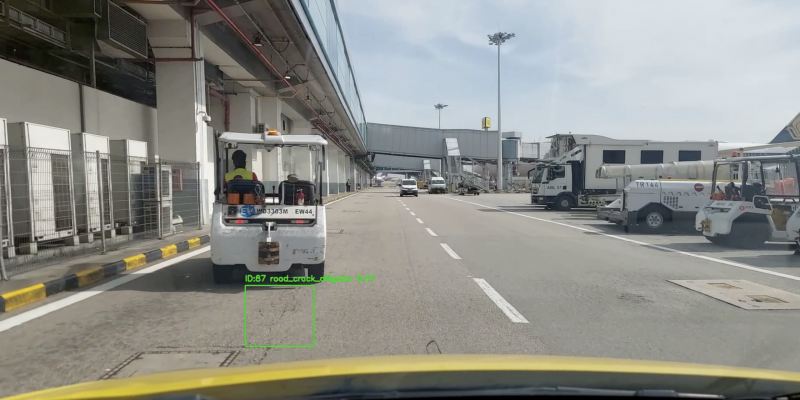
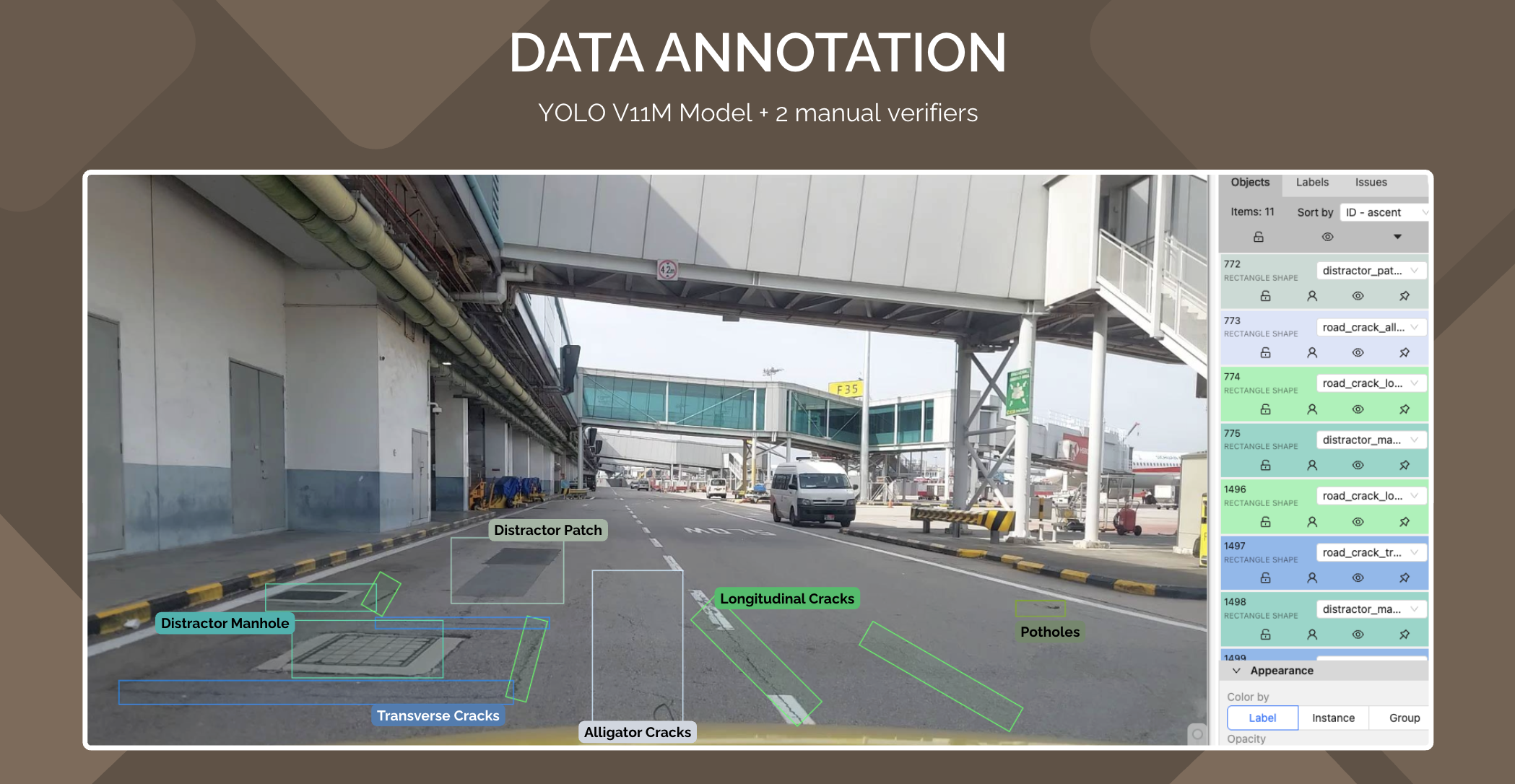
Defect Detection: Identify 10 types of road and curb defects using a YOLOv12 model.

Precision Tracking: Track multiple defects across frames using BoT-SORT, with a short validation threshold to filter out false detections.

Precision Localization & Road Analytics

Geospatial Tagging: Fuse GPS and onboard sensor data (IMU) using an Extended Kalman Filter (EKF) to assign accurate coordinates to each detected defect, including improved positioning in low or no GPS environments (e.g., indoors).

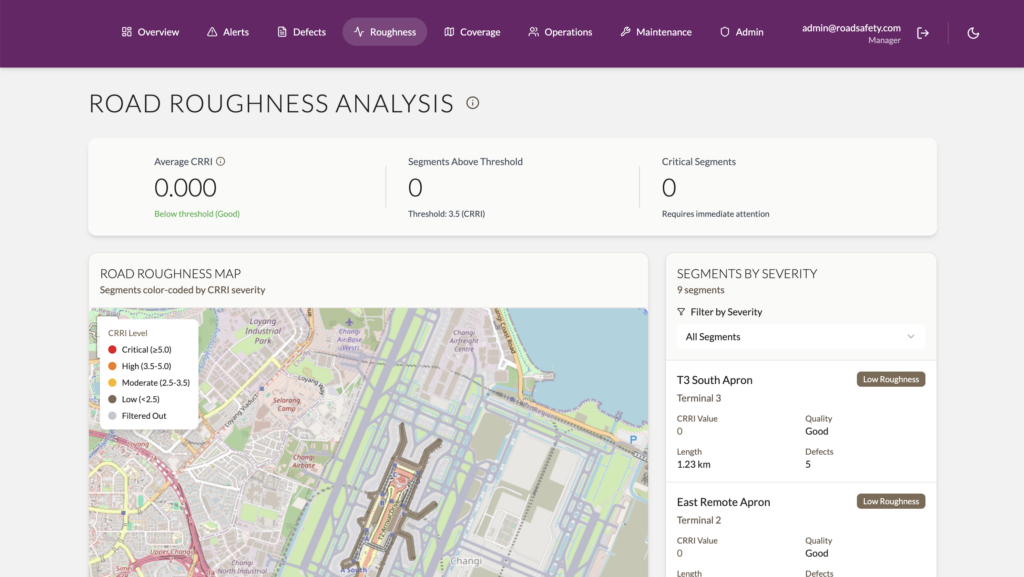
Road Quality Insights: Uses IMU sensor data and visual analysis to evaluate road smoothness and detect rough segments.

Smart Event Detection: Automatically identifies bumps while filtering out normal vehicle movements like turns.

Screenshot 2026-04-01 at 9.38.19 PM
Gemini_Generated_Image_8wbzbq8wbzbq8wbz

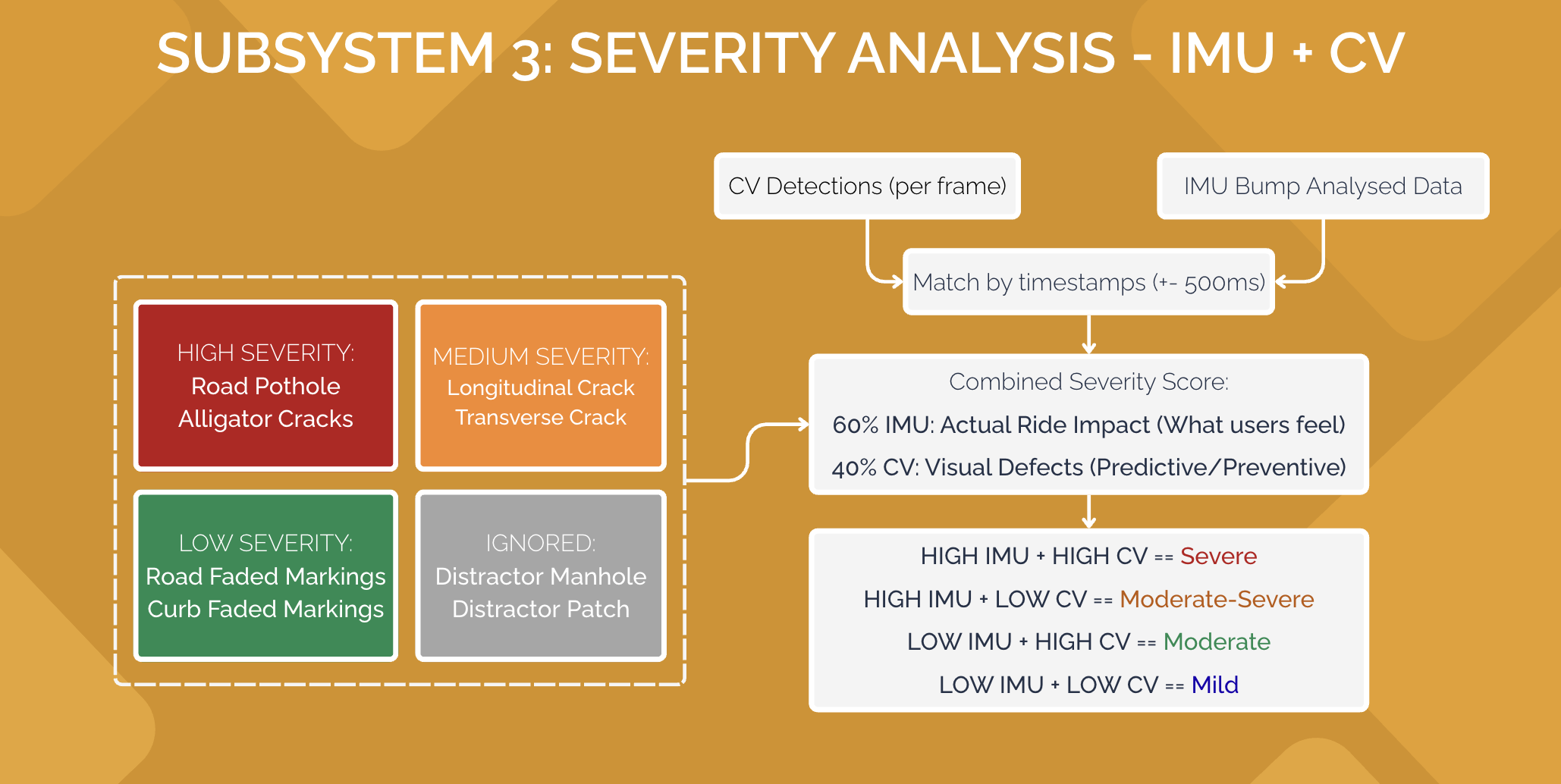
Smart Severity Control

Context-Aware Prioritization: Highlights more severe defects by considering overall road condition, so deteriorating areas get higher attention.

Sensor-Validated Alerts: Flags critical issues only when visual detection is reinforced by IMU sensor data.

Blind-Spot Coverage: Captures hidden or hard-to-see defects using IMU data, even when visibility is limited.

Smart Noise Filtering: Reduces false alerts by ignoring low-confidence detections unless supported by sensor data.

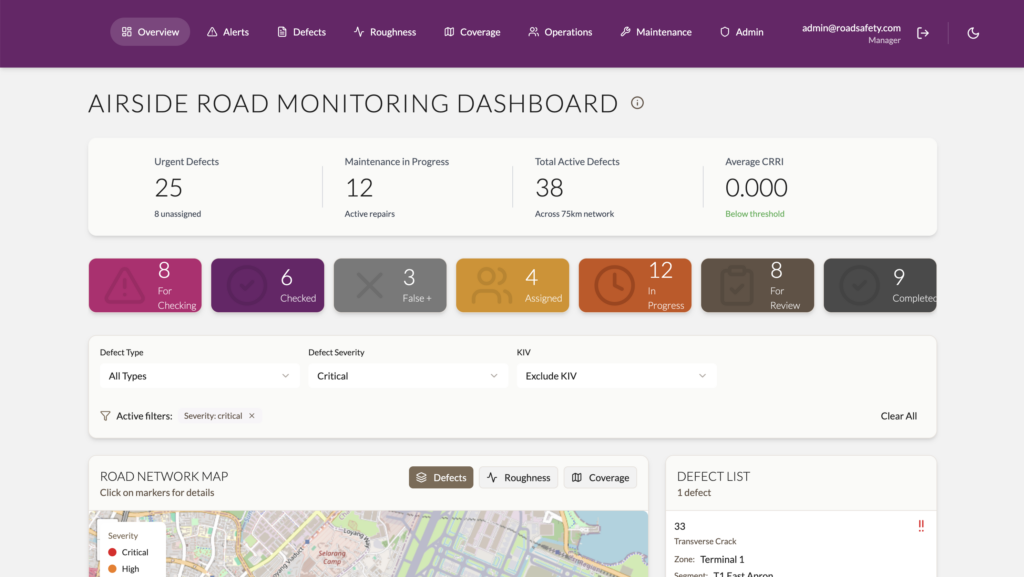
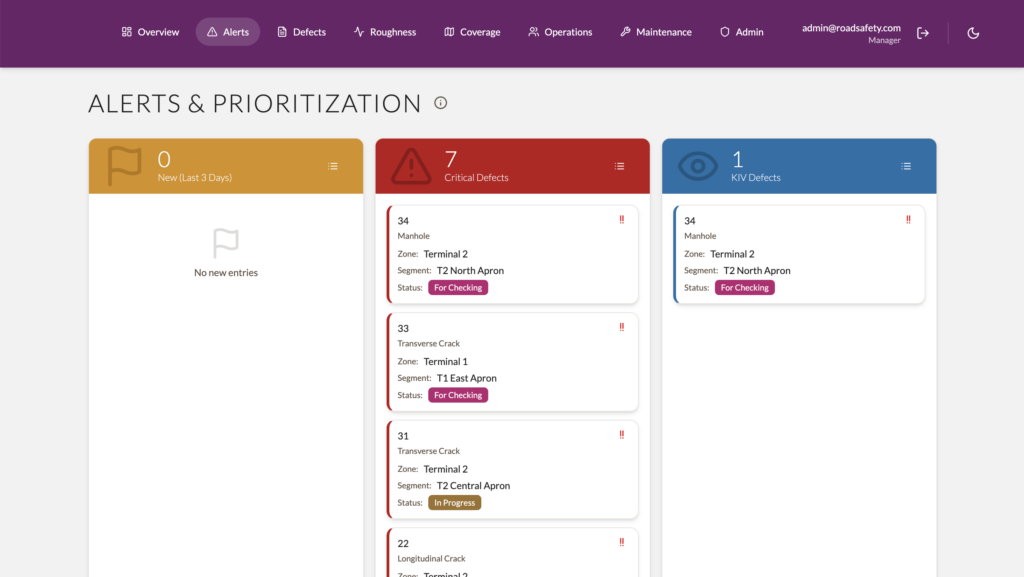
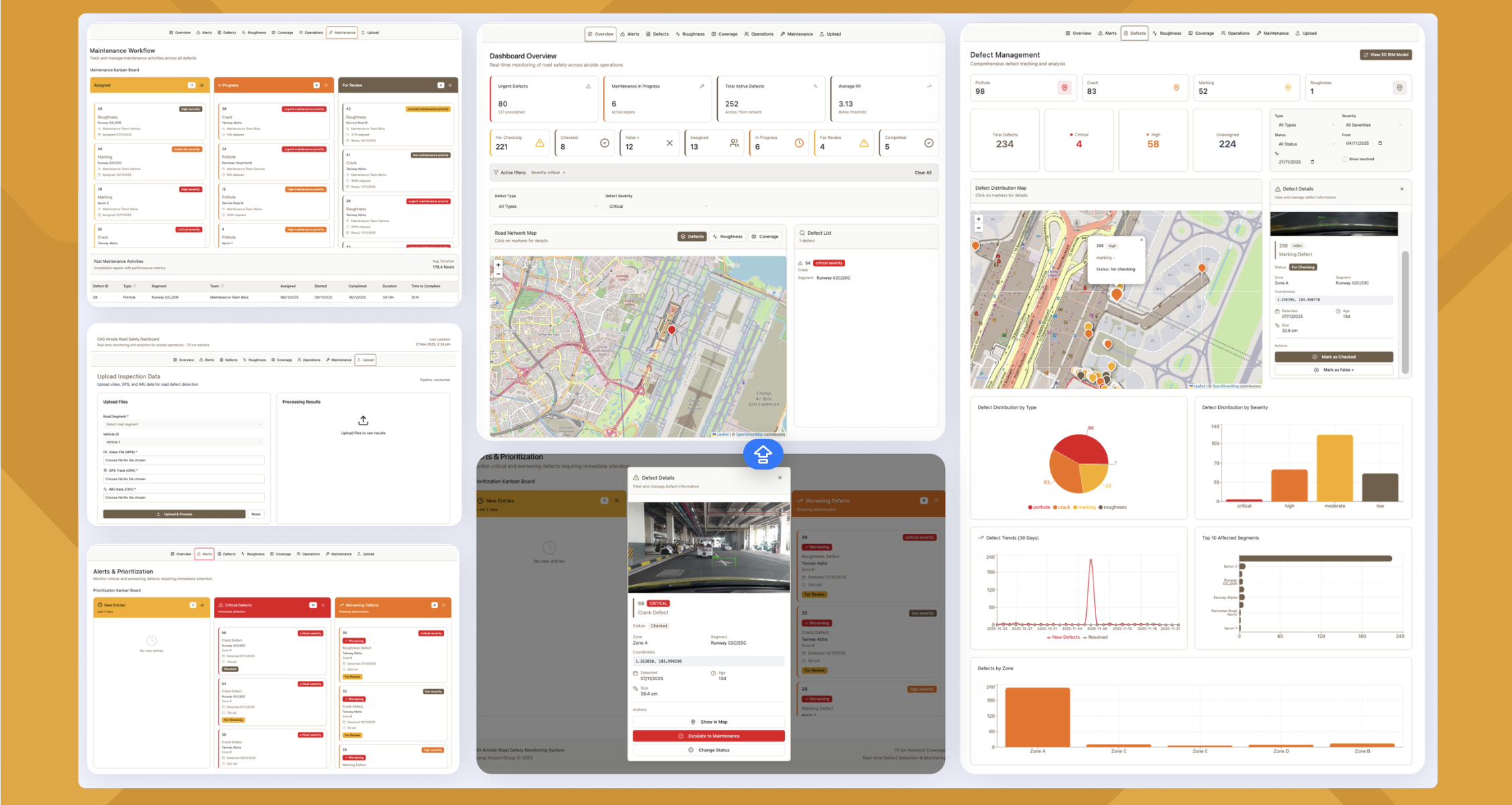
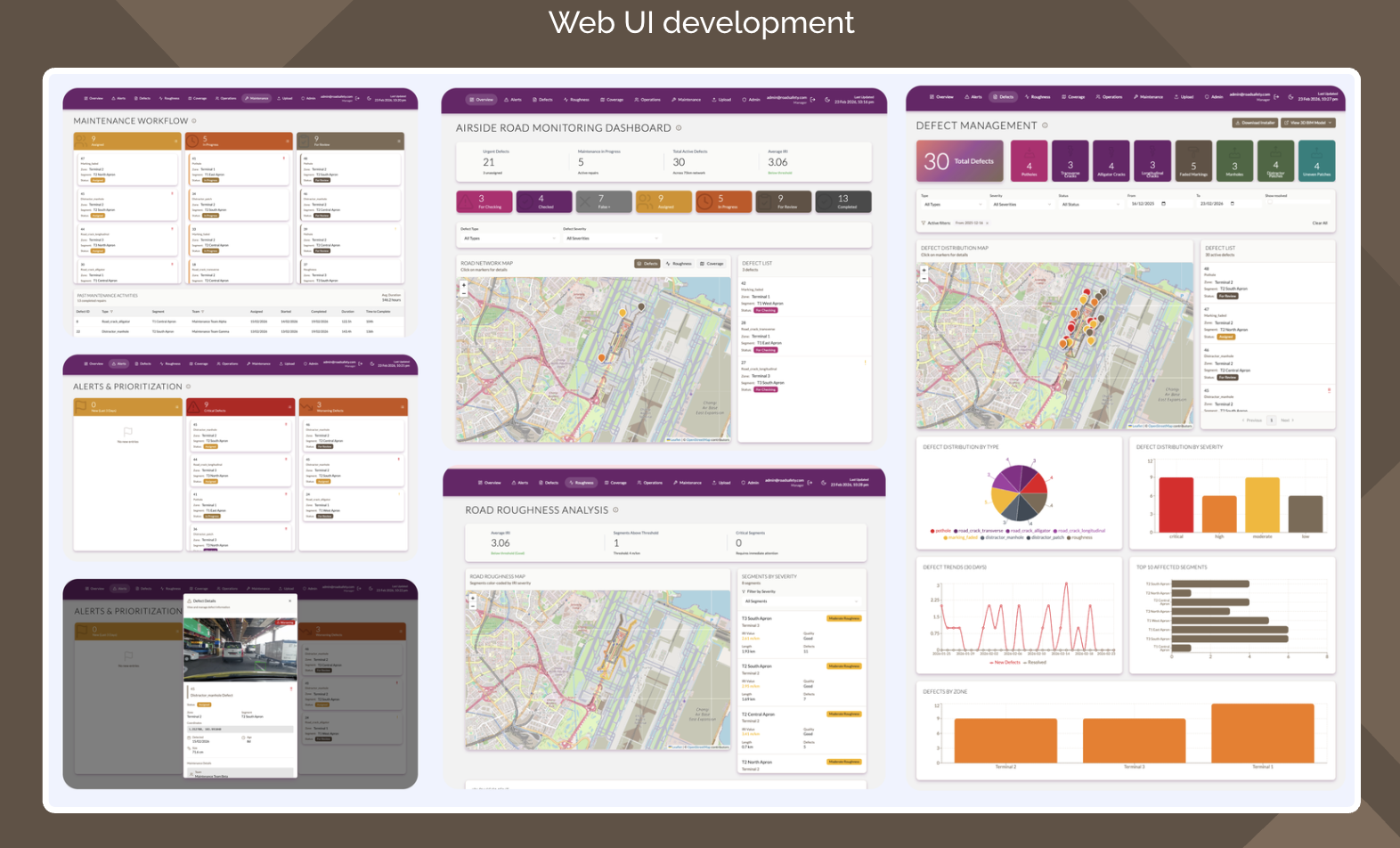
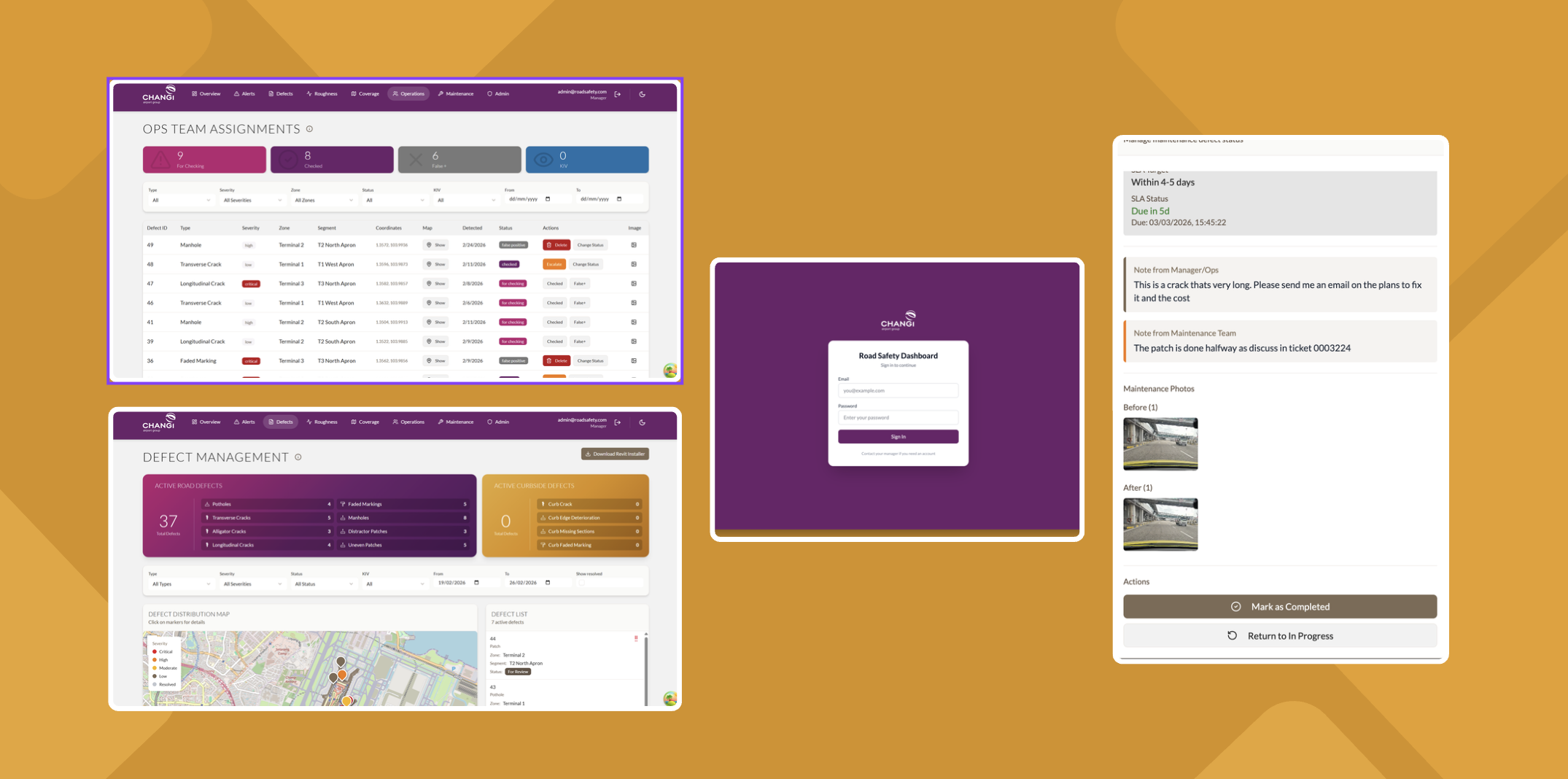
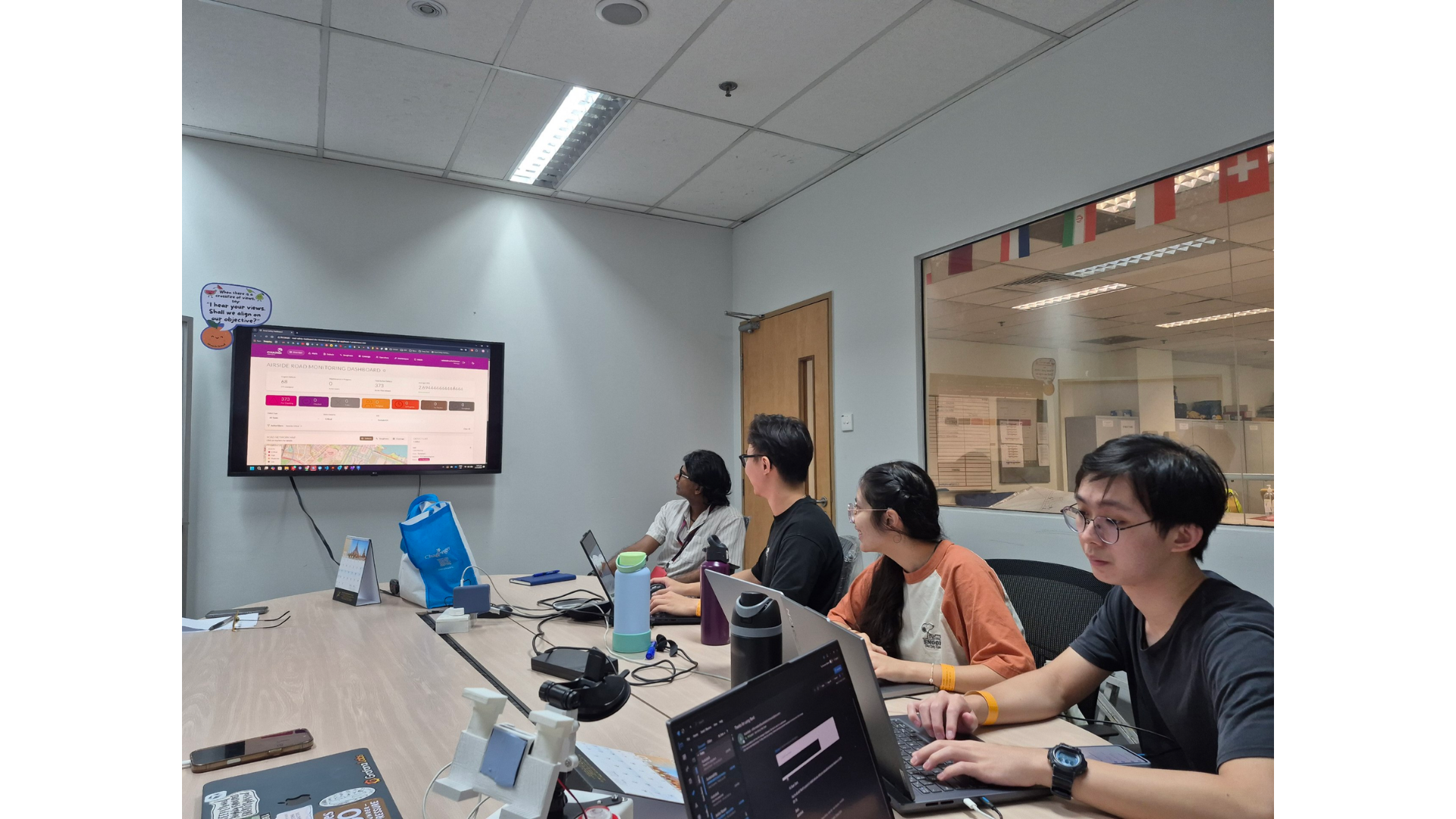
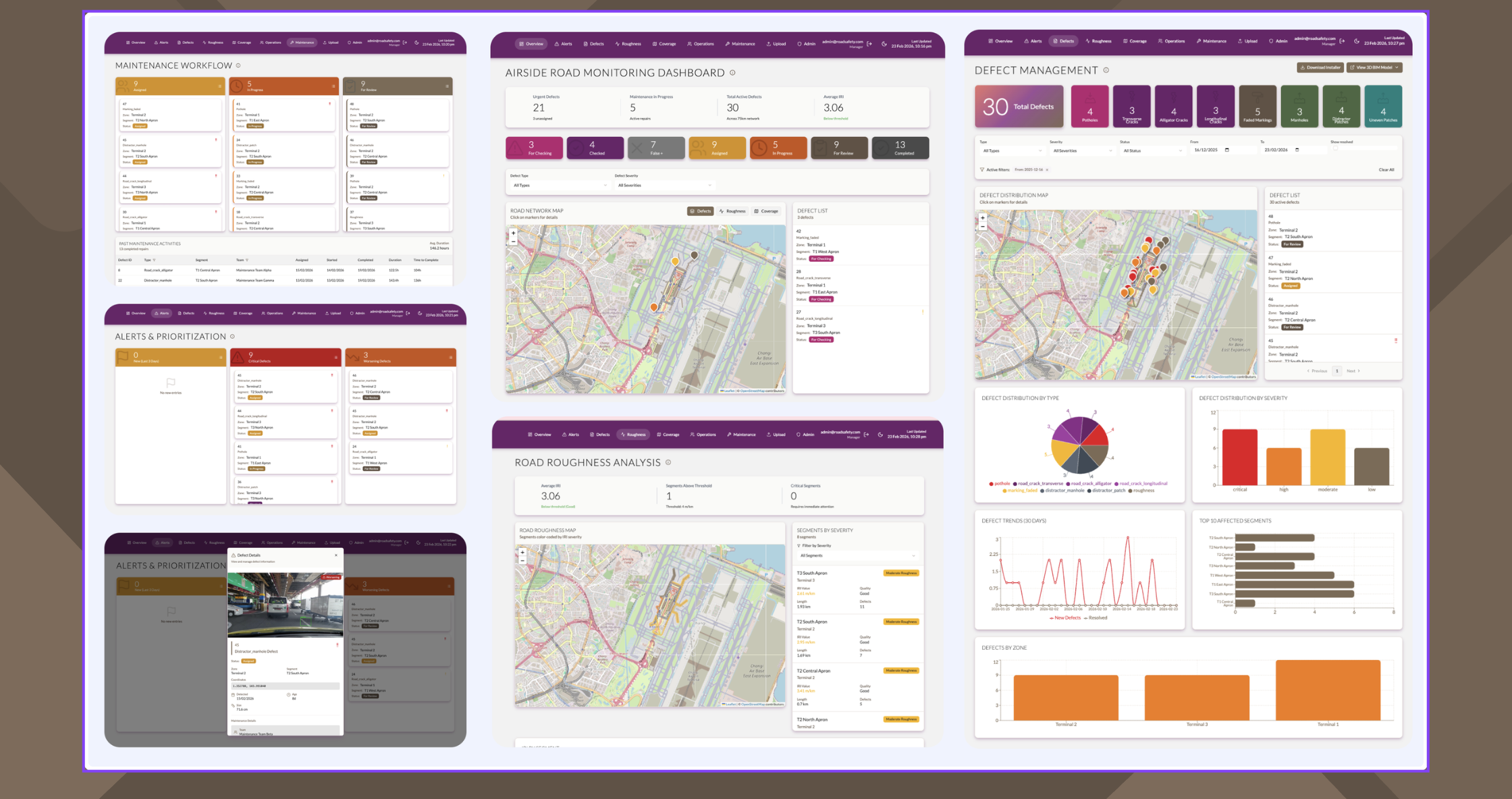
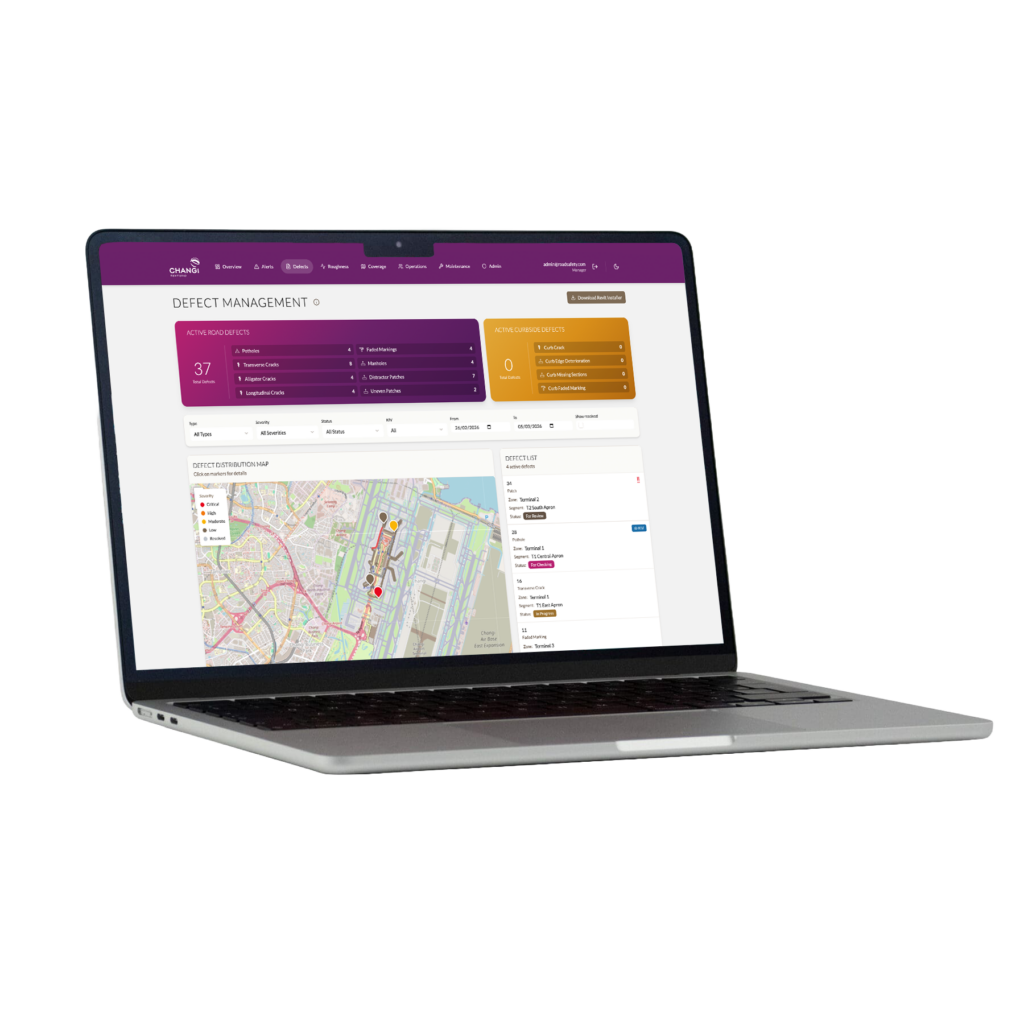
OPERATIONAL INTELLIGENCE DASHBOARD

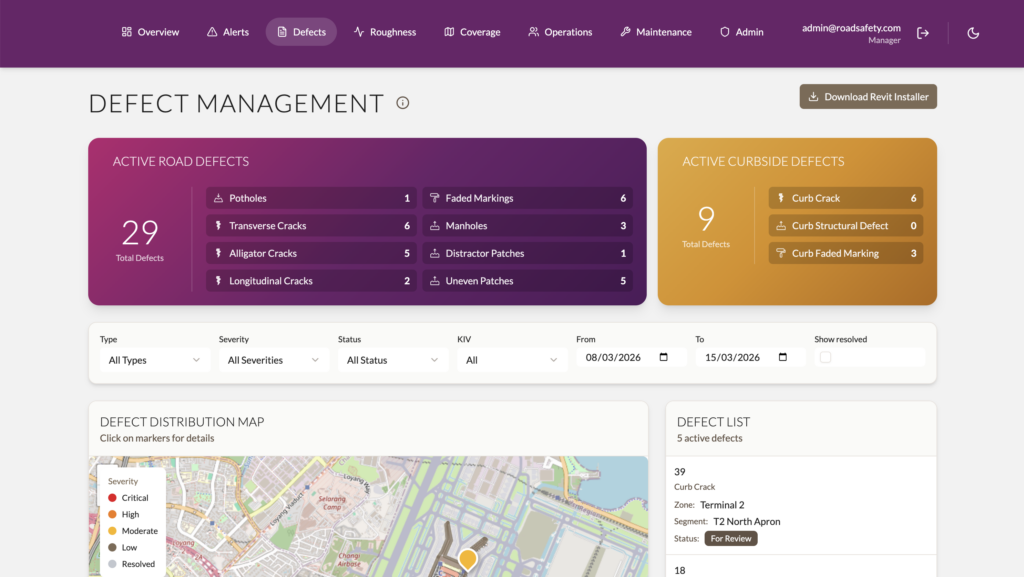
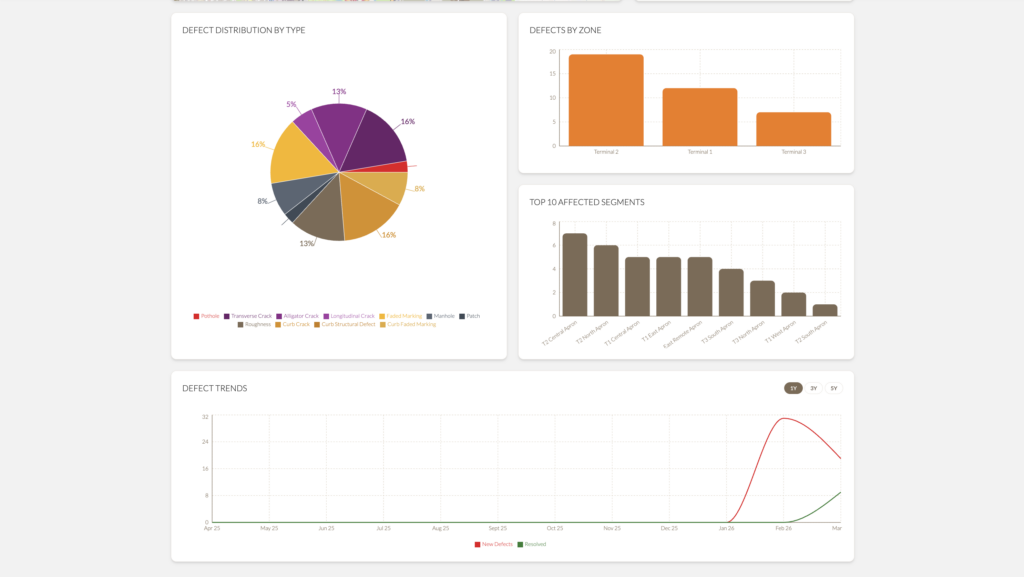
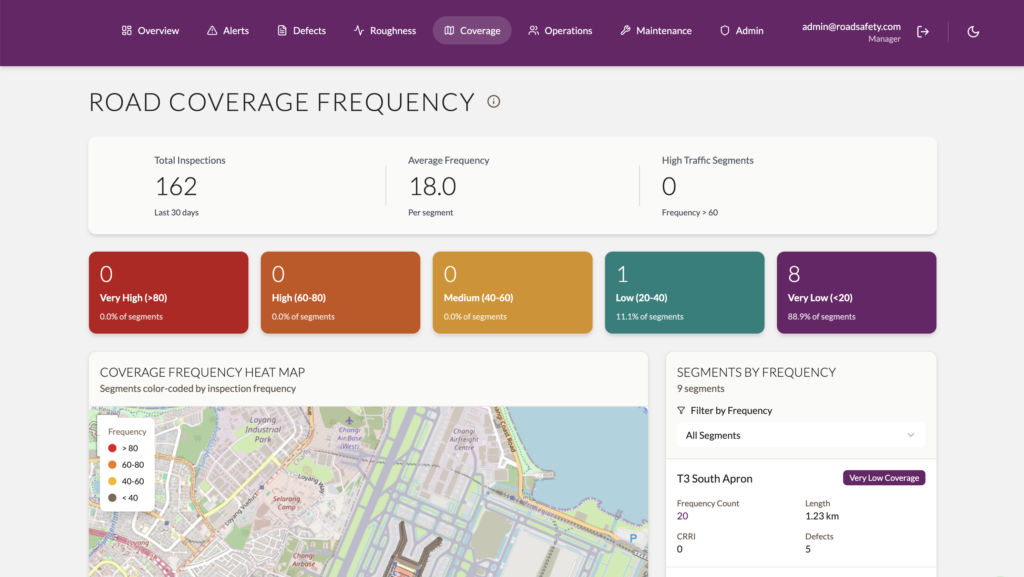
A centralized operational platform that processes multi-modal sensor data (video, GPS, IMU) through a cloud-based ML pipeline to automatically detect, geolocate, and prioritise road defects, while enabling end-to-end workflow management from detection to repair.


The system includes fault-tolerant pipeline monitoring with continuous status tracking from data upload to database persistence, ensuring reliability and transparency across processing stages. It also supports on-site post-repair verification, allowing maintenance crews to upload before-and-after evidence, maintain a historical audit trail, and instantly update defect status upon completion.

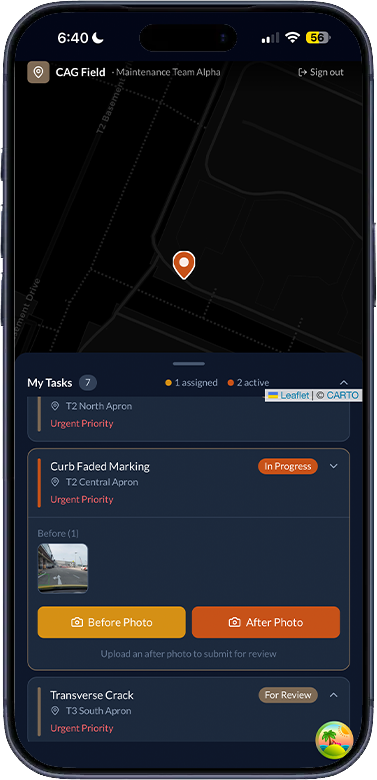
Mobile-Optimised Maintenance Interface

To support maintenance technicians working on-site, the system provides a dedicated mobile-optimised Field Interface. Designed for quick access to assigned repair tasks, location-based navigation, and image-based maintenance updates while in the field. It allows for direct upload of before- and after-repair images using phone’s camera as required evidence before status transitions.

Untitled-2

BIM DEFECT VISUALIZATION

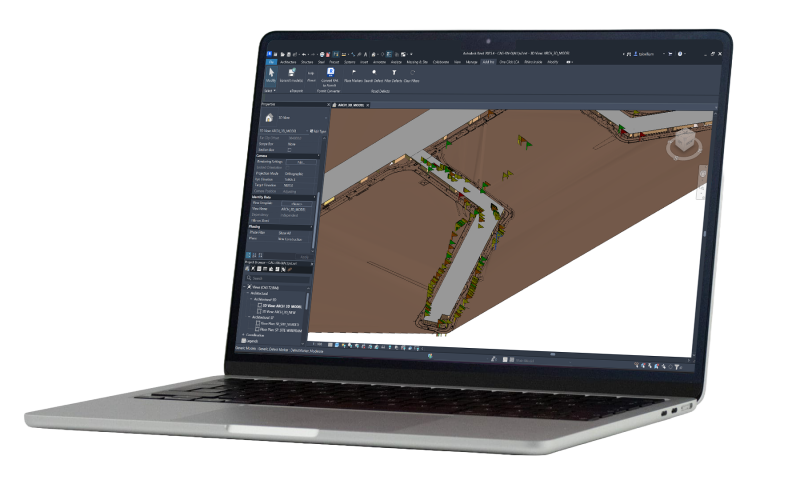
Seamlessly export defect data into Autodesk Revit as native BIM families, allowing engineers to visualize infrastructure health directly on the airport’s 3D digital twin.

• Defects rendered as 3D markers with metadata
• Overlay historical data for long-term planning
• one-click extension installation (via .exe)

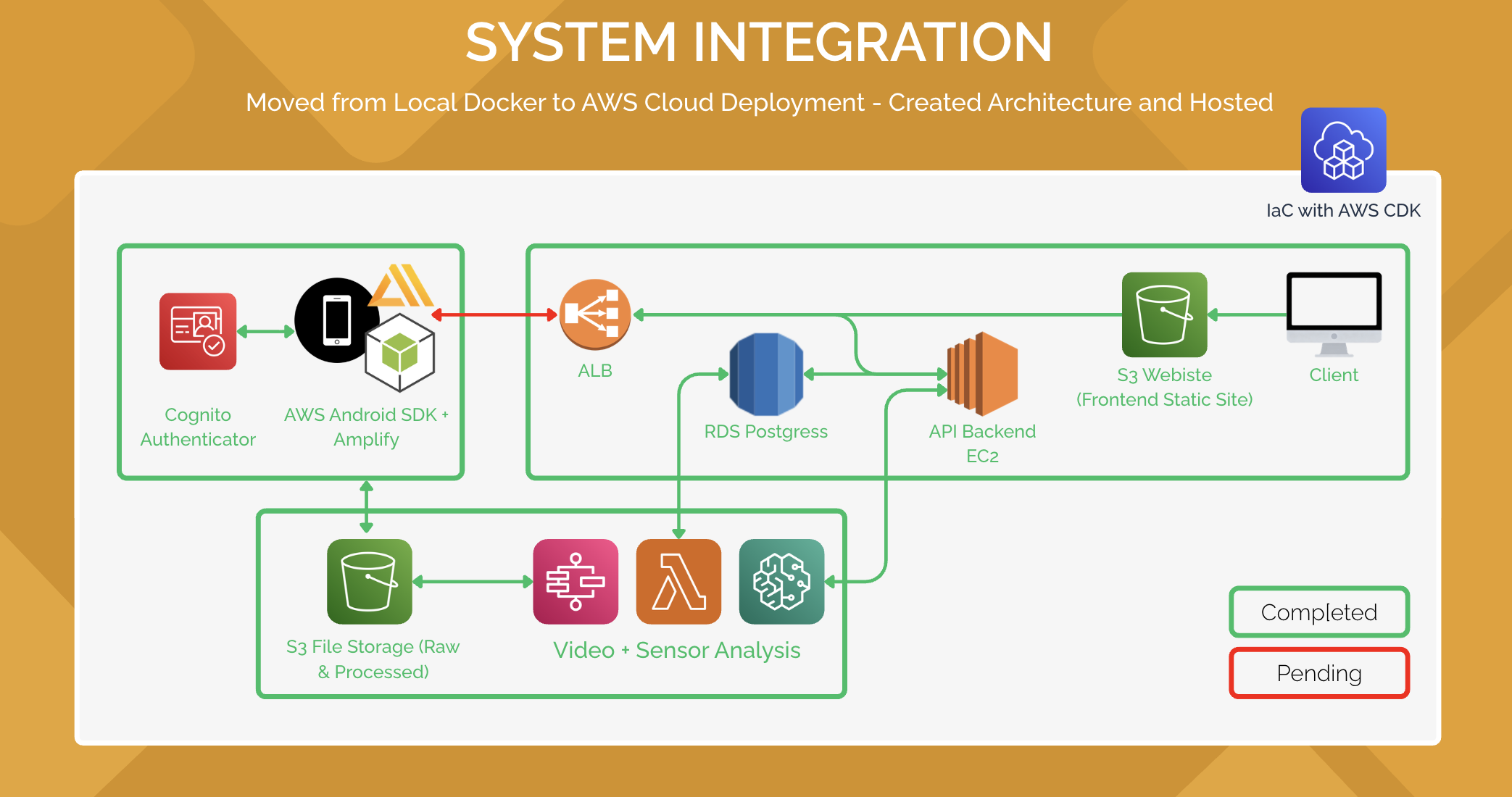
SYSTEM ARCHITECTURE

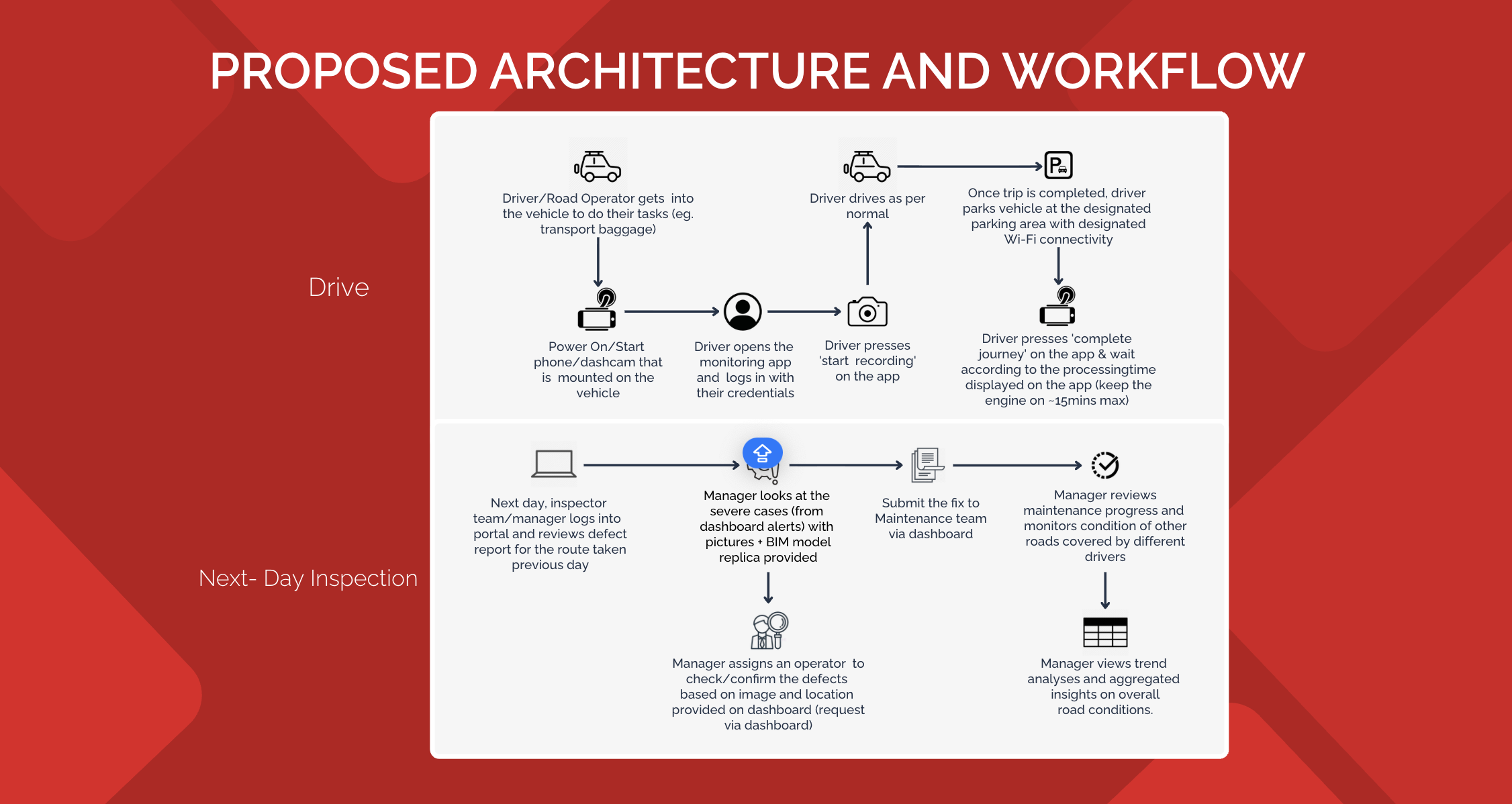
A seamless pipeline from the physical edge to the digital dashboard, engineered as a distributed system.

USER JOURNEY

A seamless pipeline from the physical edge to the digital dashboard, engineered as a distributed system.

CAPTURE

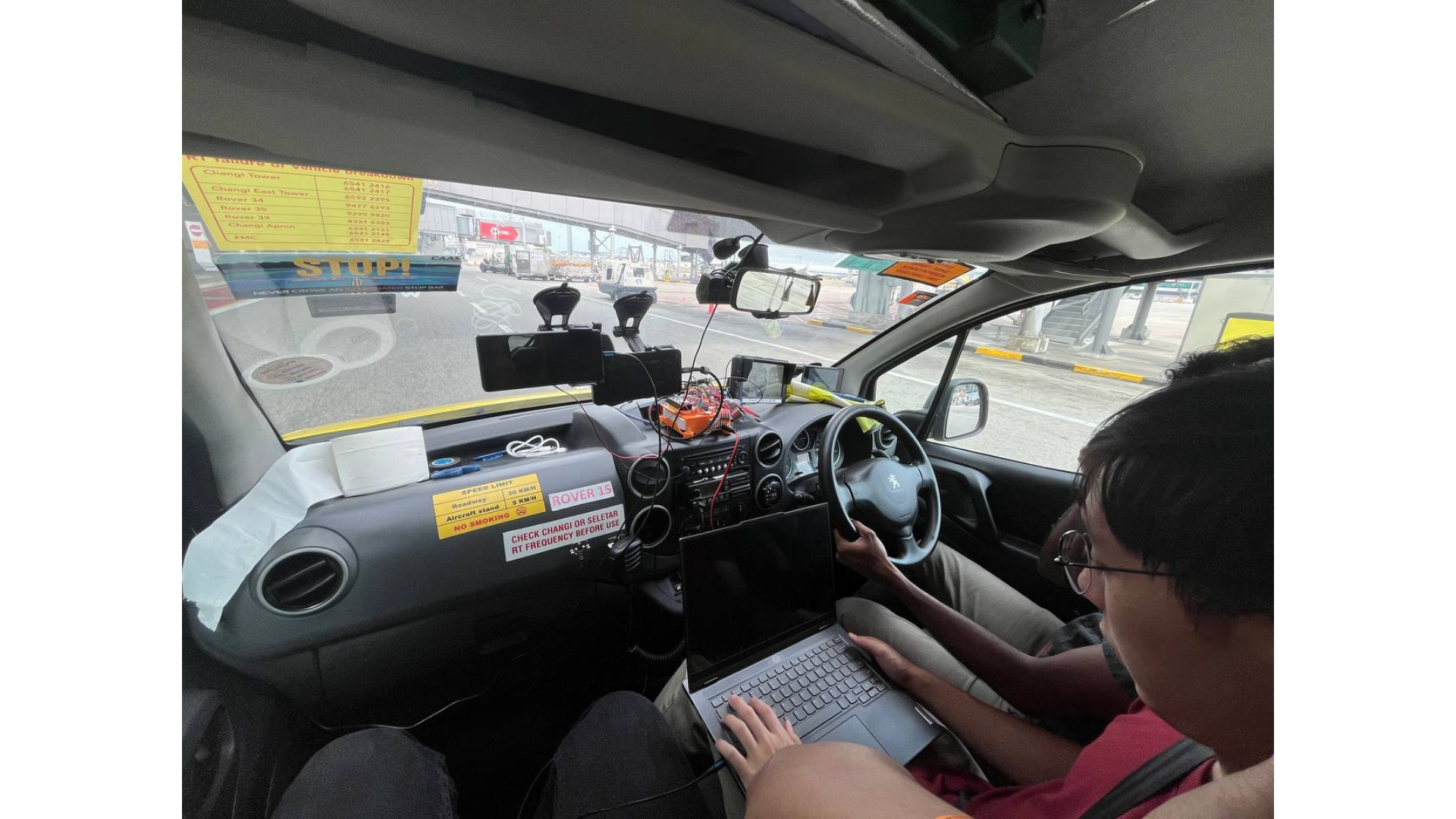
Operator drives the airfield with our mobile app and sensor suite. Video and IMU/GPS data are captured automatically.

SYNC

Data is uploaded to AWS cloud storage. Sensor telemetry is synchronized with video frames using timestamps.

Analyze

Our computer vision model processes video to detect defects. GPS/IMU fusion pinpoints exact geolocation and severity.

Alert

Detected defects appear on the dashboard with location, severity, and images. Managers receive real-time notifications.

Prioritize

Dashboard aggregates defects, calculates roughness index, and helps managers assign repair tasks by priority.

Repair

Maintenance teams receive work orders. Check assigned defects via dashboard and upload before and after pictures.

Archive

Historical defect data is exported to Autodesk Revit for long-term infrastructure planning and 3D visualization.

What used to take weeks of manual reporting now happens in hours. Operators drive their usual routes, and managers get instant, actionable insights—no clipboards, no guesswork.

PROJECT ROADMAP

Building Smart & Sustainable

Our approach prioritizes resource efficiency, cost reduction, and environmental responsibility.

Resource & Cost Efficiency

IRIS reduces the environmental and financial footprint of road maintenance by automating inspections and eliminating paper-based workflows

  • 60% reduction in inspection vehicle mileage
  • Eliminated ~10,000 sheets of paper per year
  • Lower fuel consumption and carbon emissions

Synthetic Data Generation

To reduce the need for expensive real-world data collection, IRIS uses generated synthetic airside road imagery using Unreal Engine and procedural defect modeling.

  • Trained model on 8,000+ synthetic images before real data
  • Reduced real-world data requirements by 40%
  • Faster iteration cycles during development

Iterative Fabrication & FEA

IRIS’ Sensor Suite went through 4 design iterations using rapid prototyping and Finite Element Analysis to optimize strength-to-weight ratio and thermal performance.

  • 3D-printed enclosures with PETG for durability
  • FEA simulations prevented overheating failures
  • Reduced material waste by 55% vs. traditional prototyping

In partnership with :

Acknowledgements

Team ARIA would like to express our sincere gratitude to our Capstone professors, Prof. Franklin Anariba, Prof.Sumbul Khan and Prof. Perry Lam, for their guidance, encouragement, and valuable feedback throughout the course of this project. Their support and insights have been instrumental in shaping ARIA and driving its progress.

We would also like to thank our mentors, Ang Wei Jie, Vasanthan Santhirasegaram and Ong Si Yun , for their advice, patience, and continuous support throughout the development process. Their experience and perspectives have greatly contributed to the refinement of our ideas and the successful execution of the project.

Special thanks to our client, CAG, for the opportunity to work on this project and for providing us with valuable direction, context, and feedback. We are also grateful to [Operator] for their support in the operational aspects of the project and for helping us better understand the real-world environment in which ARIA is applied.

Menu

ornament-menu