ARTE (Autonomous Robot for Transporting Equipment)

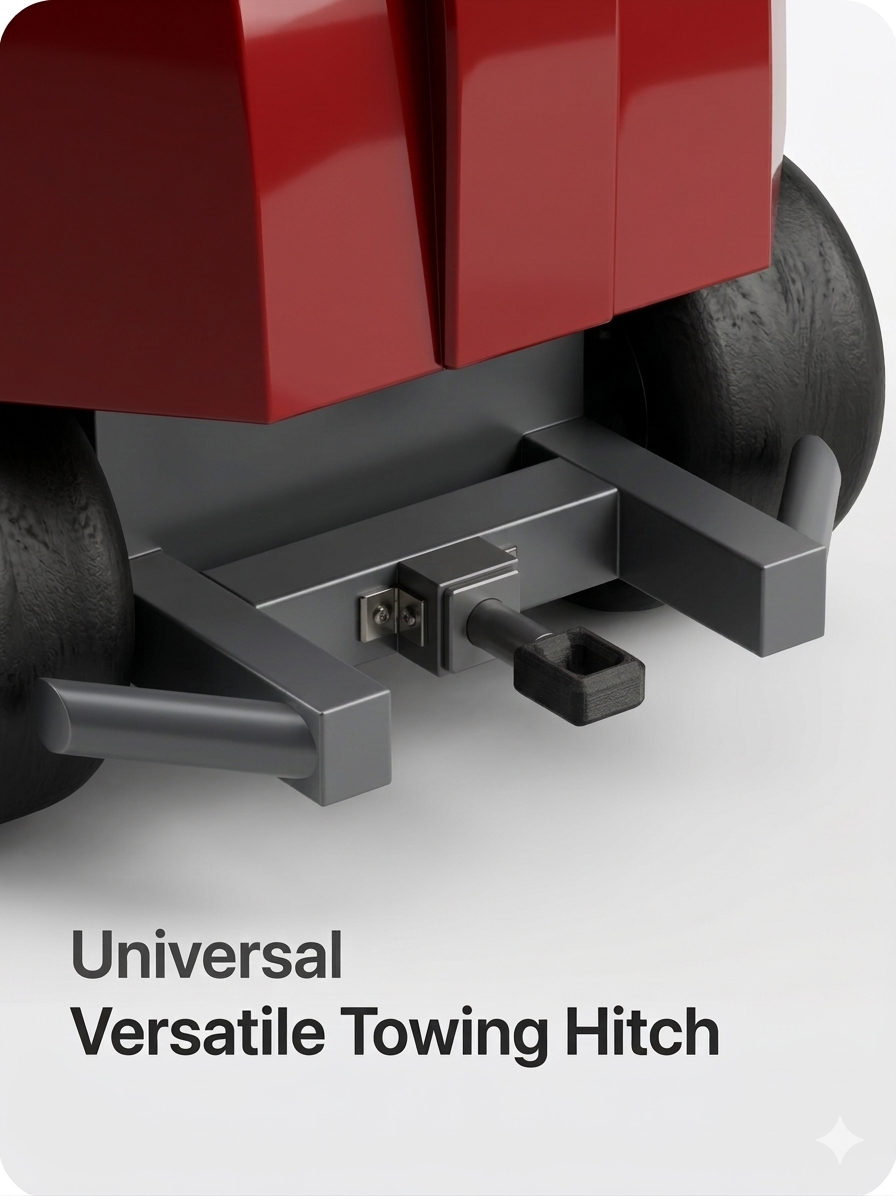
Partnering with Republic of Singapore Air Force (RSAF), ARTE addresses the RSAF engineer’s reliance on manual transportation of tools, spare parts and test equipment which is labour‑intensive, time-consuming and associated with safety risks in large busy hangar environments. ARTE aims to streamline routine transport workflows by: (1) redesigning the robot’s physical form, (2) implementation of autonomous navigation, and (3) development of an intuitive mobile application

Team members

Andre Chan Jun Yu (EPD), Benjamin Seet Rui Feng (EPD), Chen Chuxin (ESD), Destor Rose Evangeline Anne Dagman (DAI), Toh Jia Le (ISTD), Mageswari Ganeshkumar Mithunbalaji (ISTD), Tay Xiao Chun (MArch)

Instructors:

  • Thomas Schroepfer

Writing Instructors:

  • Susan Wong

  • Dominic Edmund Kim San Quah

Background

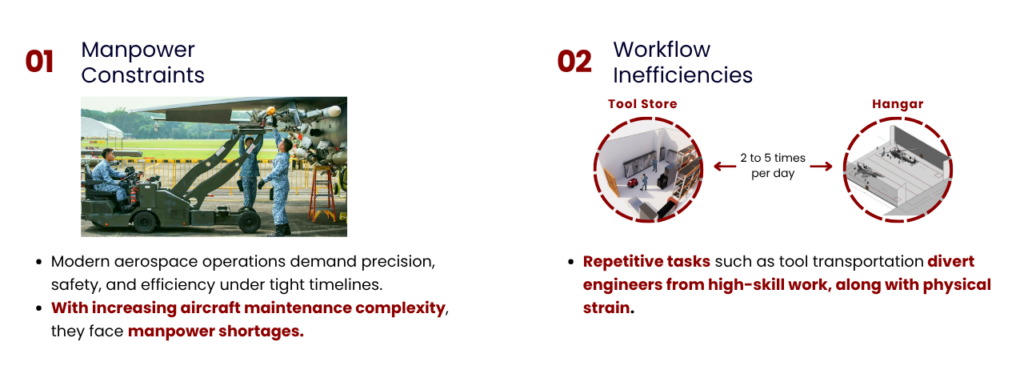
For the Republic of Singapore Air Force (RSAF), efficient hangar operations are essential to maintain mission-critical aircraft. Currently, manual transportation of components relies on trolleys, forklifts and hand-carrying, which pose safety risks, require licensed operators and strain manpower.

To address these challenges, our Capstone Project, Autonomous Robot for Transporting Equipment (ARTE), aims to design an autonomous ground vehicle that reduces physical strain, improves efficiency, and leverages existing resources to support future scalability.

Pain Points

This creates an opportunity to enhance operational efficiency by deploying automation technologies like Automated Ground Vehicles (AGVs). Such innovation could optimise material handling, reduce human fatigue, address the lack of manpower, and enable aircraft engineers to focus on higher-value tasks, ultimately raising RSAF’s operational and safety standards even further. 

User Research
User research
*Images adapted from Republic of Singapore Air Force (RSAF). https://www.rsaf.gov.sg/careers/career-schemes/mdes/air-force-engineer/ 

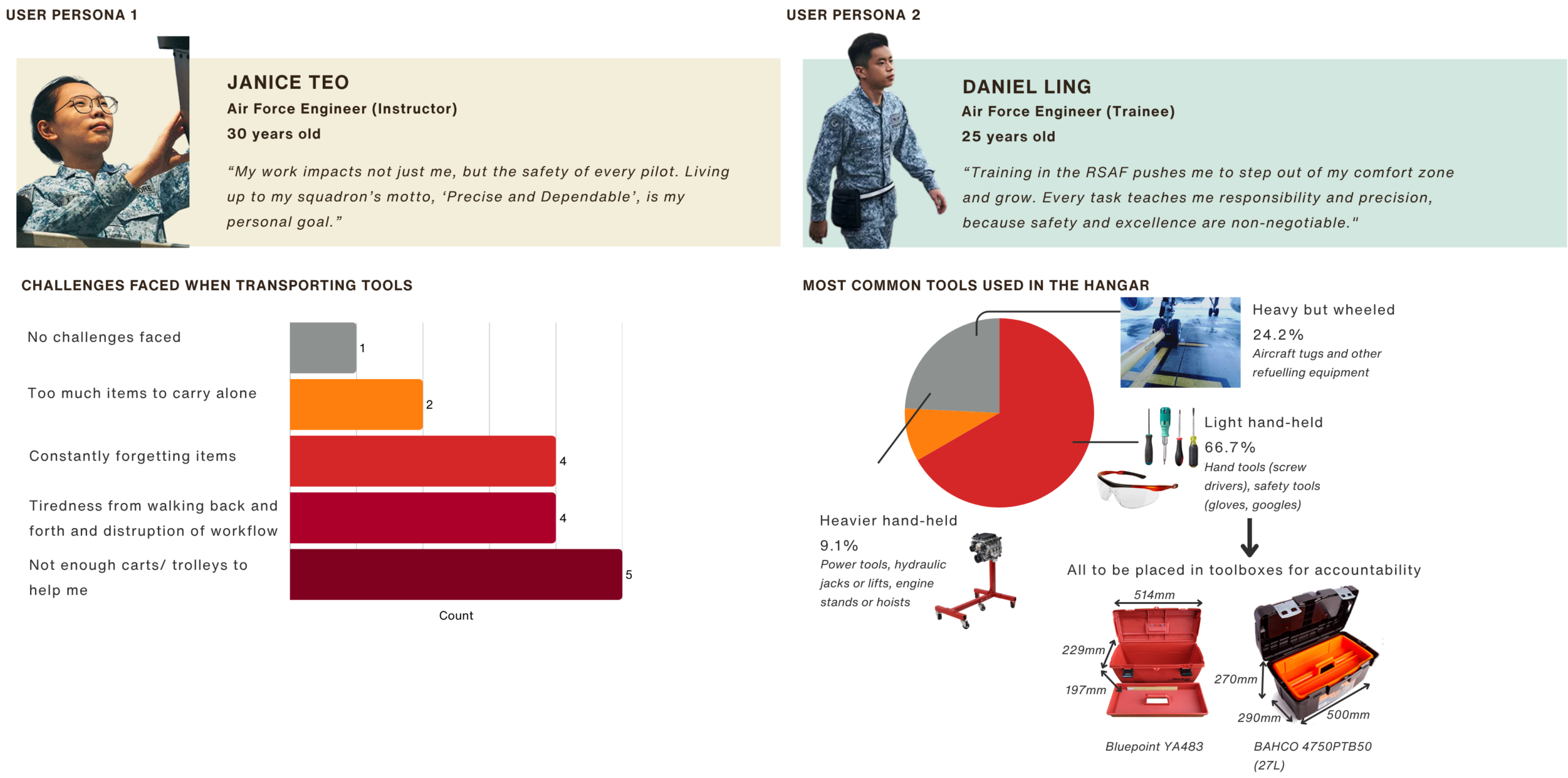
To understand users’ needs and hangar operations, interviews, surveys and site visits were conducted. These methods enabled direct observation of the RSAF working environment and maintenance workflows, while capturing users’ concerns, expectations and operational constraints.

We identify two main user groups: (1) experienced aircraft engineers and instructors who prioritise safety, reliability and operational efficiency, and (2) trainee engineers, who need time to adapt to the hangar workflow and environment. Despite differences in experience, both user groups emphasised intuitive system operation, reliable autonomous navigation, and organised tool storage. 

Problem Statement
“How might we streamline hangar operations by automating the transport of heavy tools in a way that integrates with existing workflows, ensures safe navigation, leverages current hardware, supports scalability, and offers an intuitive user interface?”
Defining the Problem

Incorporating feedback from operational stakeholders, the team iteratively refined a comprehensive problem statement that clearly defined the project’s scope and priorities. This statement became the foundation for developing an AGV to support safe and efficient equipment transport so aircraft engineers can focus on what truly matters.

Meet ARTE!

RSAF’s first autonomous robot for transporting equipment.
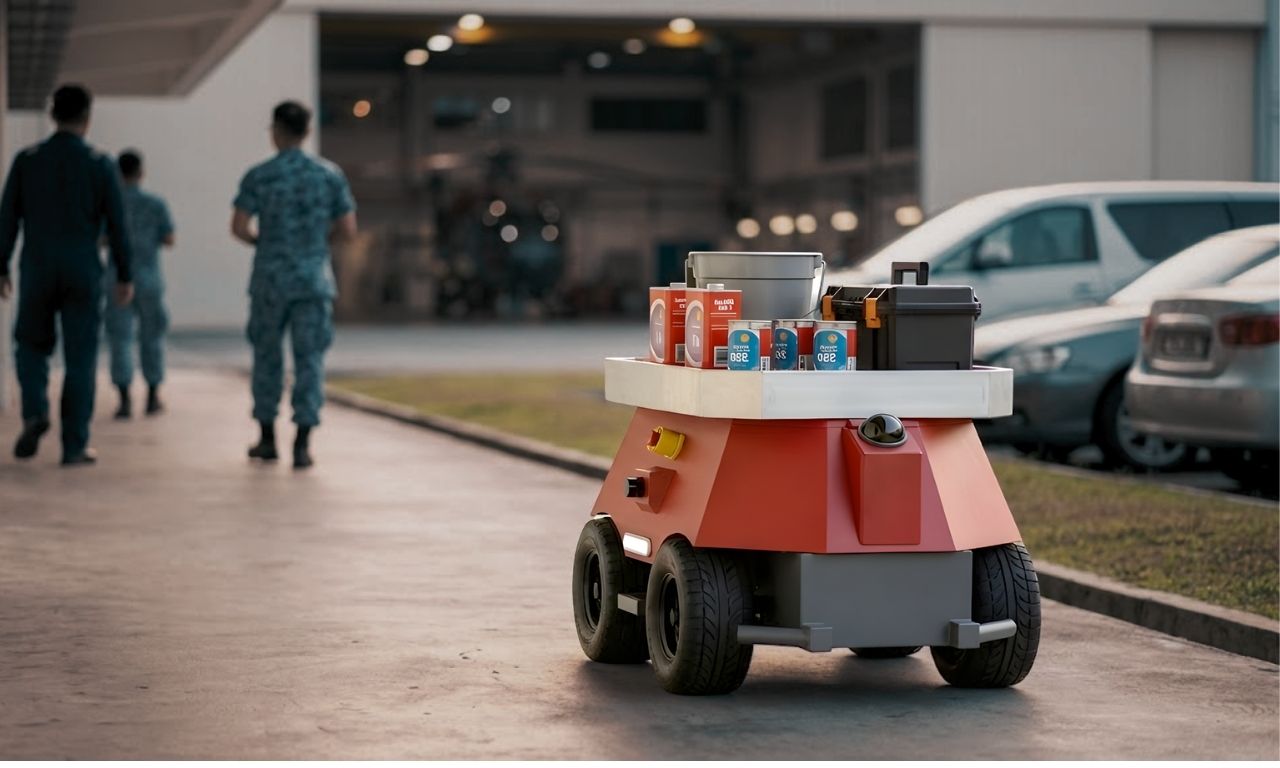
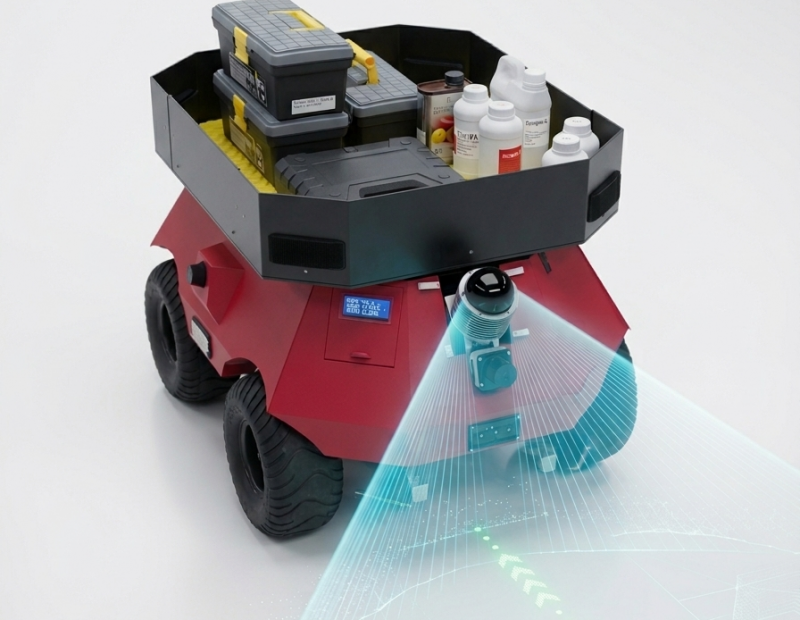
ARTE is a next-generation autonomous ground vehicle that transports equipment, designed to transform existing hangar operations. 
Equipped with intelligent navigation capabilities, ARTE can dynamically adjust its planned route to safely navigate around obstacles and respond to real-time environmental changes before resuming its assigned task. This enables tool transport tasks to be managed more efficiently while ensuring minimal disruption to ongoing workflows and human movement. 
More than just a transport robot, ARTE represents the potential for smarter, safer, and more responsive automation in hangar operations.
Overall Design

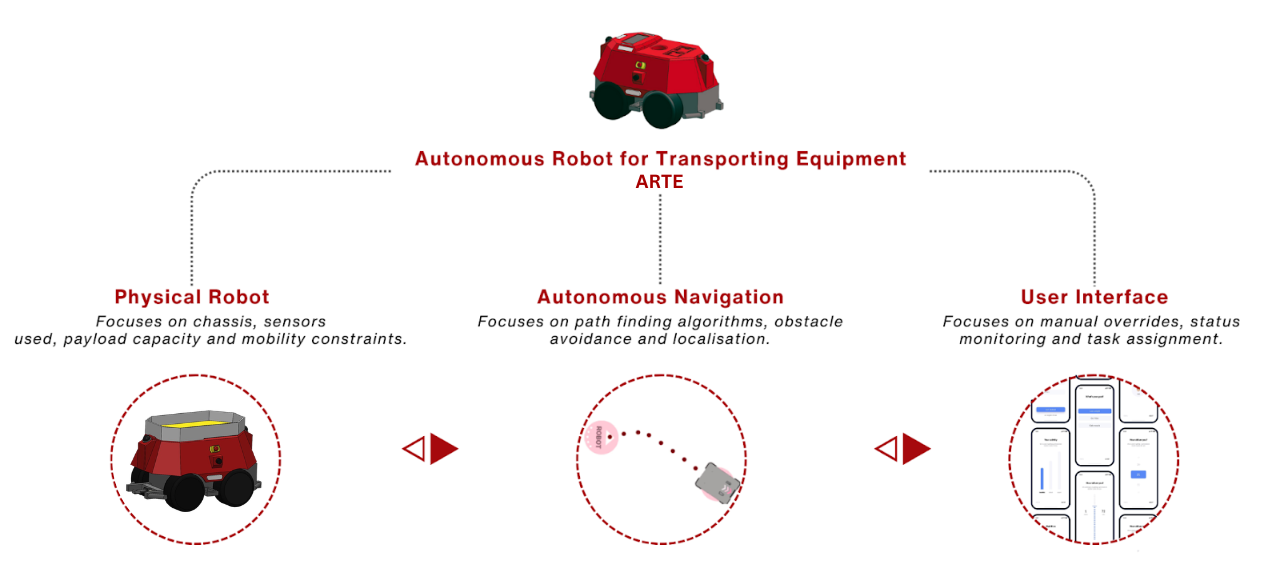
ARTE is designed as an integrated system comprising three core components:

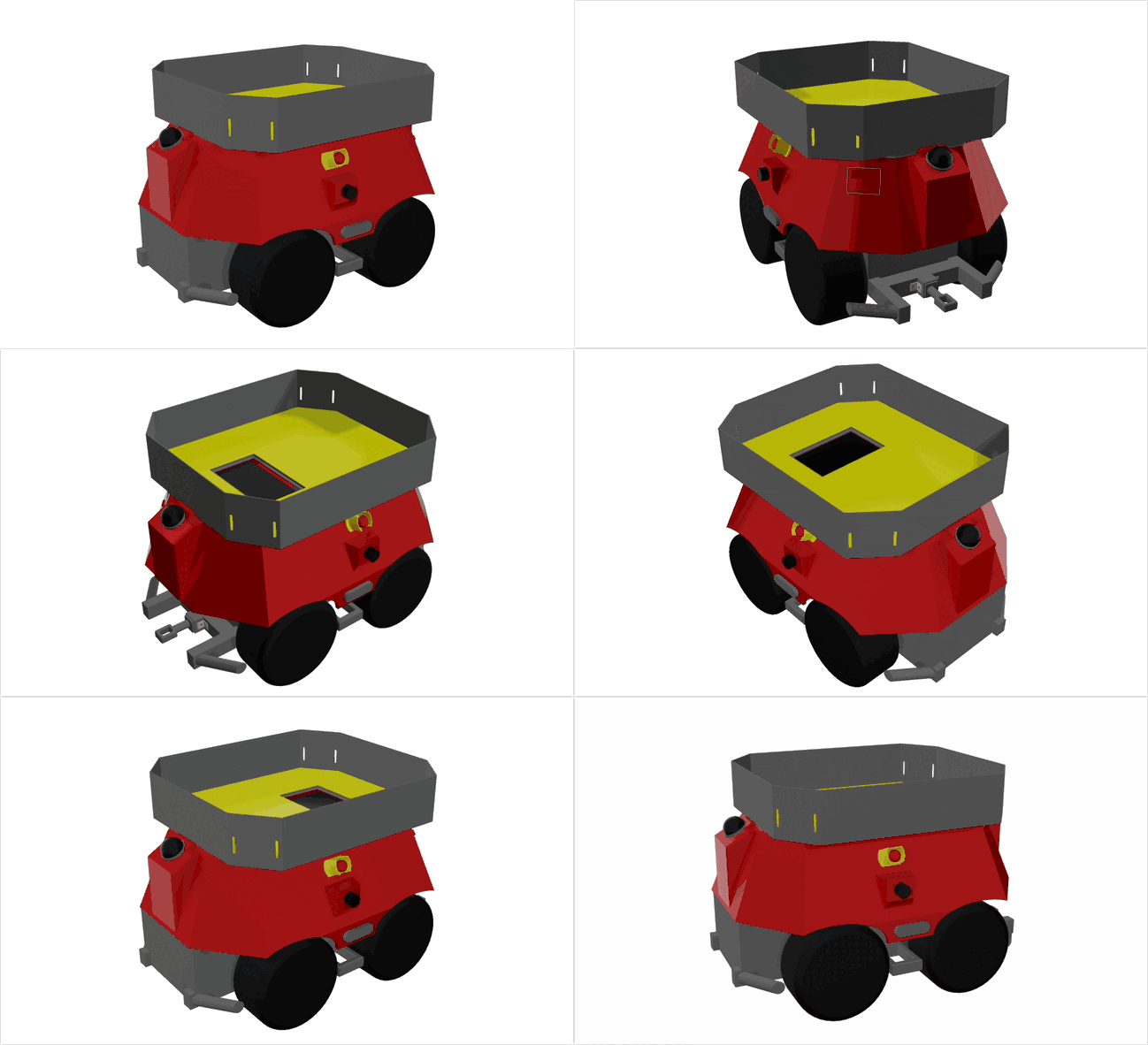
  1. Redesigning the robot’s physical form with an overhead rack system for secure payload handling, prioritising economics and safety.
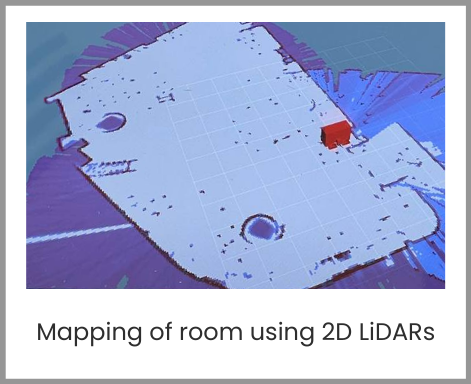
  2. Implementation of autonomous navigation using LiDAR-based SLAM (simultaneous localisation and mapping), Time Elastic Band (TEB) algorithm for path planning and real-time obstacle avoidance.
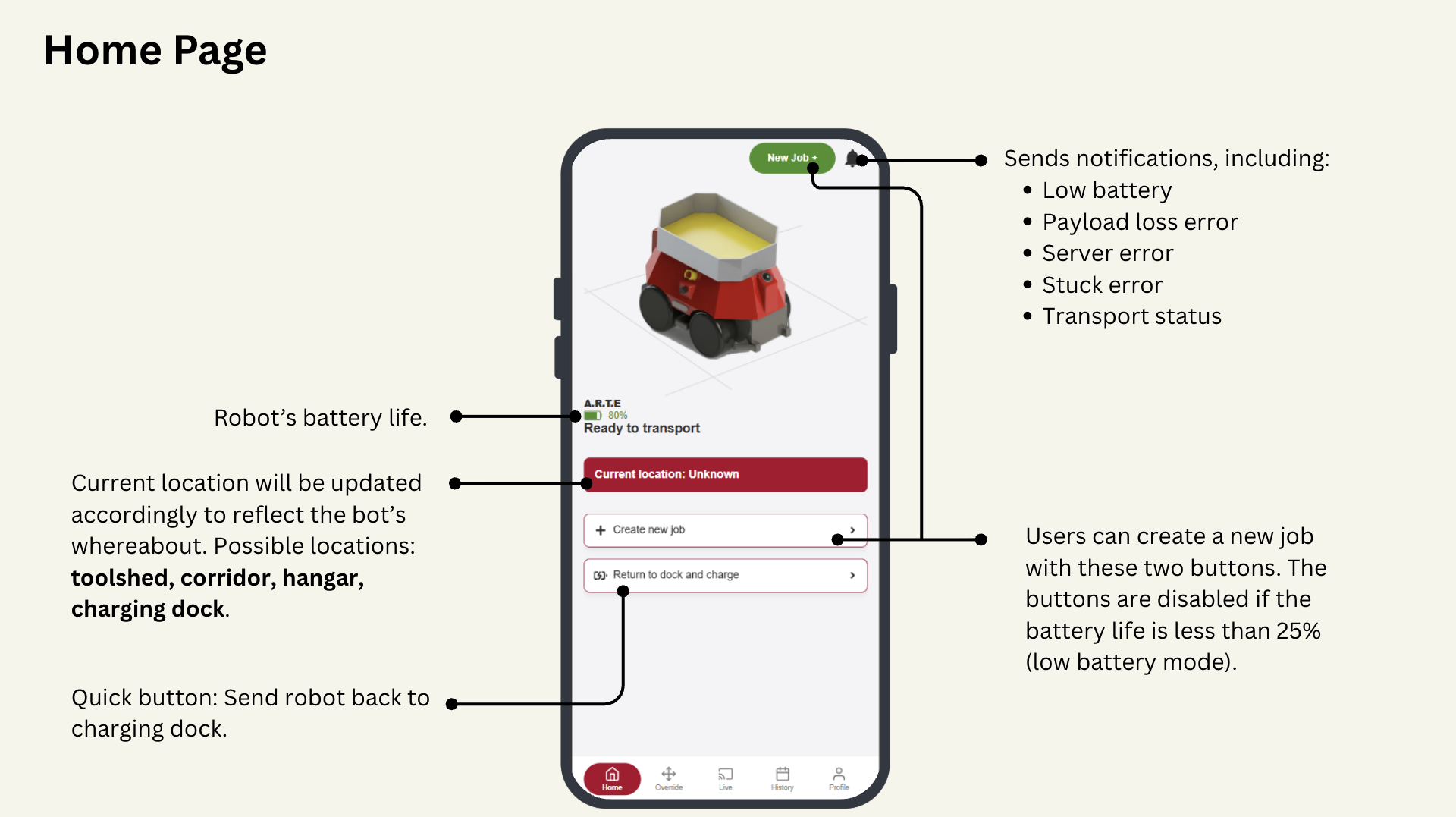
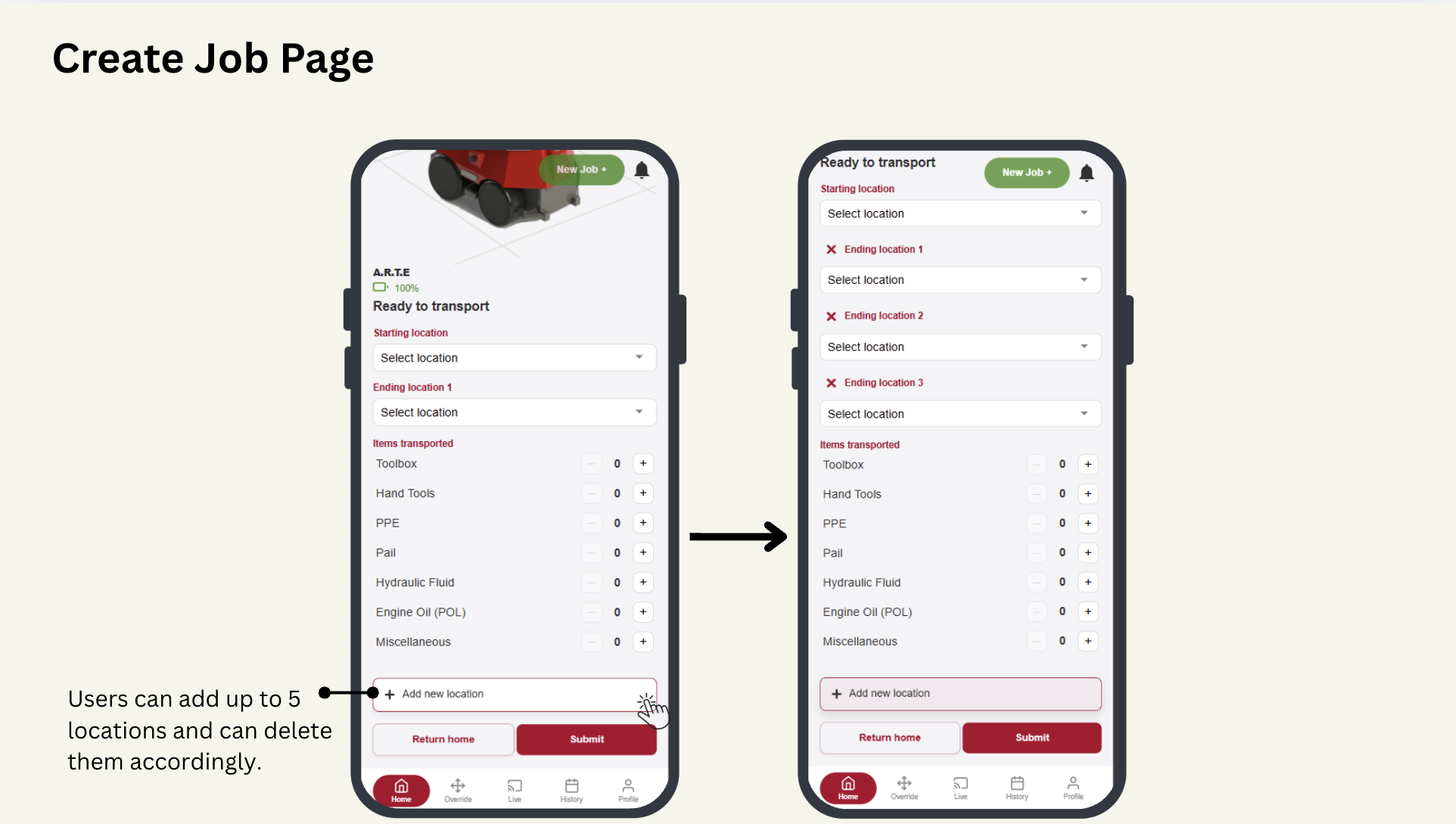
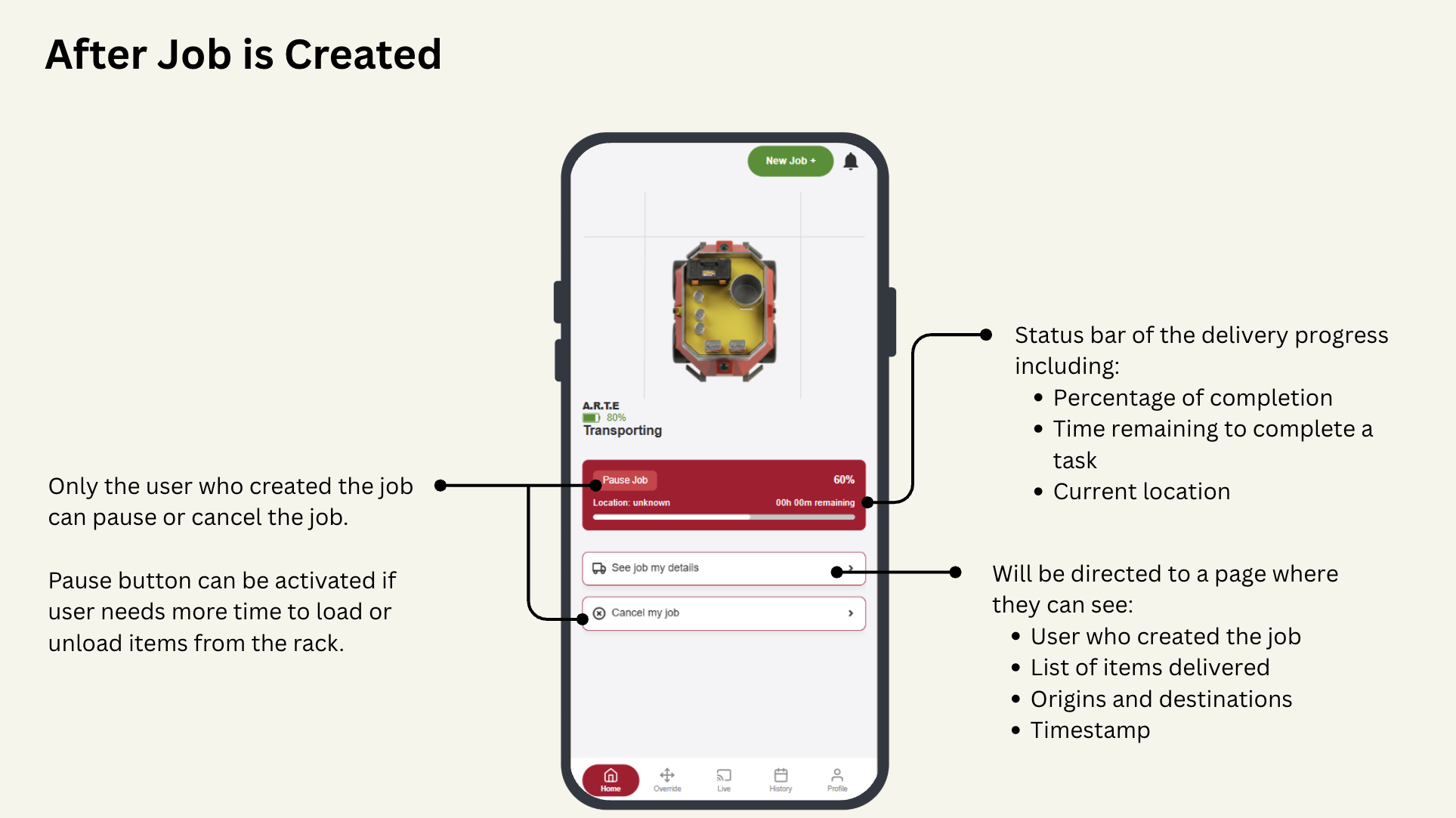
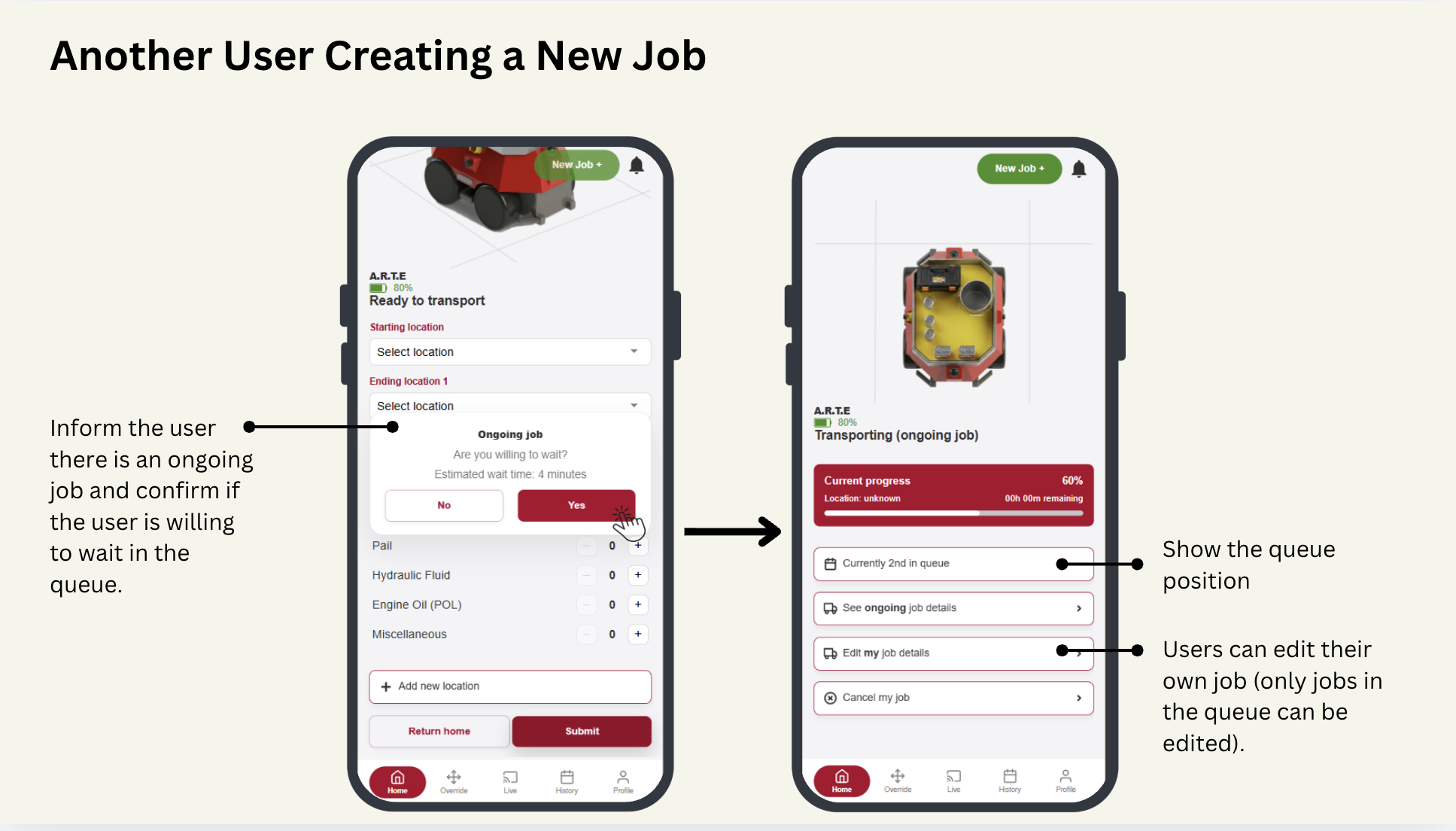
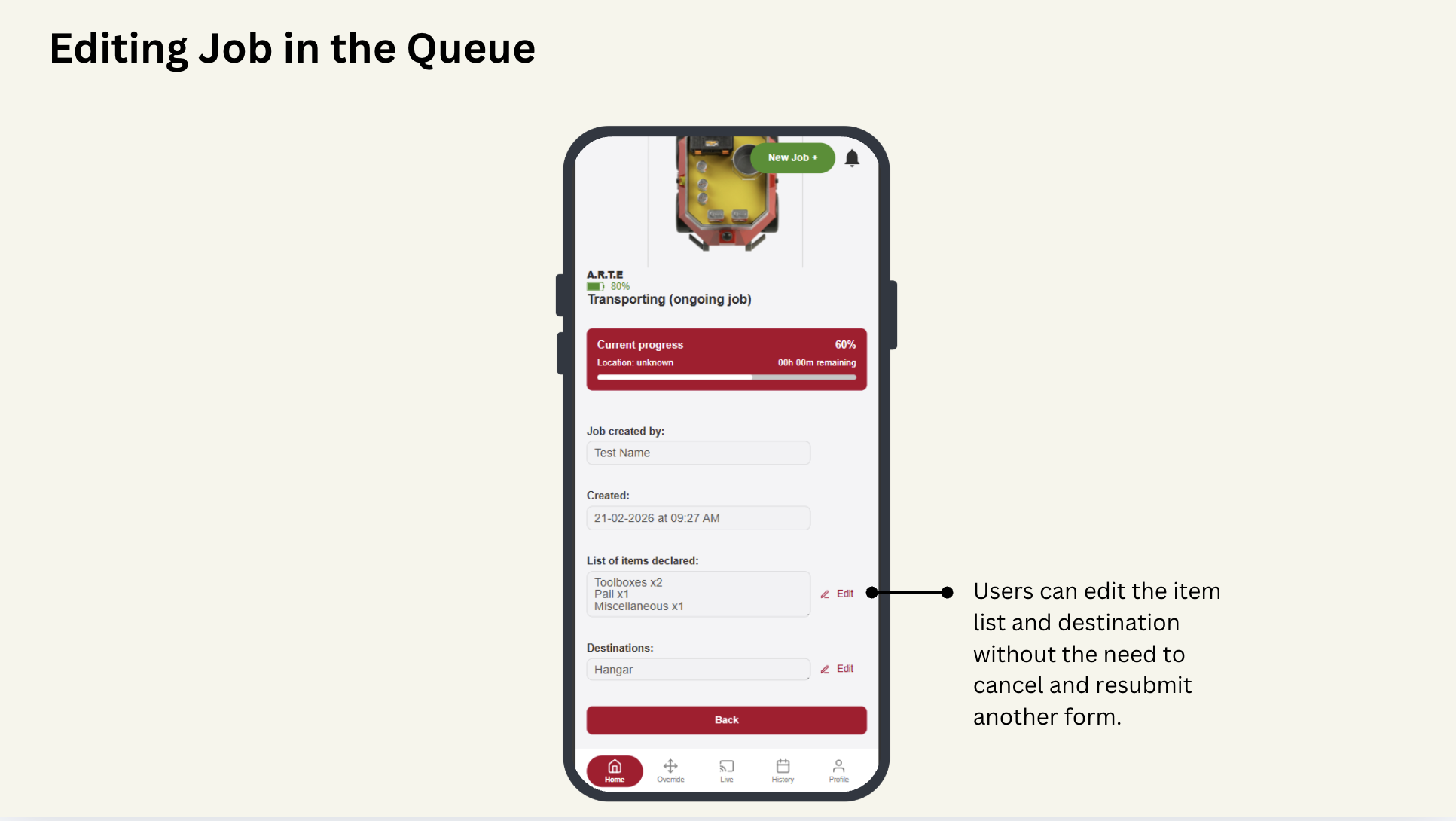
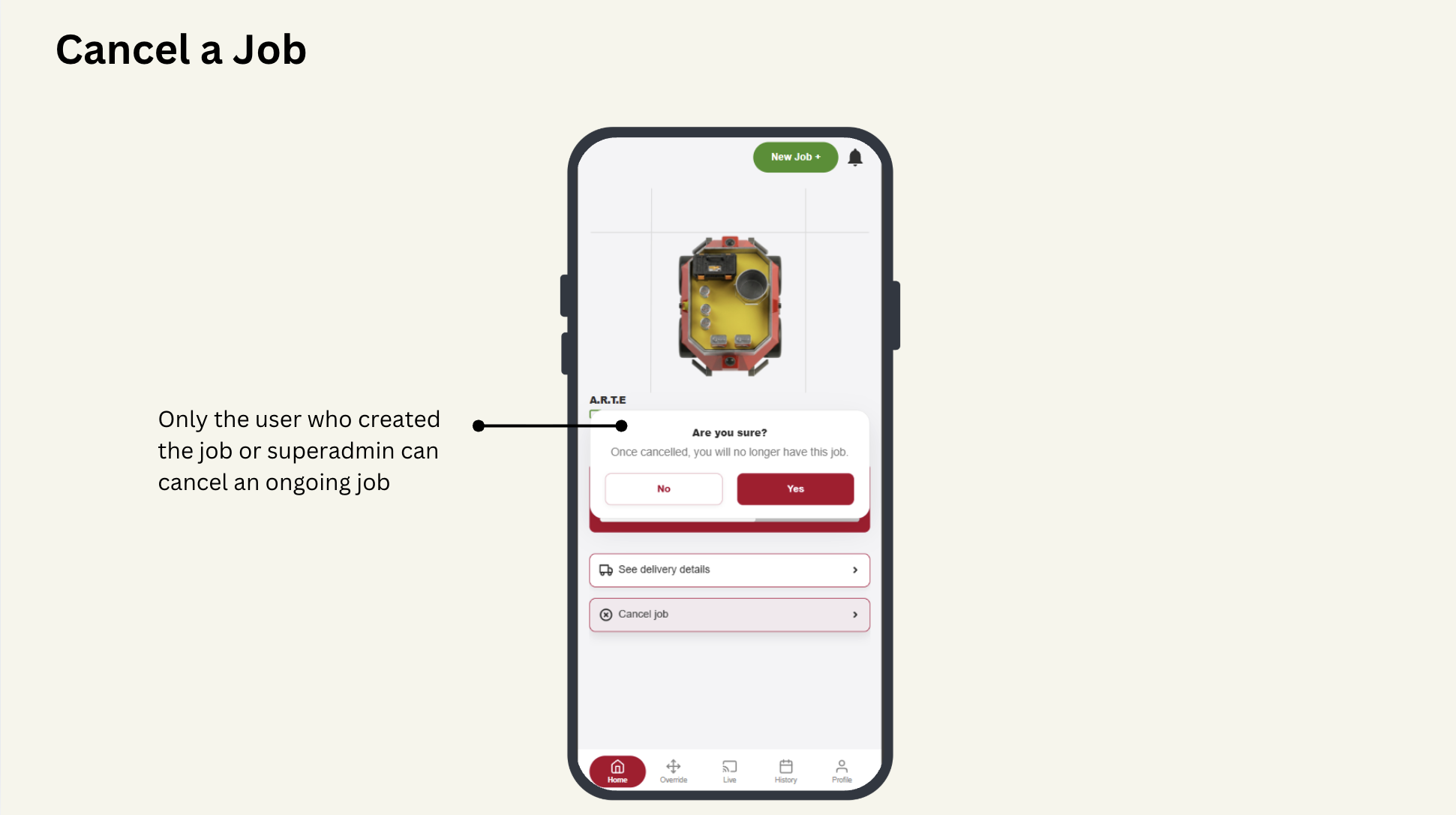
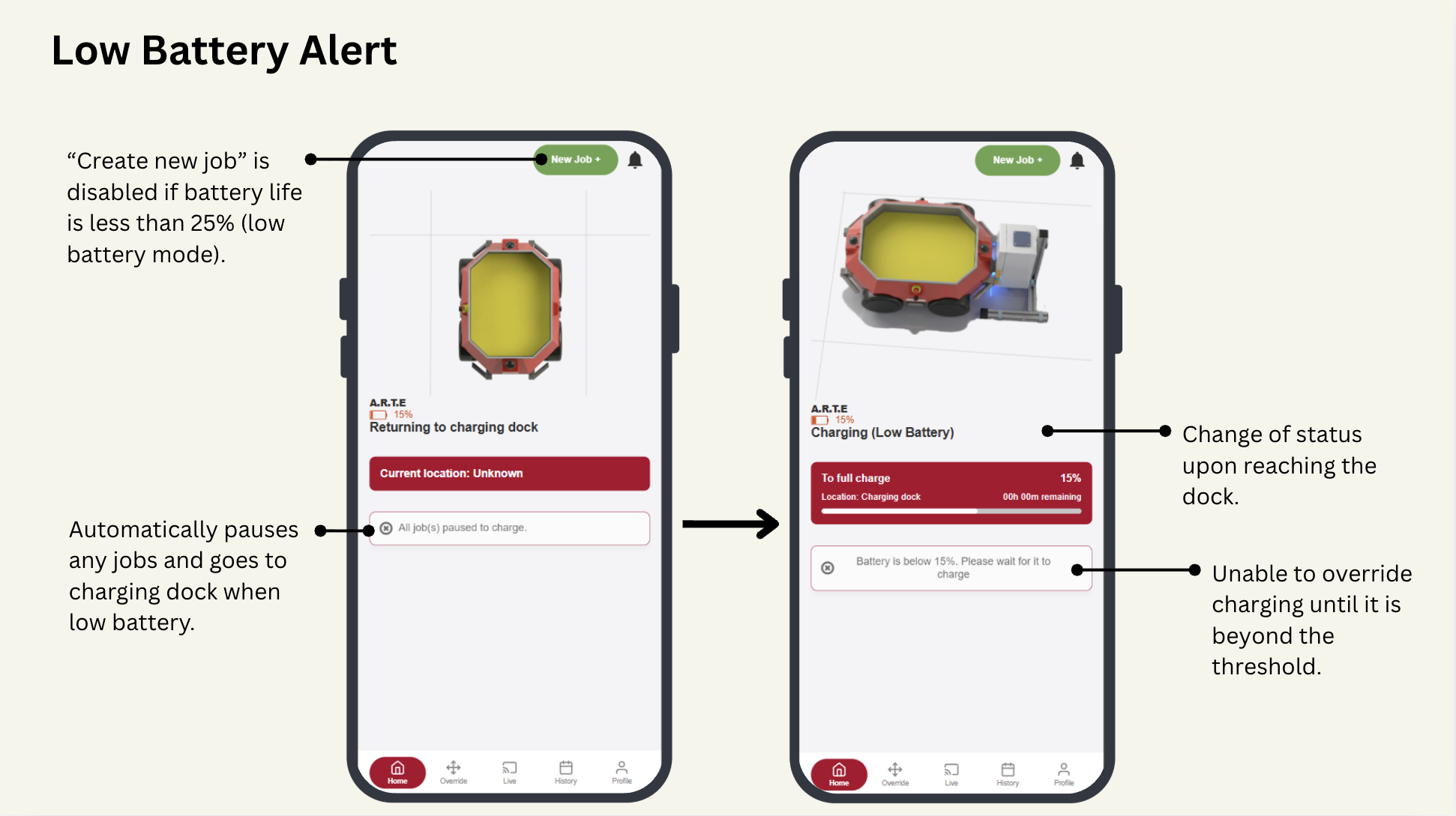
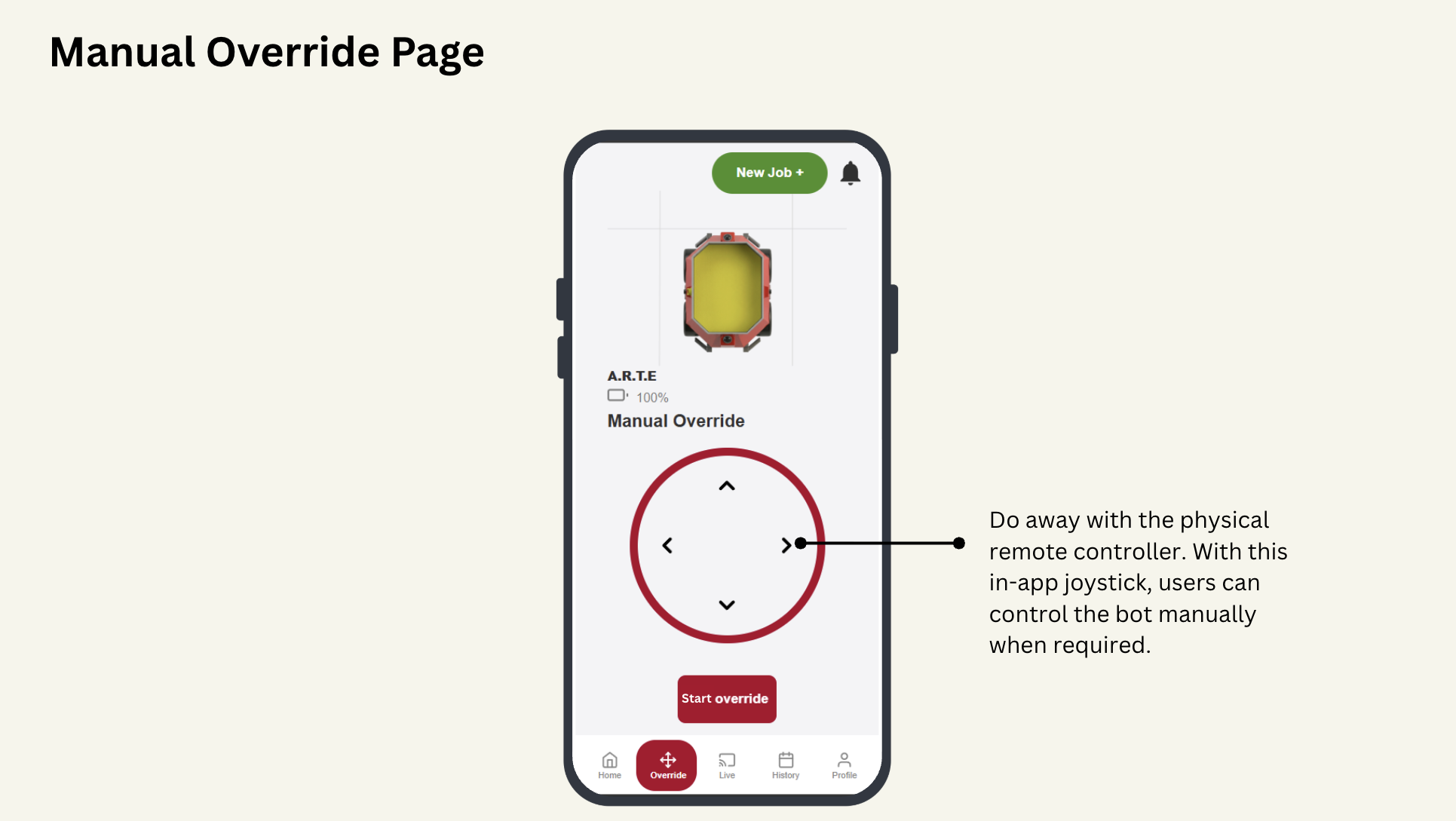
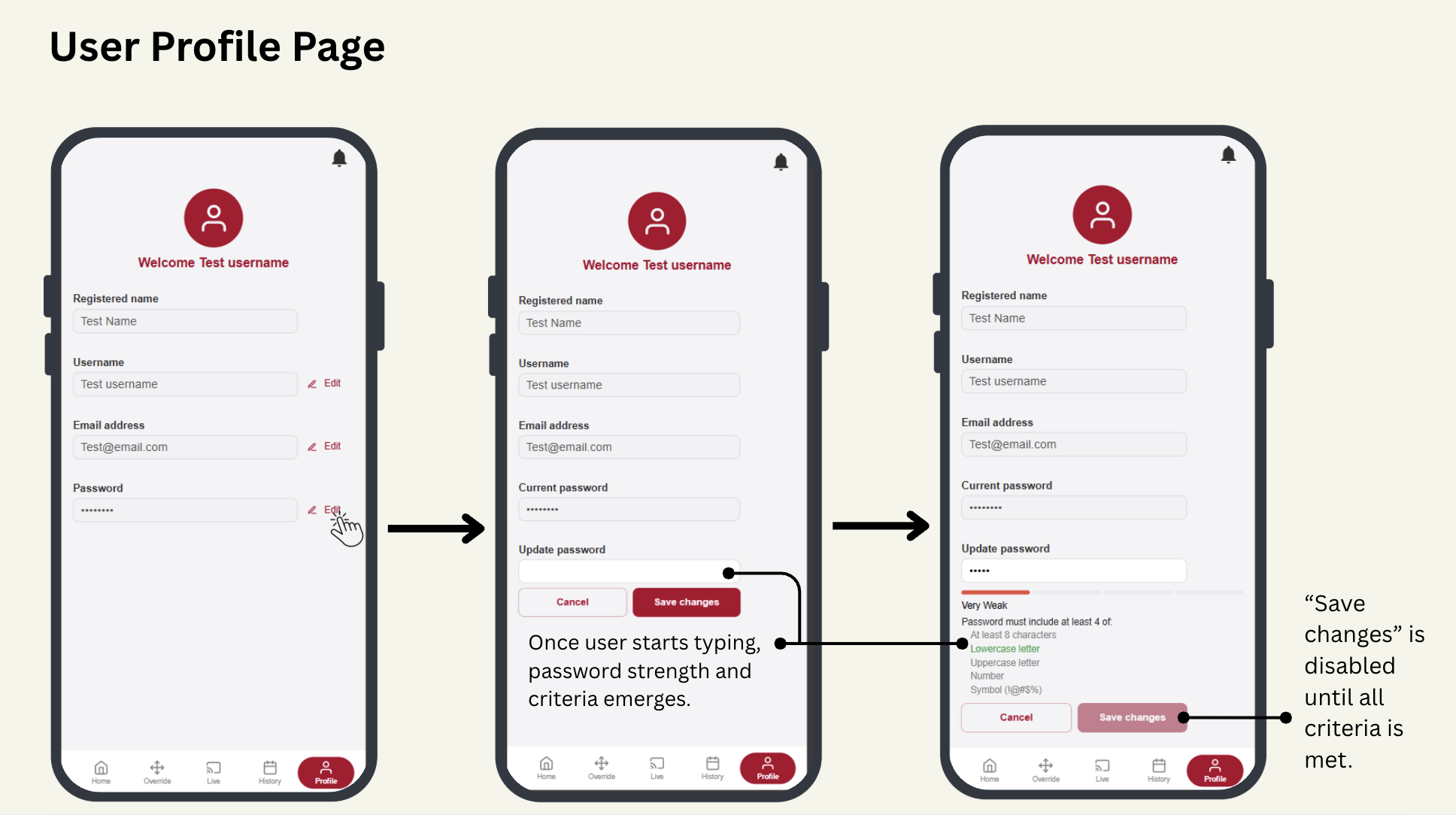
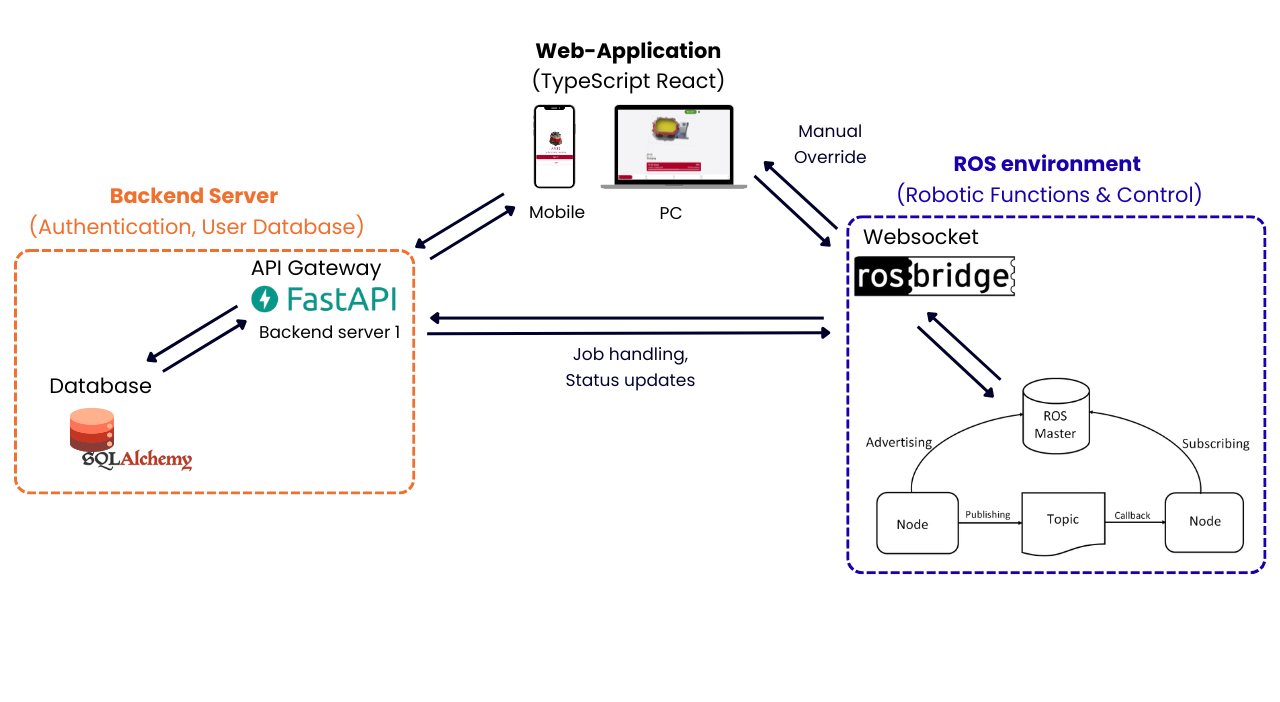
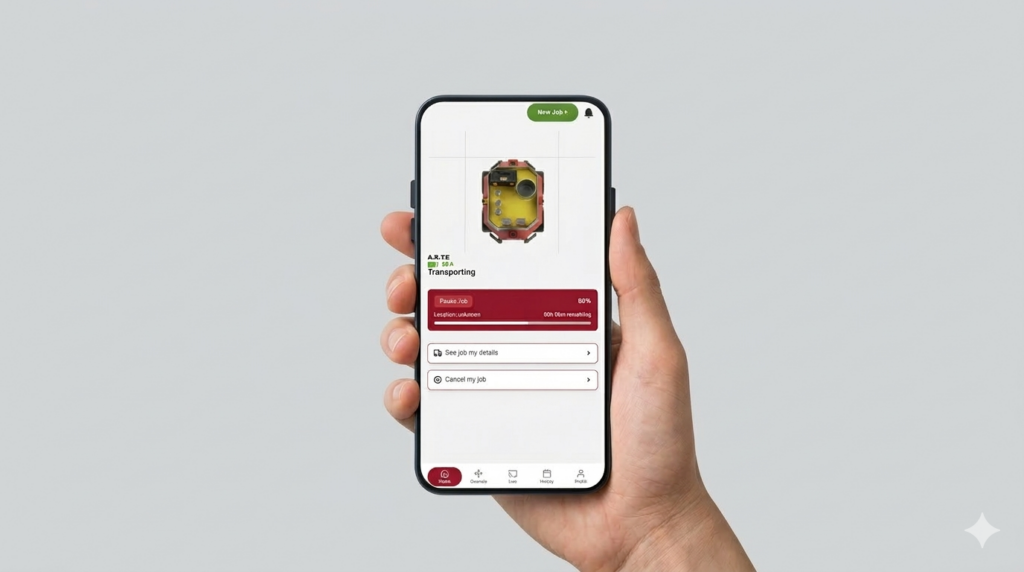
  3. Development of an intuitive mobile application that bridges users to the system through intuitive controls, real-time status updates, geofencing controls and task assignment.

Explore ARTE

Main Features
Gemini_Generated_Image_55j7iv55j7iv55j7

Autonomous Navigation

Equipped with LiDAR sensors for mapping and obstacle avoidance to move safely between destinations.

ChatGPT Image Apr 1, 2026, 03_41_15 PM

Secure Transport

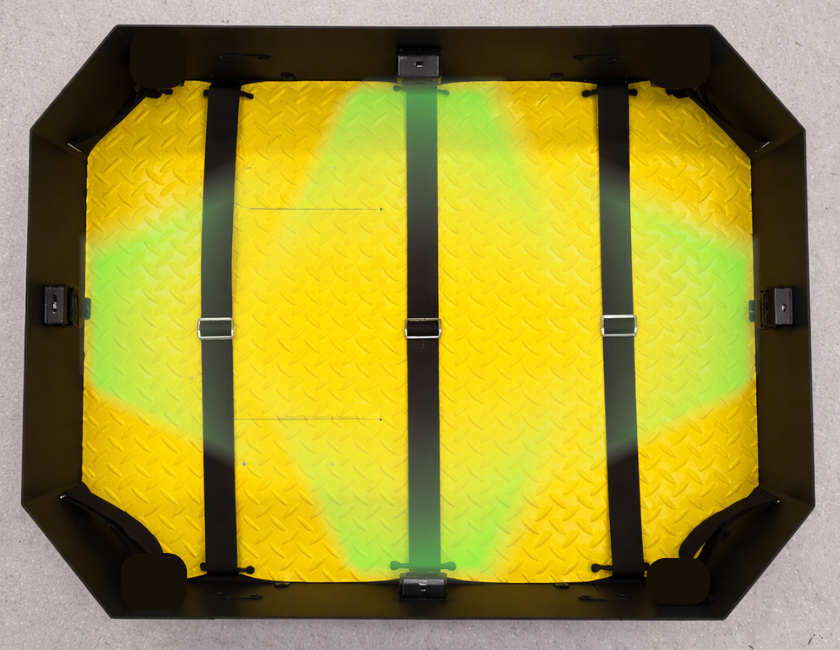
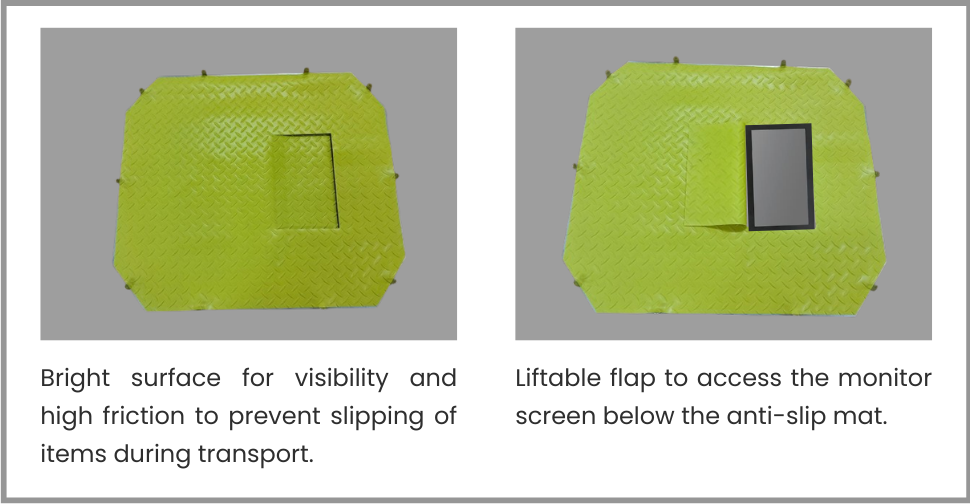
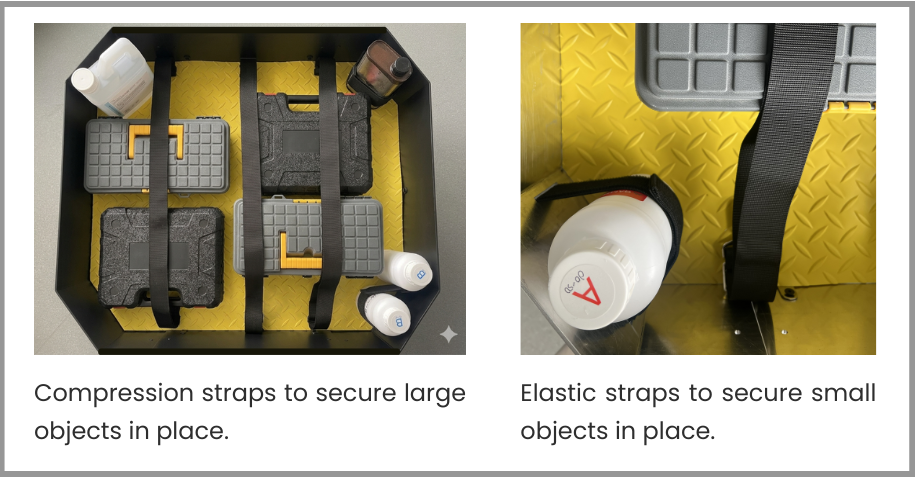
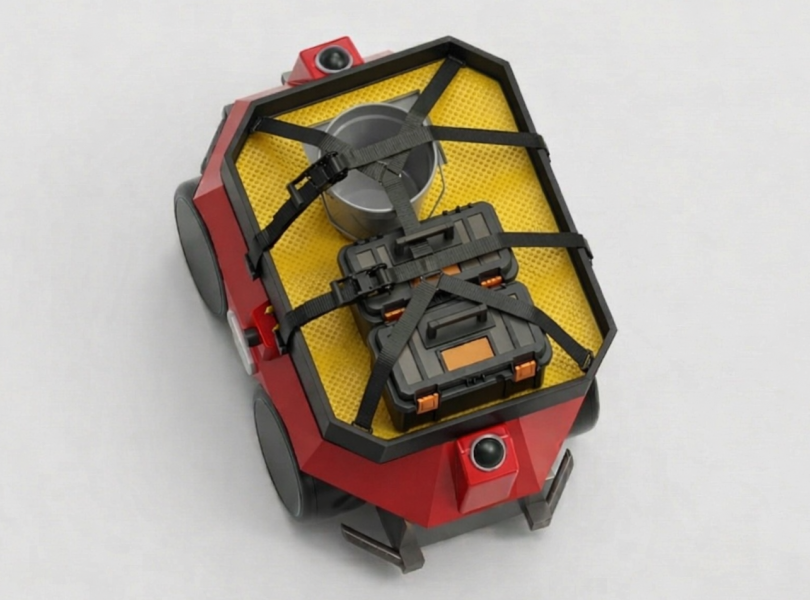
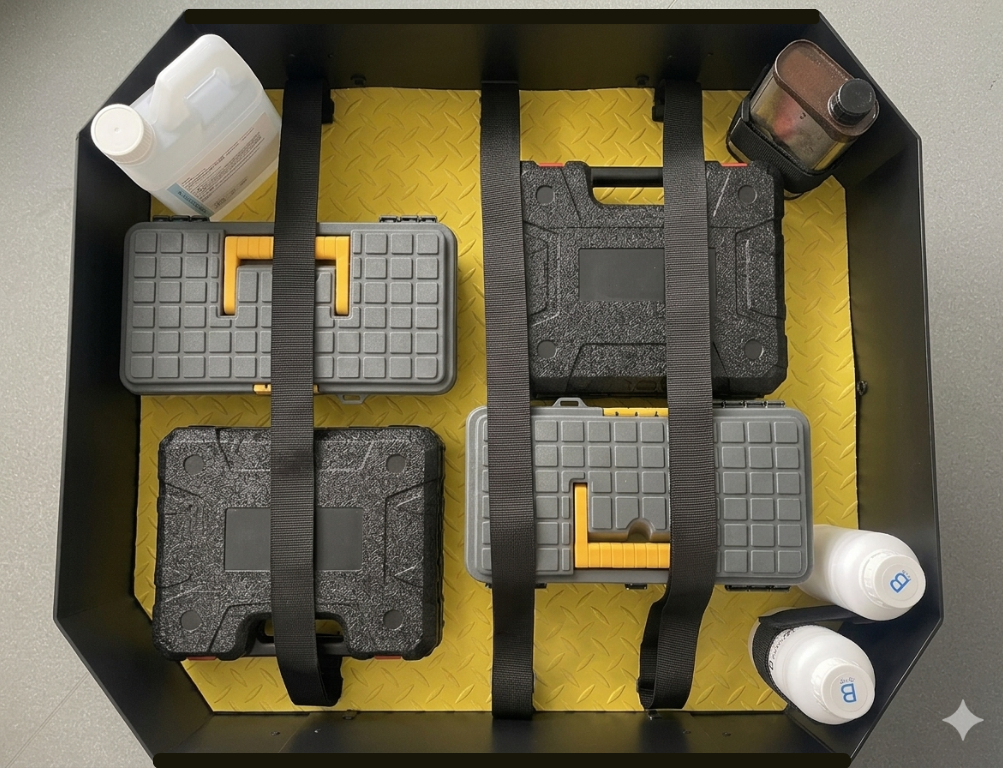
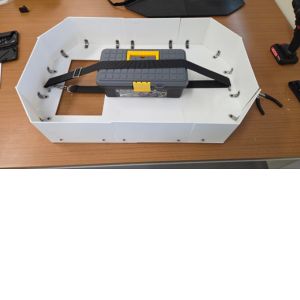
Fits 90% of use-case scenarios with an anti-slip mat and strapping mechanism for added security during transportation.

User-friendly Interface

Enables users to choose between manual mode or automatic mode for route planning and delivery through a user-friendly interface.

ChatGPT Image Apr 1, 2026, 03_47_08 PM

Multi-trip Function

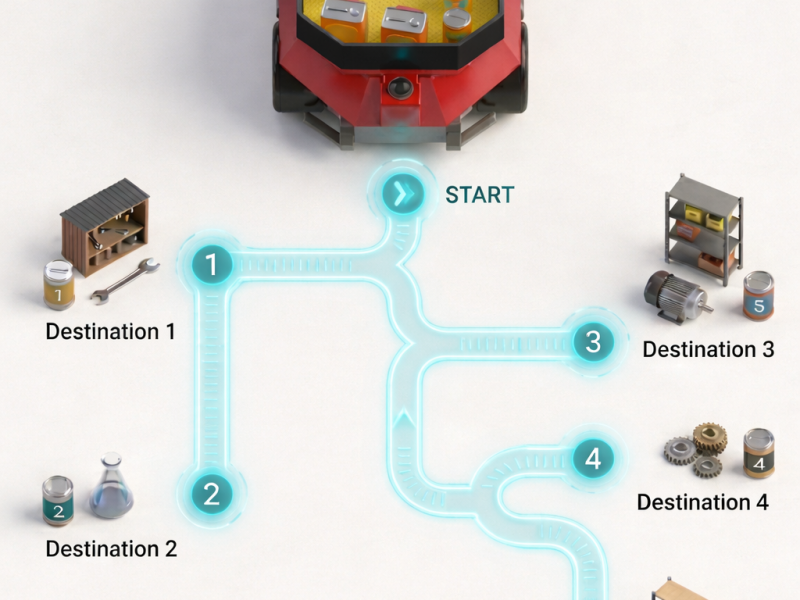
Allows users to book multiple destinations (up to 5) as a single job, providing them convenience and improving their workflow.

ChatGPT Image Apr 1, 2026, 04_01_57 PM

Payload Loss Detection

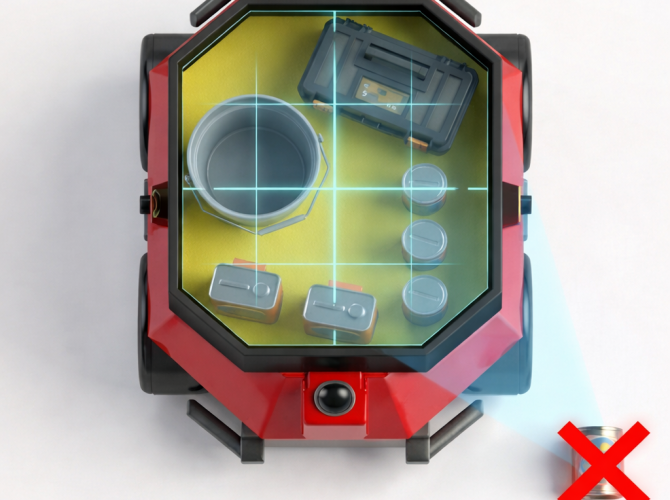
Employs computer vision to detect items that are displaced from the rack during navigation and alerts the user via notification.

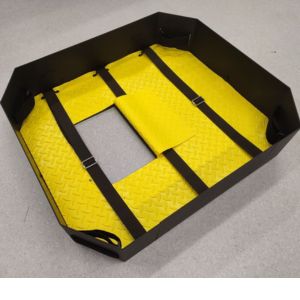
Large Capacity Payload Rack

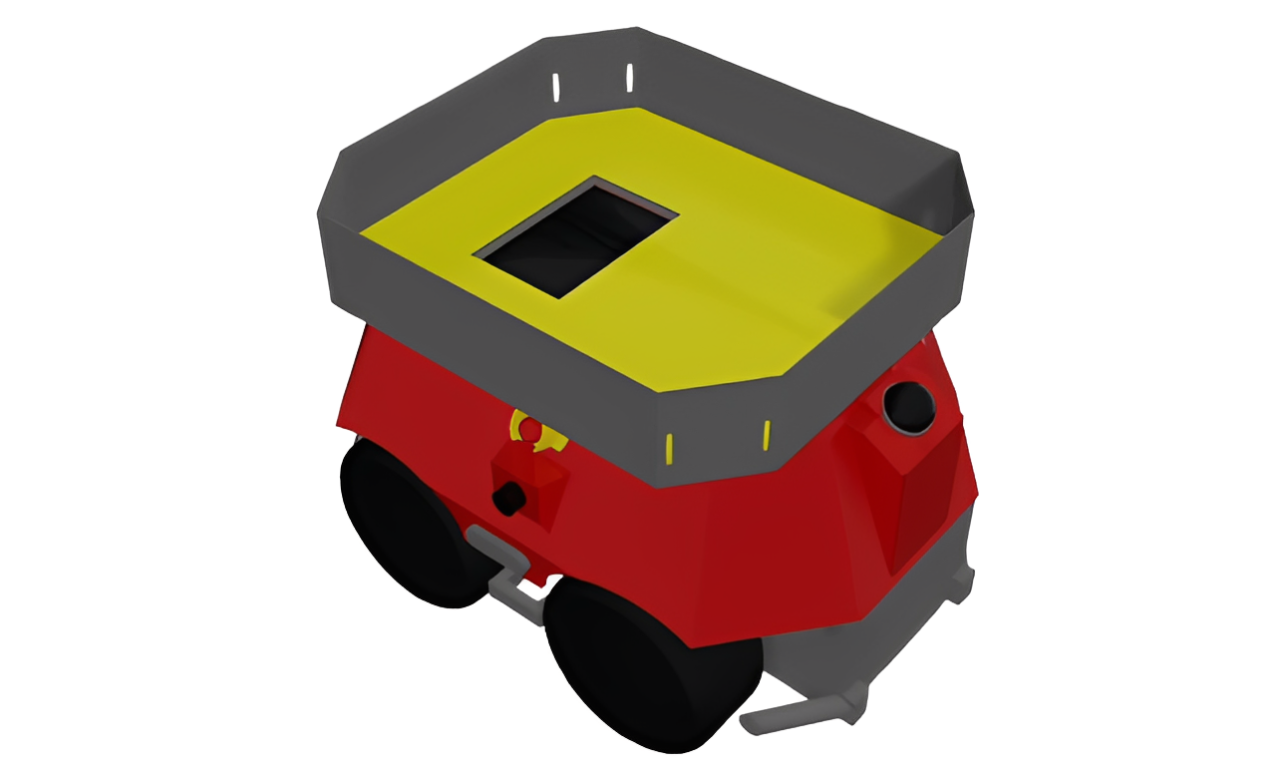
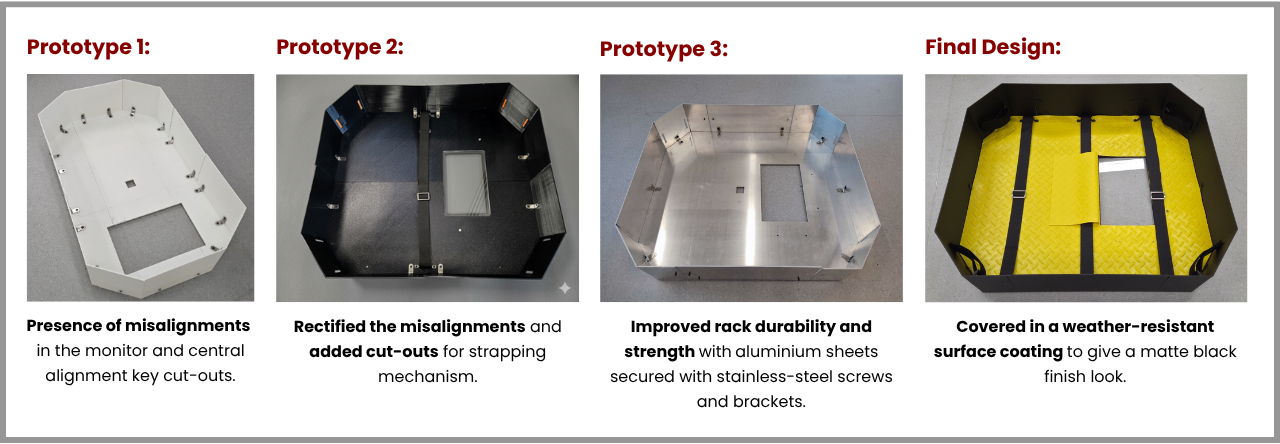
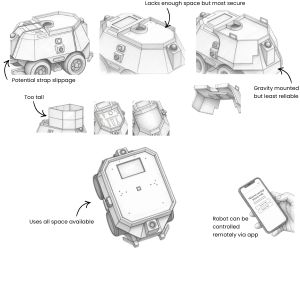
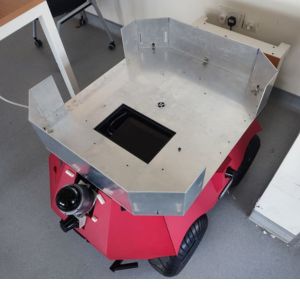
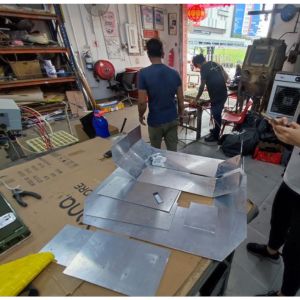
Inspired by our market research, we explored potential designs for transporting equipment via an overhead rack that accounted for payload security, user ergonomics and sensor placement.

The overhead placement was intentionally selected to maintain a compact footprint and allow ARTE to operate within narrow pathways without interfering with ground-level workflows.

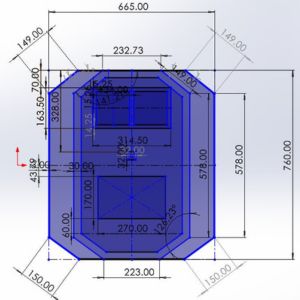
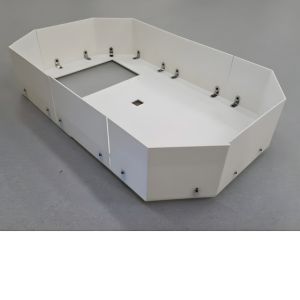
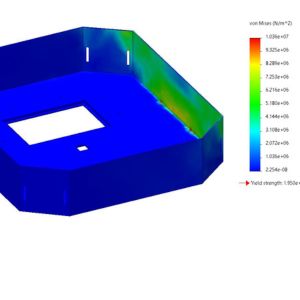
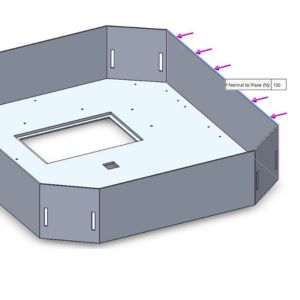
The rack is a full-length, single-layer tray with raised edges, maximising usable surface area. To further enhance payload security and usability, the final design also incorporates an anti-slip base mat and adjustable straps, addressing minor payload shifting during prototype testing.

Our work behind the scenes:

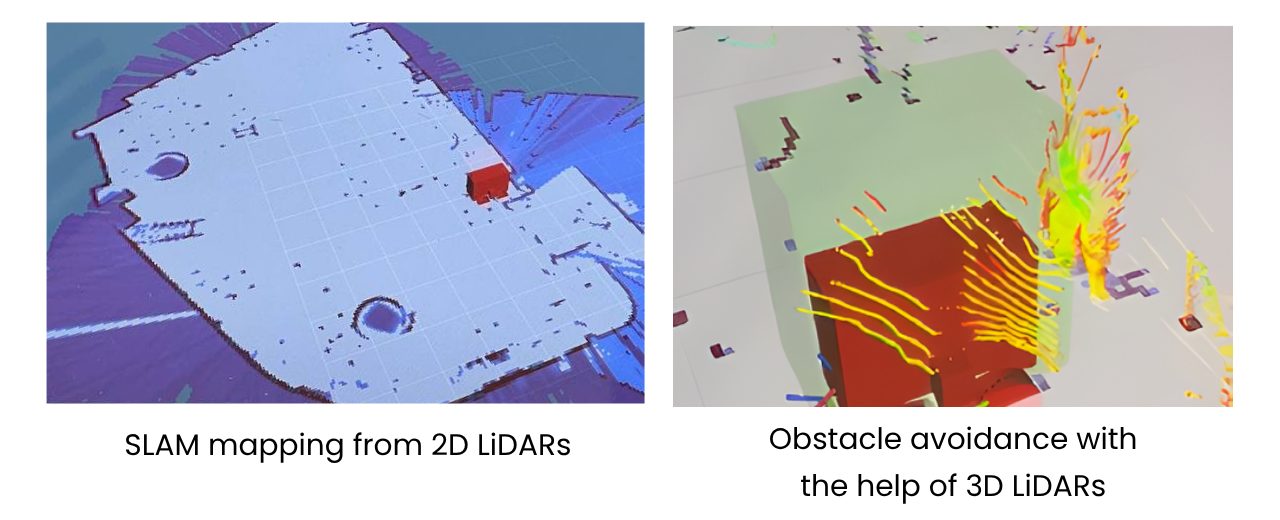
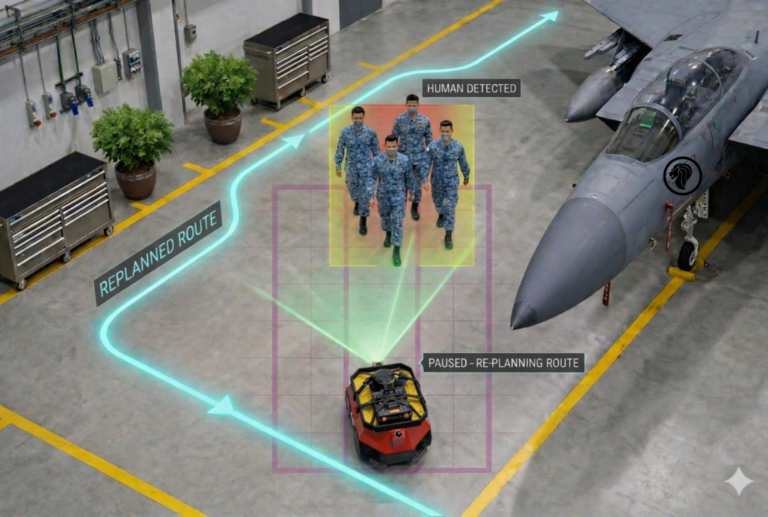
Obstacle Avoidance, Safe Navigation

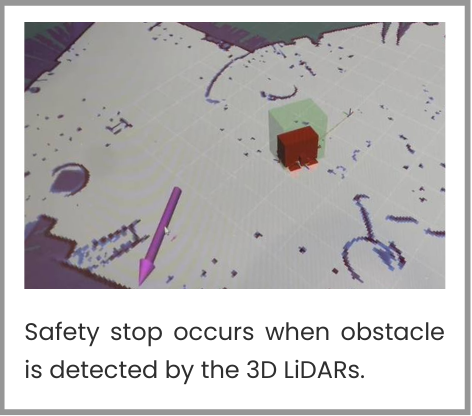
ARTE uses a combination of SLAM and LiDARs to continuously scan its surroundings, detecting humans and obstacles in real time.

When an object is identified within its path, the system immediately halts movement to prevent collisions. It then leverages onboard pathfinding algorithm (TEB) to compute an alternative route, ensuring safe, efficient, and uninterrupted navigation through dynamic environments.
Our work behind the scenes:

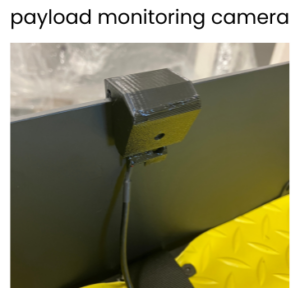
Computer Vision So Smart

A payload monitoring system was developed to complement ARTE’s navigation system by checking that payload items remain present and in their expected positions during transport. This is important because lost items may become foreign object debris (FOD), creating safety risks in aviation environments.

By enabling the robot to detect and alert users to such anomalies, it enhances ARTE beyond a conventional logistics platform, improving safety, accountability, and operational reliability.
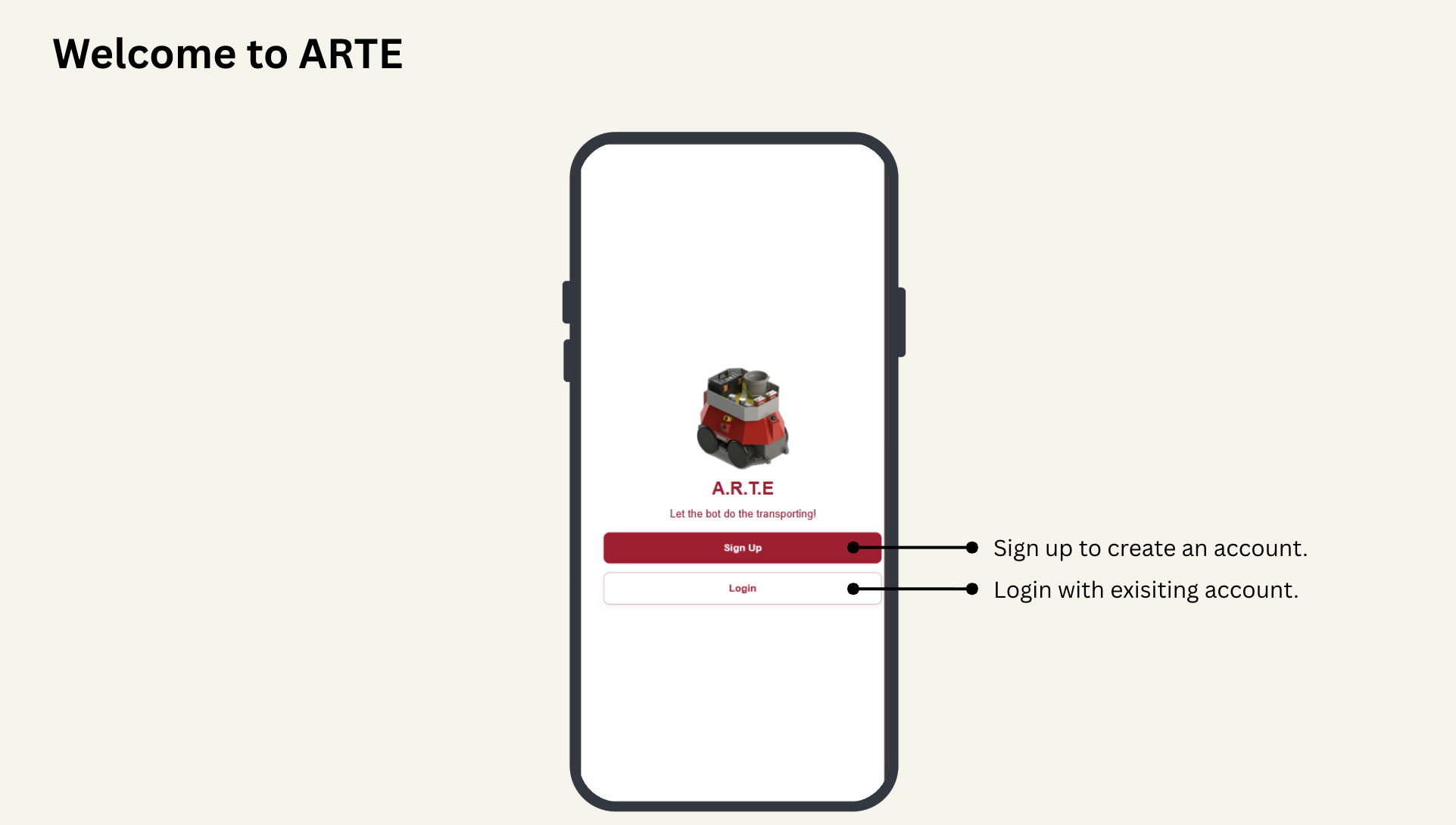
 

User-Friendly Interface

System Architecture
Core Components
Payload Rack

Anti-slip Mat

Monitor Screen
3D LiDAR

2D LiDAR

E-stop Button
Strapping Mechanism

Future Features

In partnership with :

Acknowledgements

Team ARTE would like to express our sincere gratitude to Professor Thomas Schroepfer, Dr Susan Wong and Mr Dominic E. Quah for their invaluable guidance, which was instrumental to ARTE’s success. 

A special note of thanks goes to AELD and AFTC, and particularly to ME6 Edward Kang, ME4 Desmond Tan and ME3 Benson Ong, for their dedicated mentorship and unwavering support throughout the development of ARTE. 

Last but not least, special thanks to the team for pushing through despite busy schedules and individual responsibilities outside of Capstone.

Menu

ornament-menu