
Proj 09 – IFX – GenAI Powered Infineon Technical Assistant

AI-Powered Technical Assistant for Infineon Developers

Infibot is a generative AI‑powered technical chatbot designed to support developers working with Infineon products.

It consolidates community forums and code libraries into a unified retrieval system and delivers code and context‑aware assistance, reducing troubleshooting time, while ensuring responses remain accurate and grounded in verified Infineon sources.

Introducing Proj 09 – IFX – GenAI Powered Infineon Technical Assistant

Developers working with Infineon products often waste valuable time hunting through scattered forums and documentation just to solve a single technical issue. Infibot changes that. By consolidating community knowledge and code libraries into a unified AI-powered assistant, Infibot delivers fast, accurate, context-aware answers, grounded in verified Infineon sources.

Team members

Chang Wei Zher, Nicklas (ESD), Muhammad Irfan Bin Djuanda (ESD), Ang Li En Eldrick (ISTD), Mohamed Ammar Bin Mohamed Yusri (DAI), Shah Hetavi Hardik (ISTD), Pham Hong Quan (ISTD), Ng Junhao Marcus (ISTD)

Instructors:

  • Mahamarakkalage Dileepa Yasas Fernando

Writing Instructors:

  • Belinda Seet

Project Roadmap

Empathize

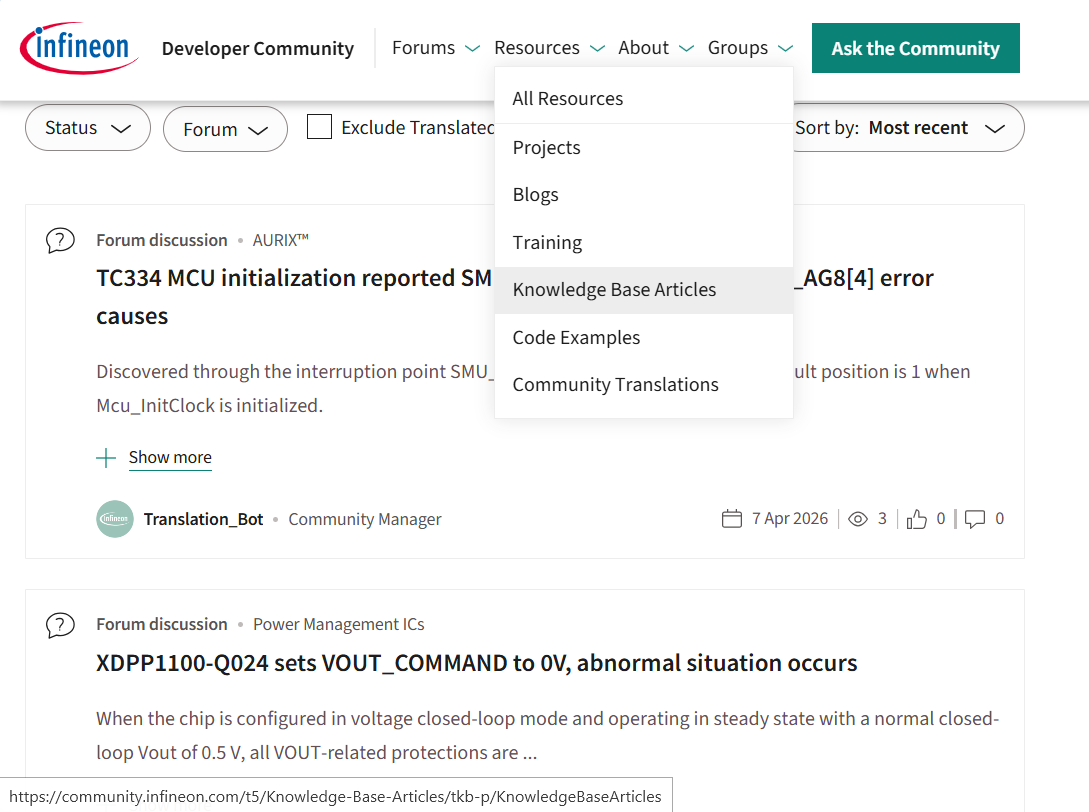
Researched the challenges Infineon developers face when seeking technical support the answers and solutions were scattered across documentation pages, community forum threads, and GitHub repositories with no unified way to query them.

Conducted analysis of common query types to understand that users needed different kinds of help: some needed product hardware guidance, others needed software/tool support, and many needed working code examples.
Define

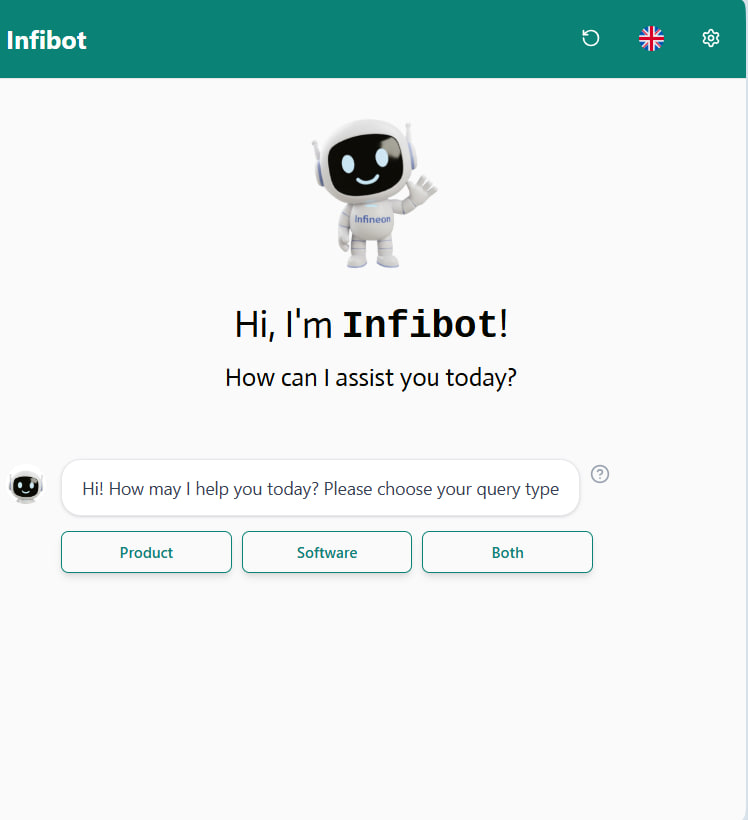
Defined the scope of the chatbot by establishing three intent categories; product, software, and both.  This help to structure how queries are handled and what sources are searched.

We also identified key success criteria: responses must be grounded in retrieved sources (no hallucination), confidence must be measurable, generated code must be syntactically valid, and out-of-domain queries must be rejected cleanly.
Solution

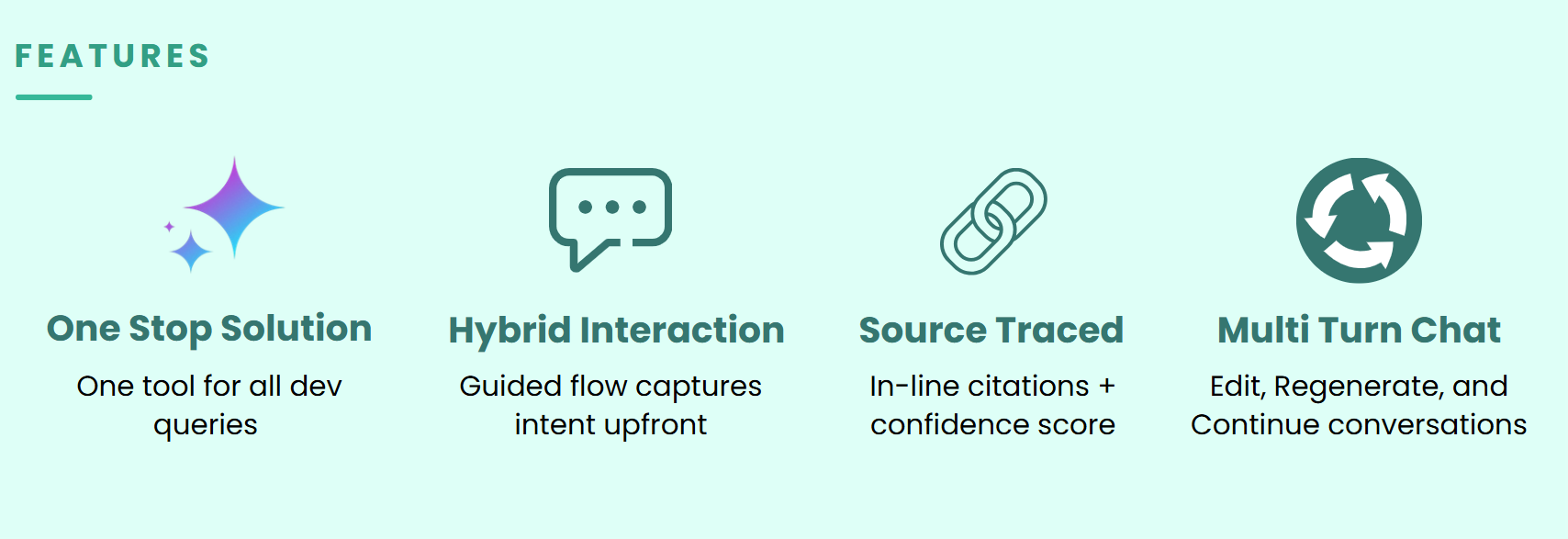
Built a RAG (Retrieval-Augmented Generation) pipeline that converts user queries into vector embeddings, compares them against a database of pre-indexed documents, forum posts, and GitHub code, and blends semantic and keyword search results to surface the most relevant content.

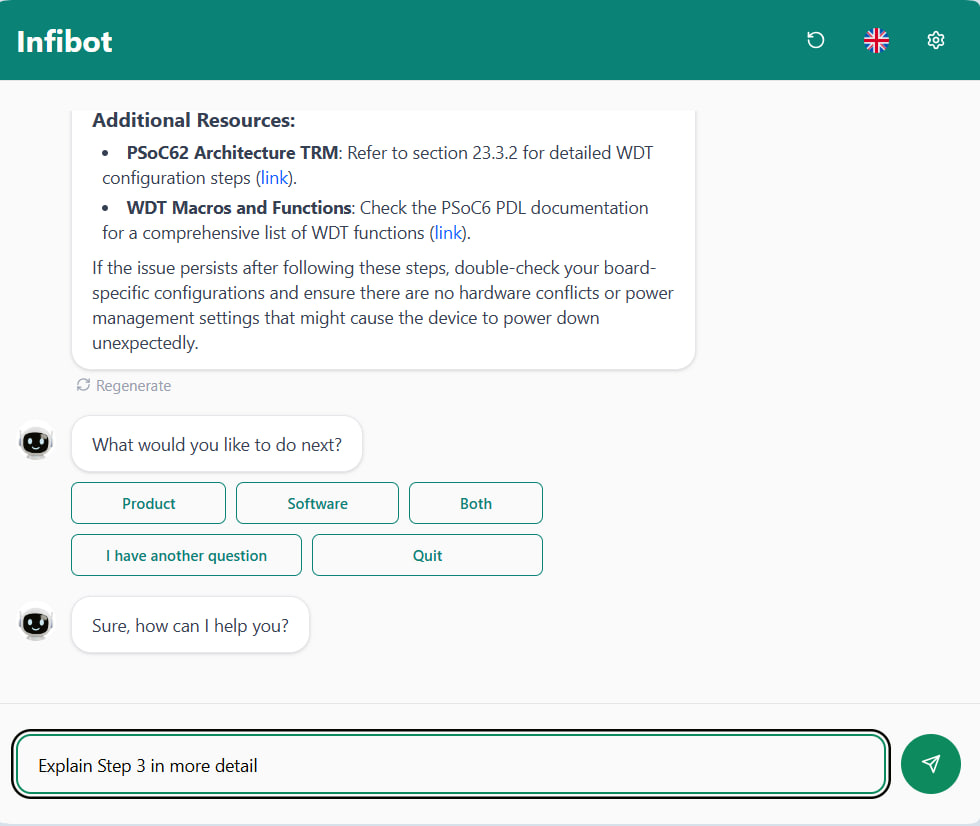
Layered on top of retrieval are NER-based query enrichment, code intent detection, confidence scoring, syntax validation with self-healing retries, and a streaming response interface with clickable source citations, delivering accurate, traceable, and real-time answers to technical queries.
Problem Statement

How might we integrate an AI-powered chatbot into the Infineon website to provide efficient and context-aware technical support for developers, reducing knowledge fragmentation searches and boosting productivity?

How It Works?

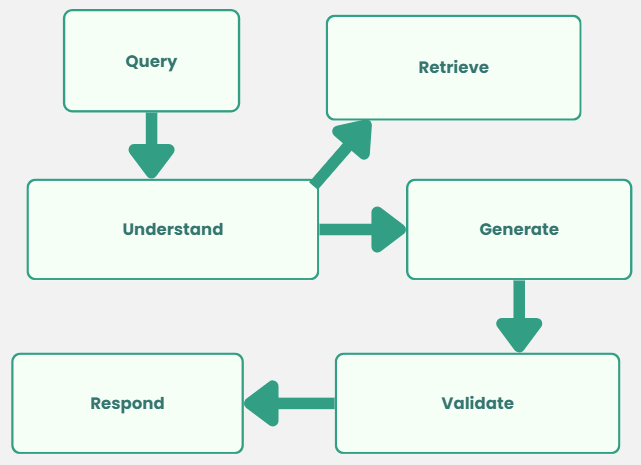
  1. The chatbot first receives your question along with your selected intent (product, software, or both), then checks if it’s relevant to Infineon, and extracts key technical terms like product codes and tool names to sharpen its search.
  2. It then runs a dual search one based on meaning, one based on keywords across documentation, community forums, and GitHub code repositories, blending the results to find the most relevant content.
  3. That content is handed to an AI language model (Claude or GPT-4) which composes a grounded answer using only what was retrieved, while simultaneously checking any generated code for syntax errors and retrying if needed.
  4. Finally, the response is streamed back to you in real time, complete with syntax-highlighted code, confidence indicators, and clickable citations linking back to the exact sources used.

UI Flow Diagram

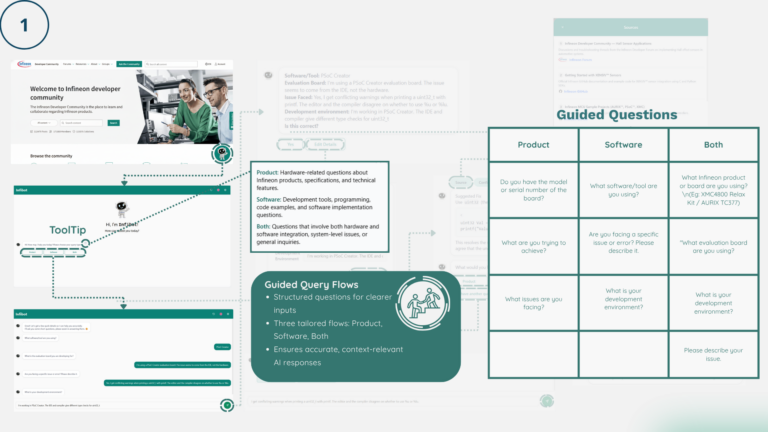
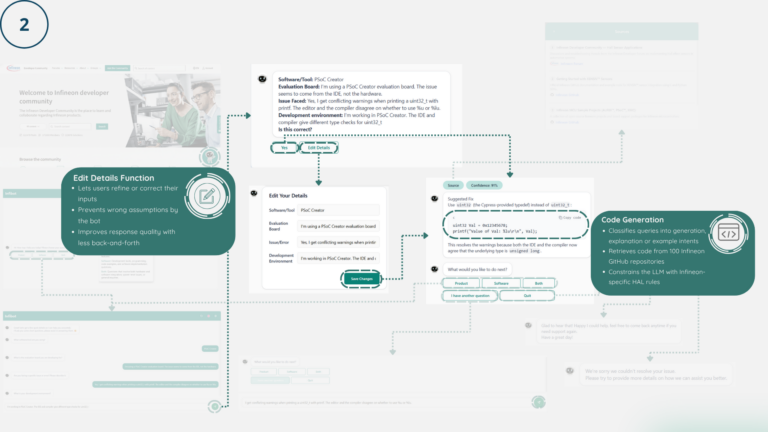
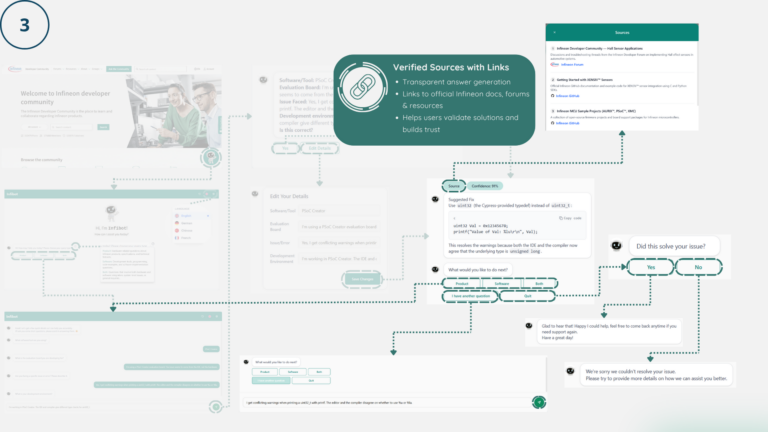
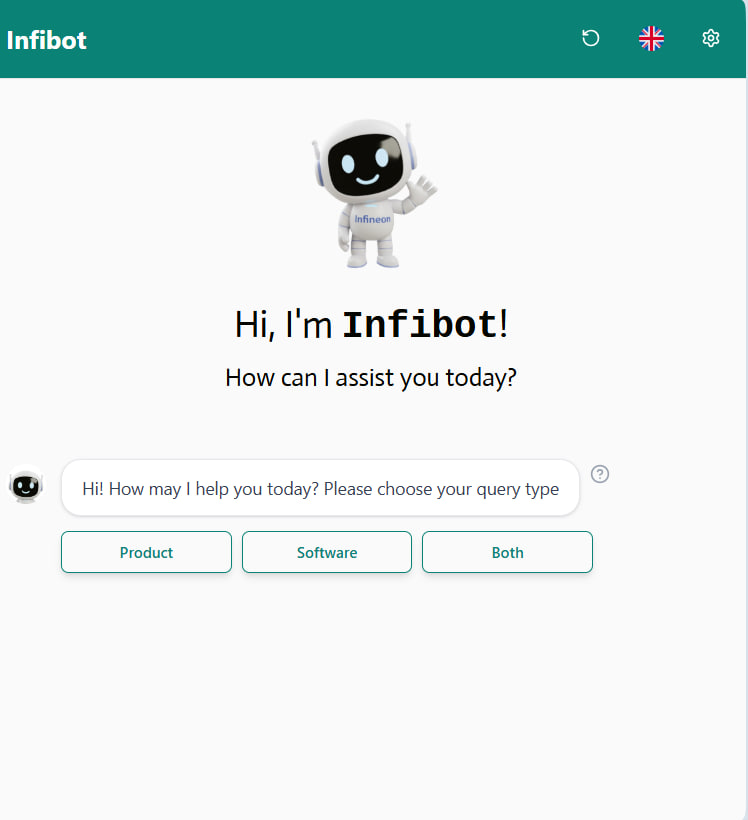
1. Clicking the Infibot icon opens the chatbot, presenting Product, Software, and Both options. 2. Hover the tooltip for details. Each selection triggers tailored guided questions. 3. A summary is then generated, with options to edit inputs, view cited sources, ask follow-up questions, or return to the homepage.
/

Architecture and Key Technical Highlights

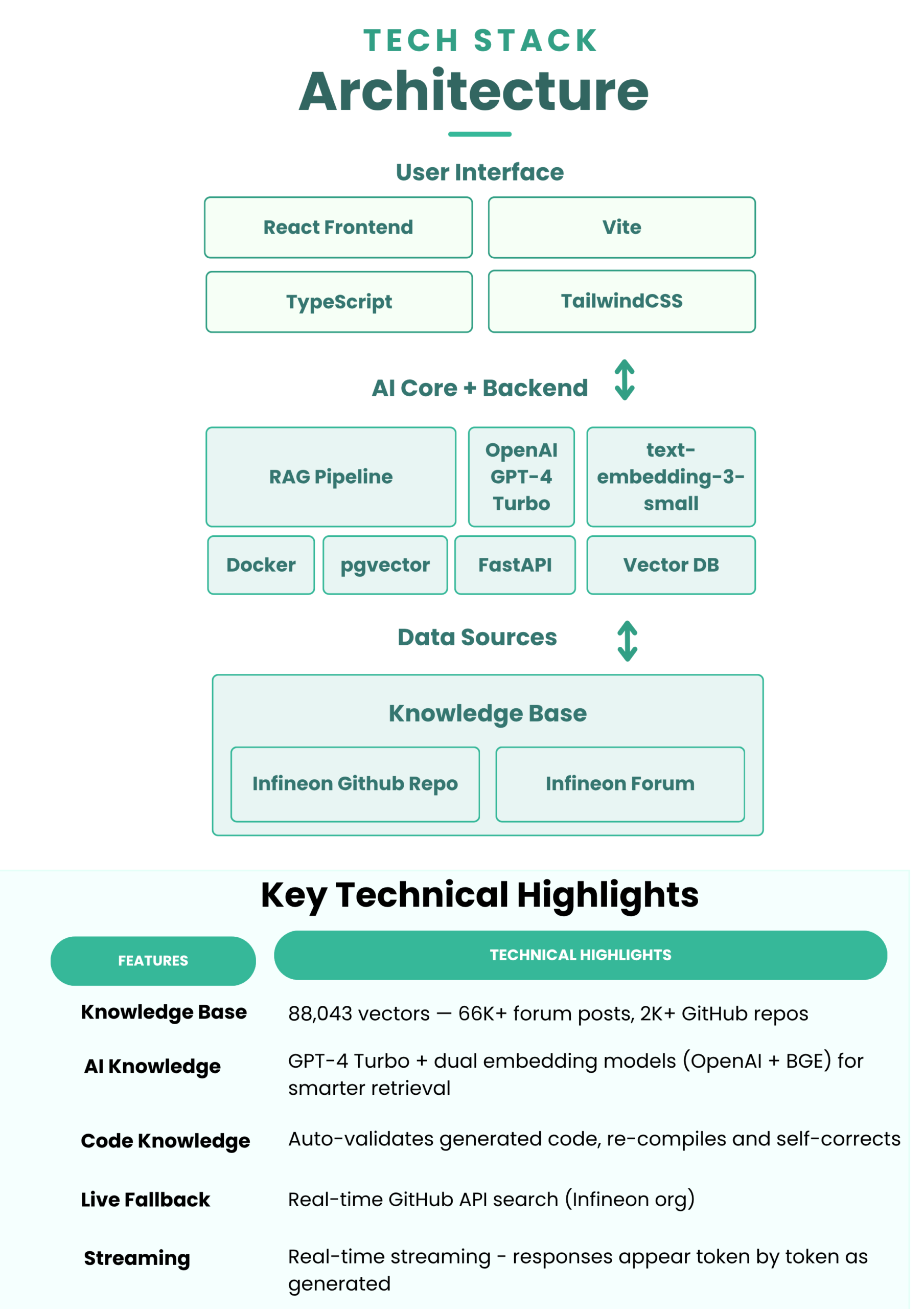
This project is built on a modern full-stack architecture designed to deliver accurate, grounded, and real-time responses to technical queries.

RAG Pipeline & Intelligent Retrieval
AI Models & Response Generation
Frontend & User Experience

At the core of the system is a two-stage fusion retrieval pipeline that converts user queries into vector embeddings using OpenAI’s embedding model, then compares them against thousands of pre-indexed documents, forum posts, and GitHub code snippets stored in a PostgreSQL vector database (pgvector).

A parallel keyword search runs simultaneously, targeting exact technical terms extracted via Named Entity Recognition (NER), and both result sets are blended using Reciprocal Rank Fusion (RRF) to surface the most relevant content. This approach ensures results are found by meaning, not just by exact word match.

Retrieved content is passed to a large language model either Claude 3.5 Sonnet via AWS Bedrock or GPT-4 which generates a grounded response using only what was retrieved, preventing hallucination.

For code-related queries, a specialised BGE code embedding model handles retrieval, and responses go through automatic syntax validation with a self-healing retry mechanism that silently corrects errors before the answer reaches the user.

Confidence scoring is applied throughout, triggering live GitHub fallback fetches and warning injections when retrieval quality is low.

The frontend is built with React and TypeScript, featuring a structured multi-phase conversation flow where users select their intent (product, software, or both) before querying.

Responses are delivered via Server-Sent Events (SSE) for real-time token streaming, rendered with GitHub-flavoured Markdown, syntax-highlighted code blocks via Prism.js, and numbered source citations that link directly to the original forum post or GitHub file.

End-to-end tests are handled with Playwright, and unit tests with Vitest, ensuring reliability across the full user journey.

In partnership with :

Acknowledgements

Our team wishes to express our sincere gratitude to Professor Dileepa for his guidance, encouragement, and constructive feedback throughout the duration of this project. His insights were instrumental in shaping our direction and helping us strengthen our understanding of the subject matter.

We wish to another thank our industry partner, Kivi, for her support, expertise, and collaboration. Her practical perspectives provided us with valuable exposure to real-world challenges and greatly enriched our learning experience.

Menu

ornament-menu