
Project 05: HomeTeamNS – Sustainable Clubhouse at Tengah

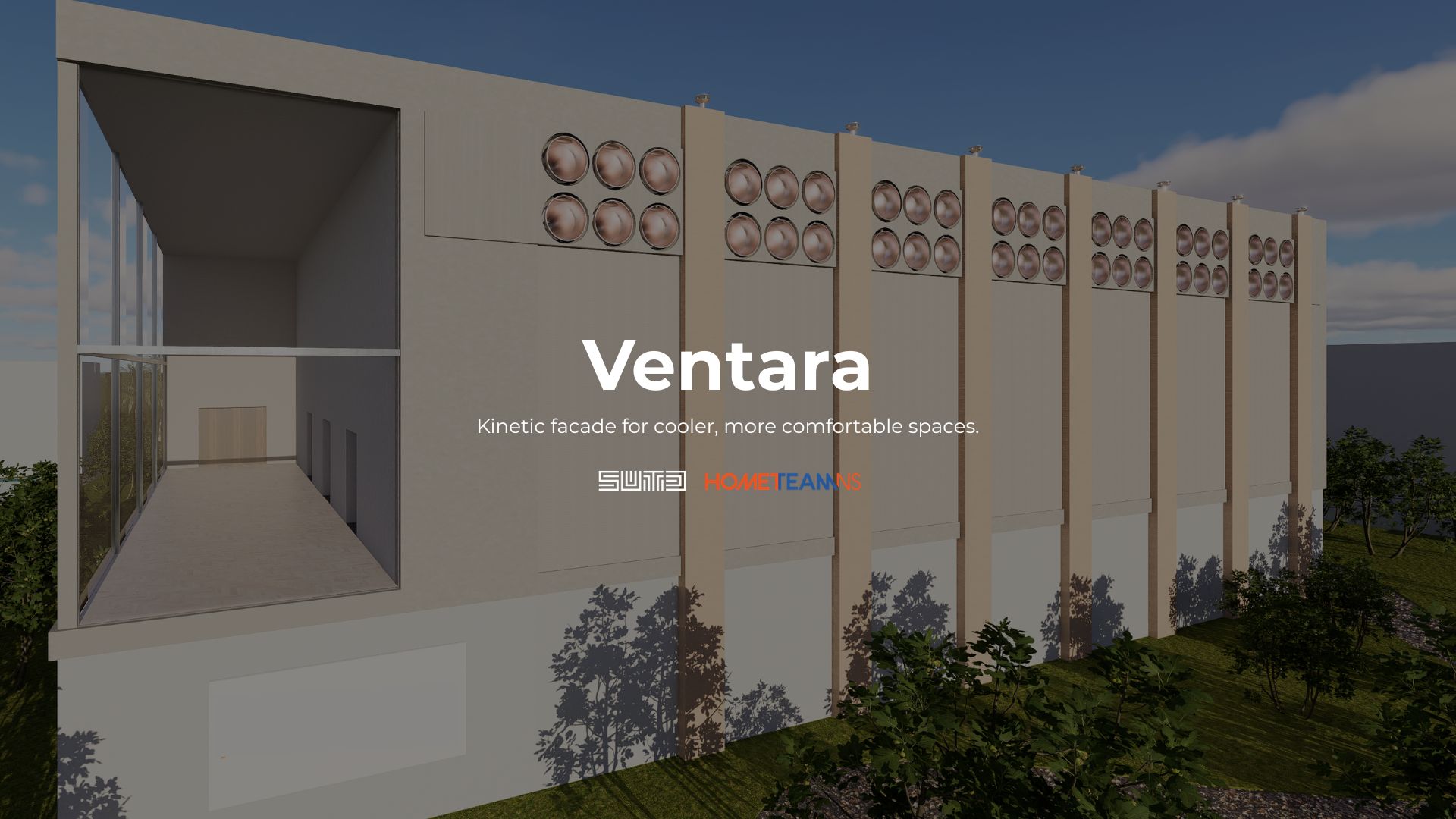
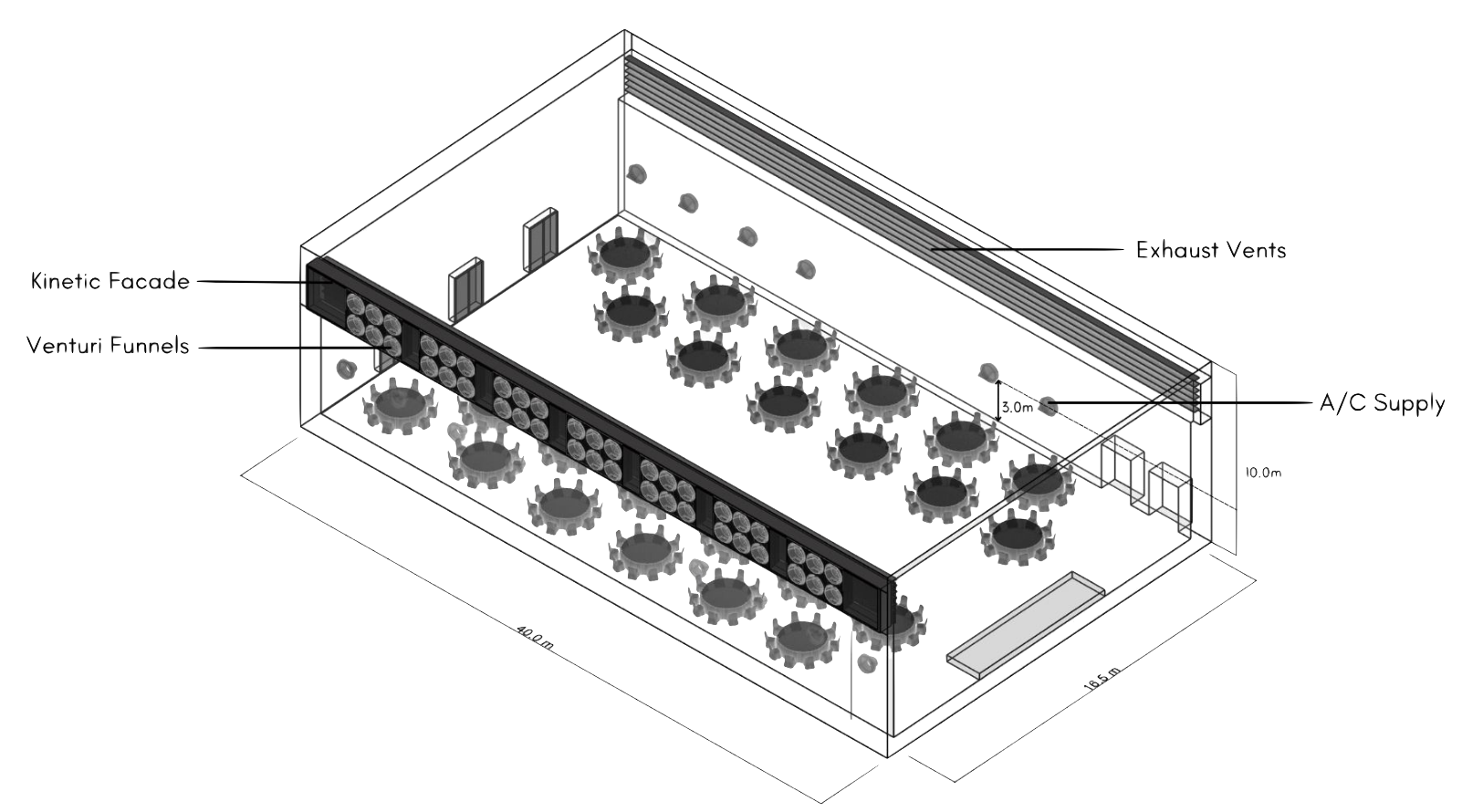
VENTARA is a kinetic façade system designed for the double‑volume space at the new HomeTeamNS Tengah clubhouse. It uses wind‑driven Venturi effect to draw in and distribute fresh outdoor air, enabling an intensive pre‑event flushing mode that removes built‑up heat and CO₂ before guests arrive. During events, the same façade modules facilitates displacement ventilation, entraining warm, stratified air, lowering the cooling load on the air‑conditioning system. By combining flushing with displacement ventilation, the project aims to improve thermal comfort while cutting energy use and supporting a more sustainable operation of large indoor event spaces.

Team members

Chua Zhang You (ASD), Lee Jin Yen Brian (ASD), Aaron Yao Junchi (ESD), Crystal Chee Xin Jie (ASD), Jenna Chan Jing Yi (ESD), Boominathan Harini (EPD)

Instructors:

  • Edwin Koh

Writing Instructors:

  • Bernard Tan

  • Belinda Seet

Ventara's Objectives

Offering consistent comfort regardless of event

From wedding dinners to corporate seminars, the cooling system needs to keep occupants comfortable at throughout the space across all scenarios.
Better cooling without higher energy consumption

By implementing a more targeted cooling system, the load on mechanical cooling and energy consumption is reduced.
Faster pre-cooling before each event

Pre-cooling the ballroom before every event takes time and is energy-intensive. The goal is to shorten that process without compromising comfort.
Problem Statement

How might we design a solution

that prioritises improving thermal comfort for users in double volume spaces

at the upcoming HomeTeamNS Tengah clubhouse?

Ventara: Smart Kinetic Facade

What is Ventara?

Ventara is a smart air distribution system with an automated kinetic facade made of modules that respond to prevailing wind conditions to actively shape and direct airflow into the room.

The kinetic facade modules are each shaped like a funnel to utilise the venturi effect, directing wind into the room with an accelerated speed. The facades rotate, powered by linkages and linear actuators, in response to the wind direction sensors mounted on the skin of the building. Ventara is complete with a complementing displacement ventilation air conditioning system that is more energy efficient than other air mixing methods.

Funnel-shaped
Modules

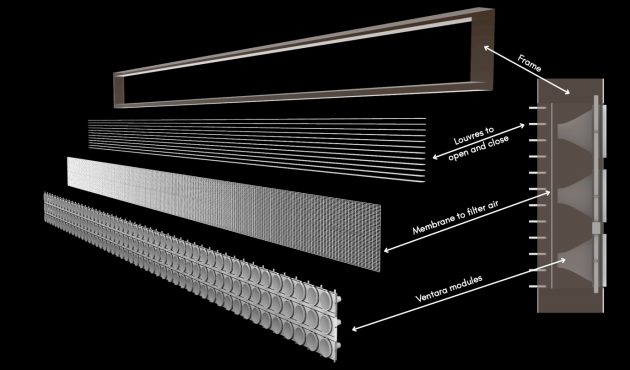
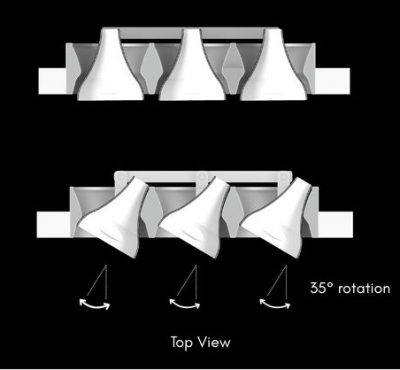
Ventara’s kinetic facade is made of modules, each shaped like a funnel to facilitate the Venturi effect, directing prevailing wind into the room with an accelerated speed. The facades react to the direction of the wind, as they rotate in sections, powered by linear actuators, in response to the wind direction sensors mounted on the skin of the building.

Hotels Business Website (1)
FINAL PRESENTATION

Top view of Ventara modules

Exploded diagram of the Smart Kinetic Facade Structure

3D Model of One Kinetic Facade Section

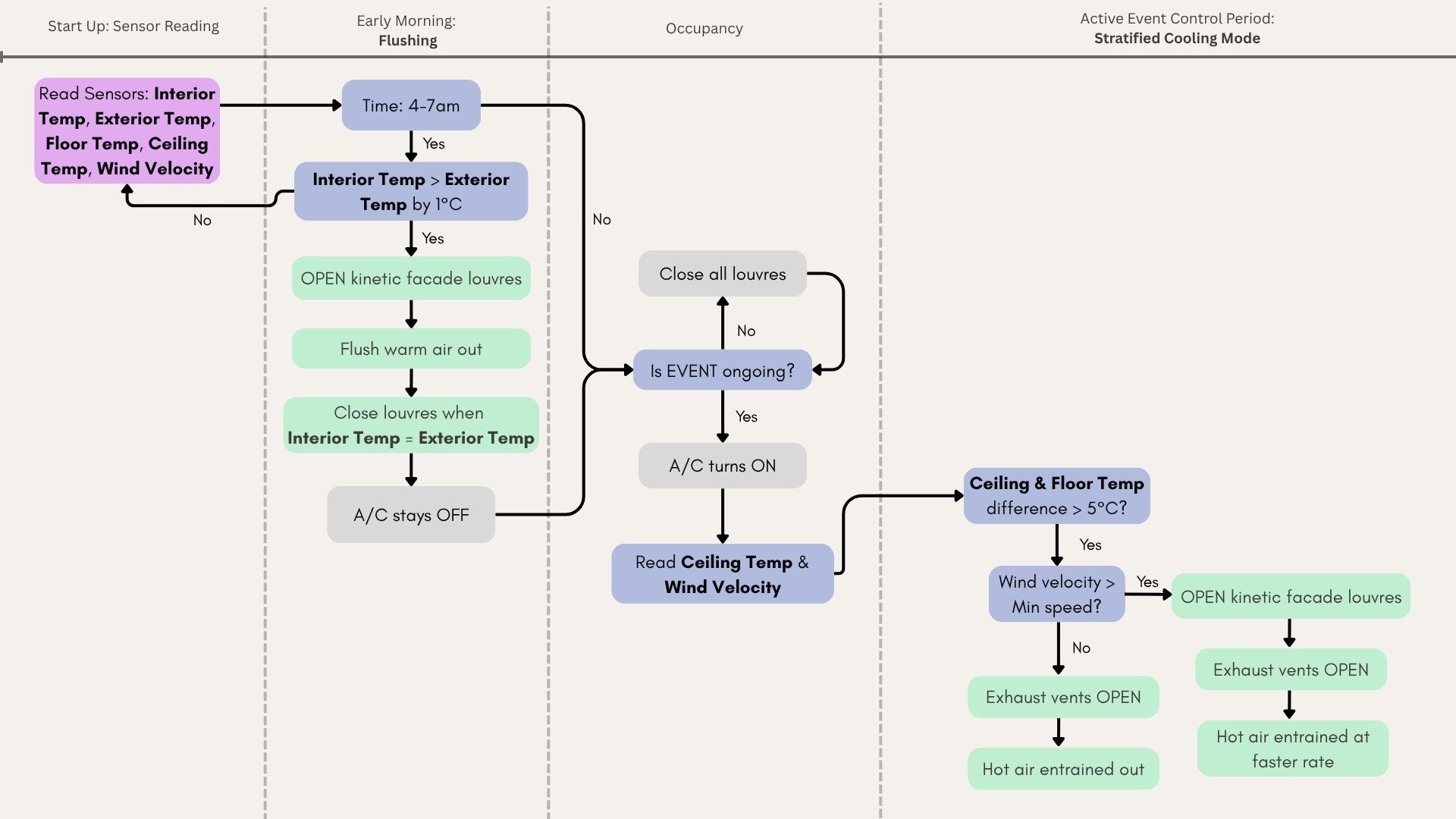
Ventara works in 2 modes:

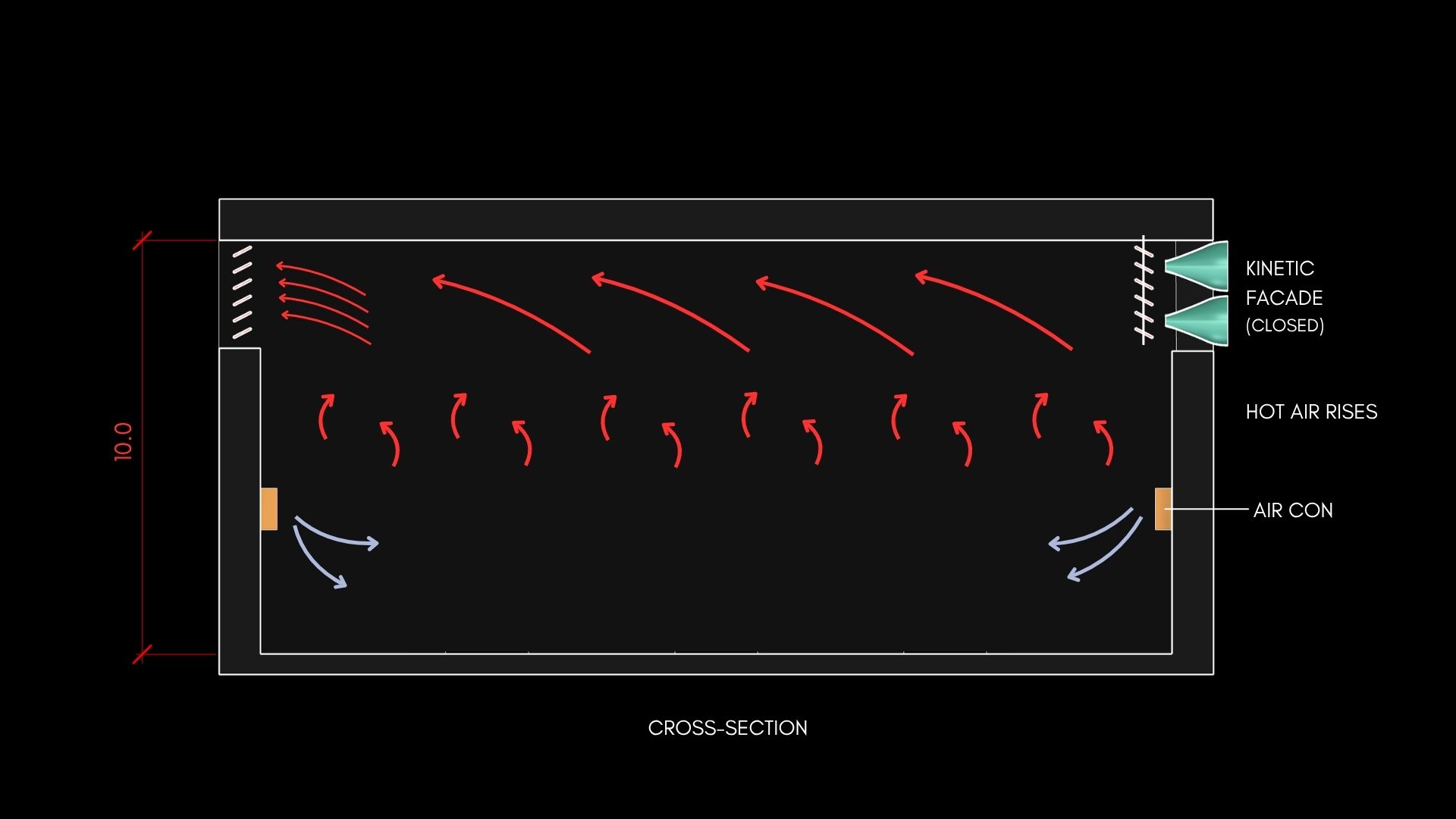
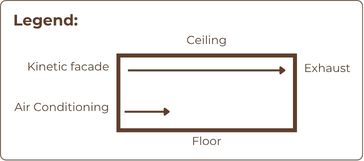
Every morning, the facades are opened to remove overnight heat buildup and stale air from the room. This process reduces the indoor temperature, reducing the cooling load for the air conditioning system, which is turned on before the event starts.

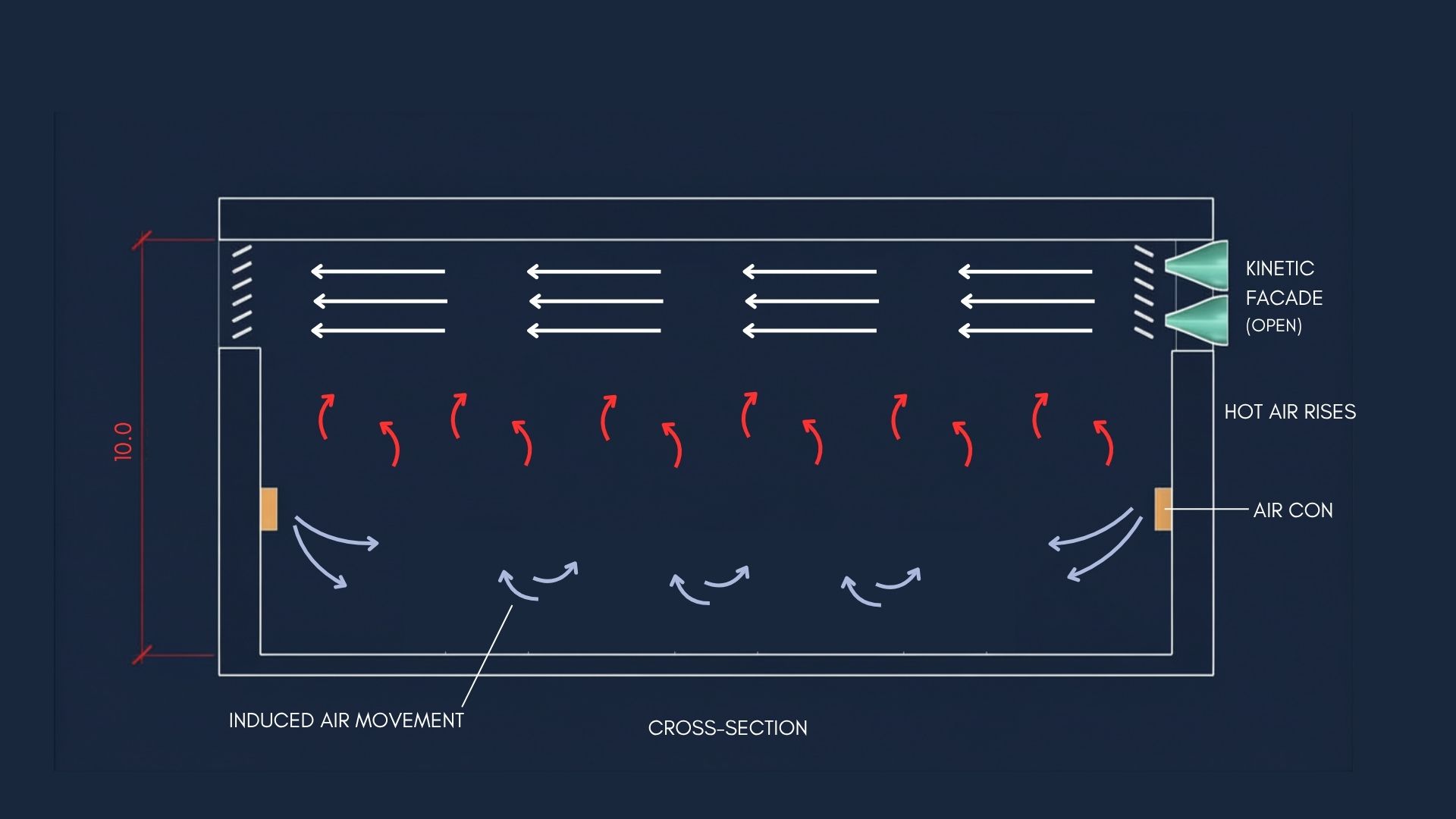
The air conditioning vents are mounted along the walls, closer to the occupied region. During the event, the hot air from all the indoor heat gains rises to the ceiling due to convection. The facades are opened periodically, through the event, to remove the hot air from the room through entrainment.

FINAL PRESENTATION (1) FINAL PRESENTATION (4)

Ventara's System Flow

Simulating Ventara

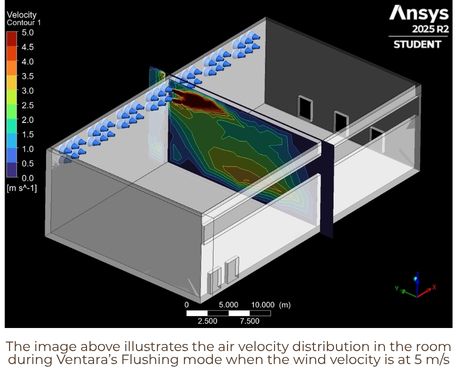
Computational Fluid Dynamics (CFD) simulations were a major part of this project, utilised to iterate on the design parameters, to understand the physics of the indoor air flow, and visualise the effects of how our solution reacts to different conditions.

Flushing Mode

The higher the wind speed, the faster and more effective the flushing.
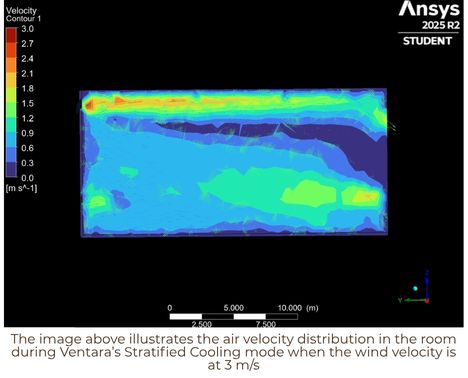
Stratified Cooling Mode

Wind velocity of at least 3 m/s is necessary to induce air movement within the occupancy level and maintain the stratification.
Physical Prototyping

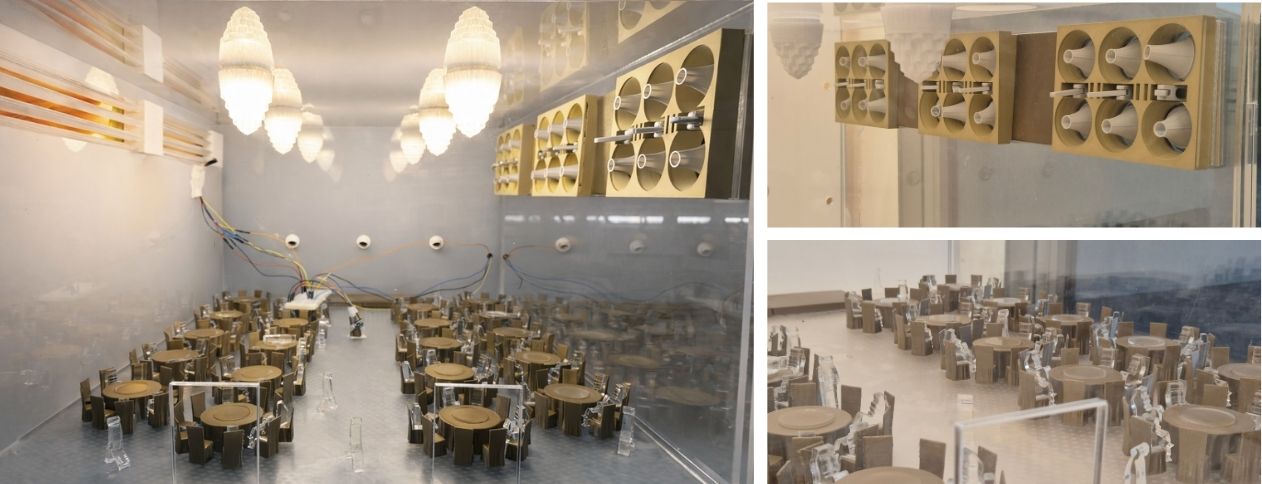
We built a 1:25 scaled model of the ballroom, complete with the kinetic façade modules and linear actuator that drives its motion. Constructing the prototype allows us to validate how the louvres open and close, test the directing of airflow, and work through the structural and material considerations. Fog was also introduced during testing to observe how air moves through the module in practice.

Acknowledgements

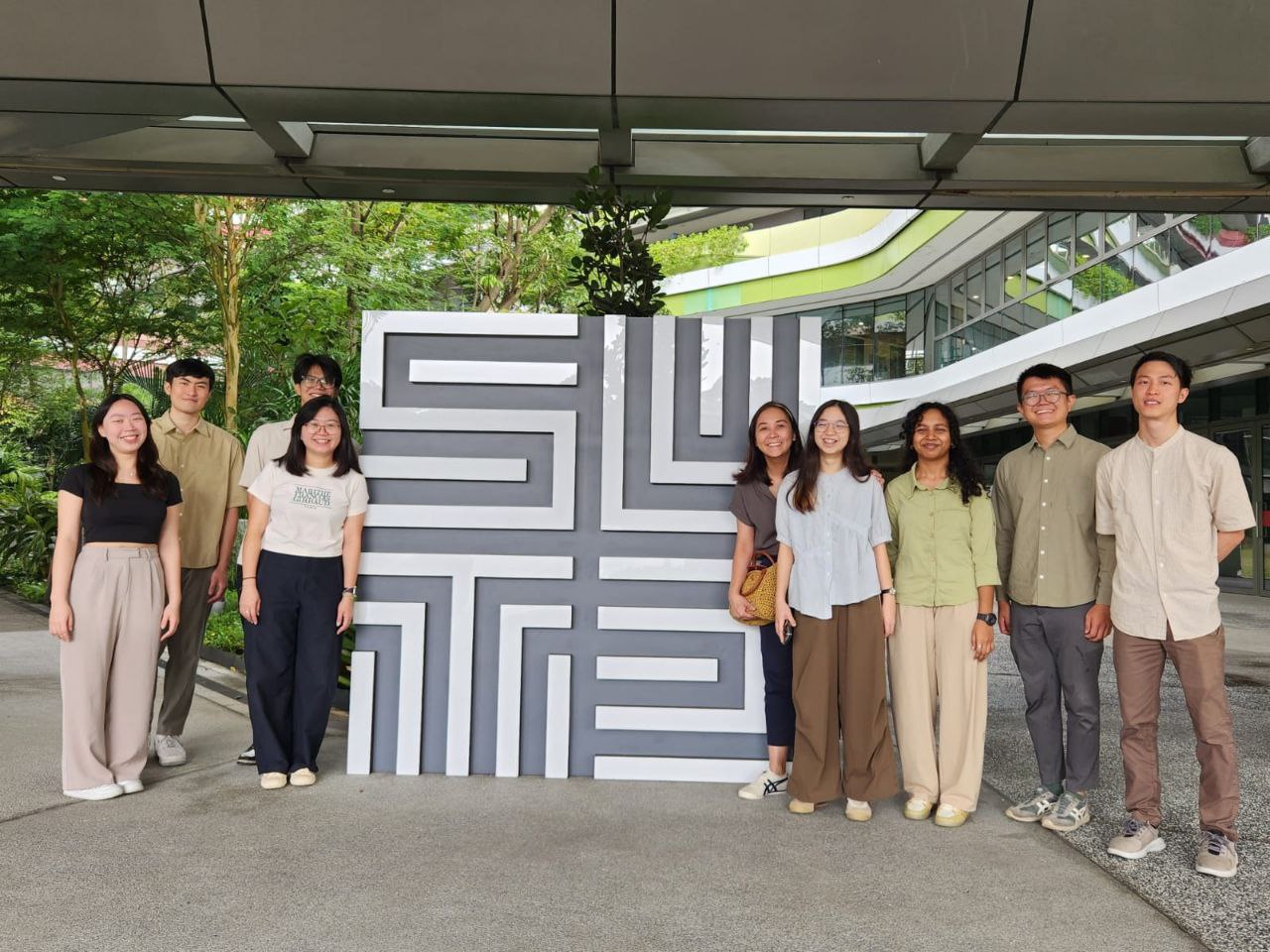
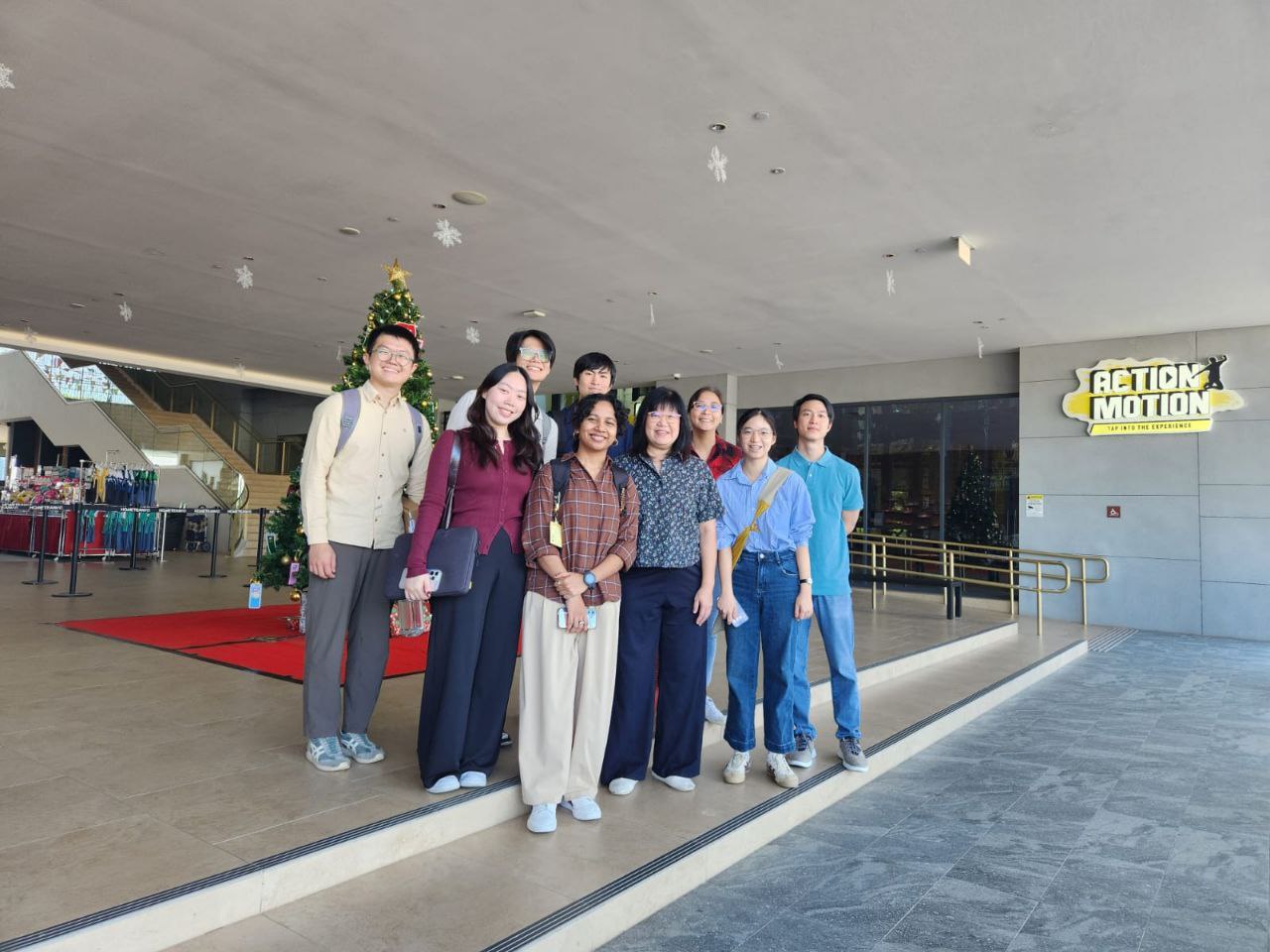
We would like to express our sincere appreciation to our industry partner, HomeTeamNS, and in particular to Ms Agnes Eu, Ms Melissa Lorenzo, Mr Paul Teoh, as well as those who supported this work behind the scenes, for their invaluable support throughout this project. Their guidance, insights, and the opportunity to conduct an on-site visit greatly enriched our understanding of the clubhouse operations and design considerations. 

We also extend our heartfelt thanks to Professor Edwin Koh, Professor Zheng Kai and Professor Bernard Tan for their expert guidance, thoughtful feedback, and continuous encouragement, all of which were essential to the development of this project.

Menu

ornament-menu