EvoFlow

Revolutionizing VAV airflow sensing with AI for Energy Efficient Buildings

Introducing EvoFlow

Variable Air Volume (VAV) systems are essential for building energy management, yet conventional sensors suffer from significant inaccuracies. EvoFlow integrates advanced sensor design, machine learning analytics, and IoT connectivity to deliver precise airflow control and improved energy efficiency across modern buildings.

Team members

Anay Shastri (ESD), Foo Yu Qian, Erika (EPD), Rout Bishmit (ESD), Kunder Shruti Arun (ISTD), Mali Janya (ISTD), Lai Shi Jie, Keith (EPD)

Instructors:

  • Wai Lee

Writing Instructors:

  • Belinda Seet

  • Dominic Edmund Kim San Quah

The Problem

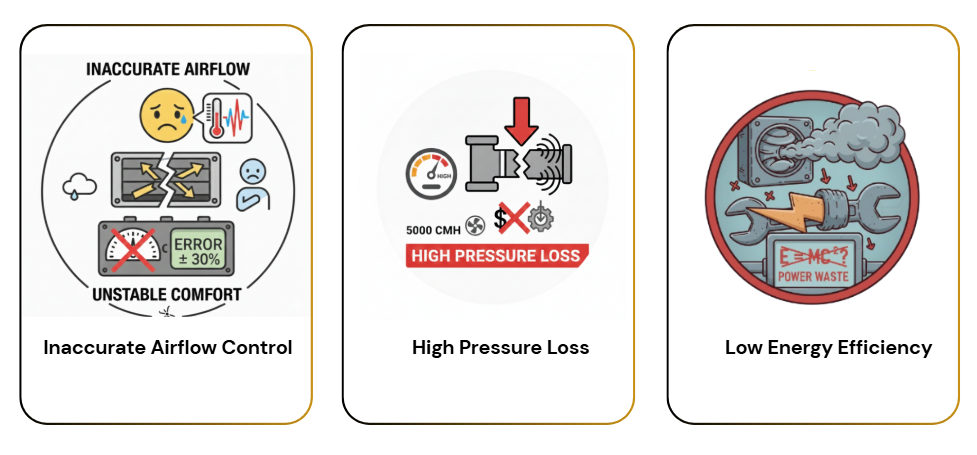
Turbulent airflow over conventional sensors introduces measurement errors of up to 18.84%, leading to inefficient HVAC operation and increased energy consumption. This results in three key challenges:

• Inaccurate Airflow Control
Leads to unstable room comfort and poor regulation

• High Pressure Loss
Increases resistance, requiring more energy

• Low Energy Efficiency
Causes unnecessary power consumption due to incorrect damper operation

Existing solutions lack predictive intelligence, system-wide visibility, and intuitive control, limiting building optimization.

The Evoflow Solution

EvoFlow delivers a comprehensive solution through three integrated innovations that address airflow inaccuracies, enable predictive optimization, and provide scalable building control. 

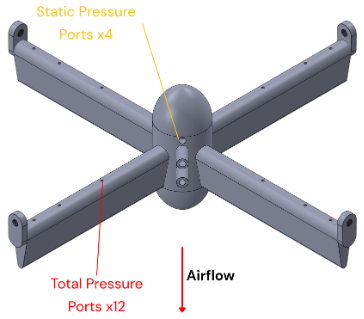
Designed with Computational Fluid Dynamics (CFD) and validated by wind tunnel testing, the prototype has three key features: 

  • Streamlined hub and spar geometry for reduced turbulence and pressure loss 
  • Repositioned and enlarged Static Pressure Ports 
  • Retention of ASHRAE-111 standard Total Pressure Port configuration 


More Accurate , More Precise , Low Energy Consumption

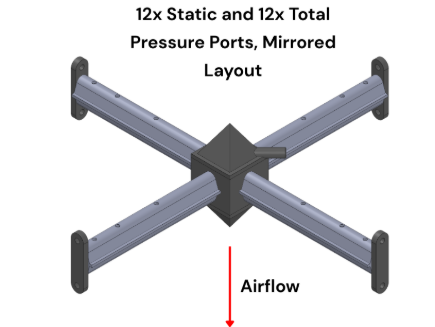
Comparison between market alternatives and our product

Fig 1 : Market Alternative

Fig 2 : EvoFlow Product

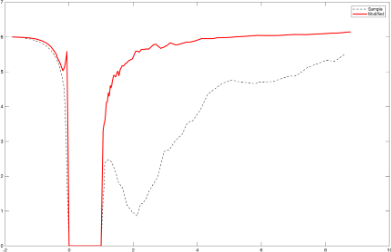
CFD Simulation Results

Fig 3 : Velocity

Fig 4 : Pressure

Simulated results show that the redesigned sensor delivers more uniform and consistent airflow with significantly lower pressure drop, demonstrating better performance compared to conventional solutions.  

Wind Tunnel Validation Results

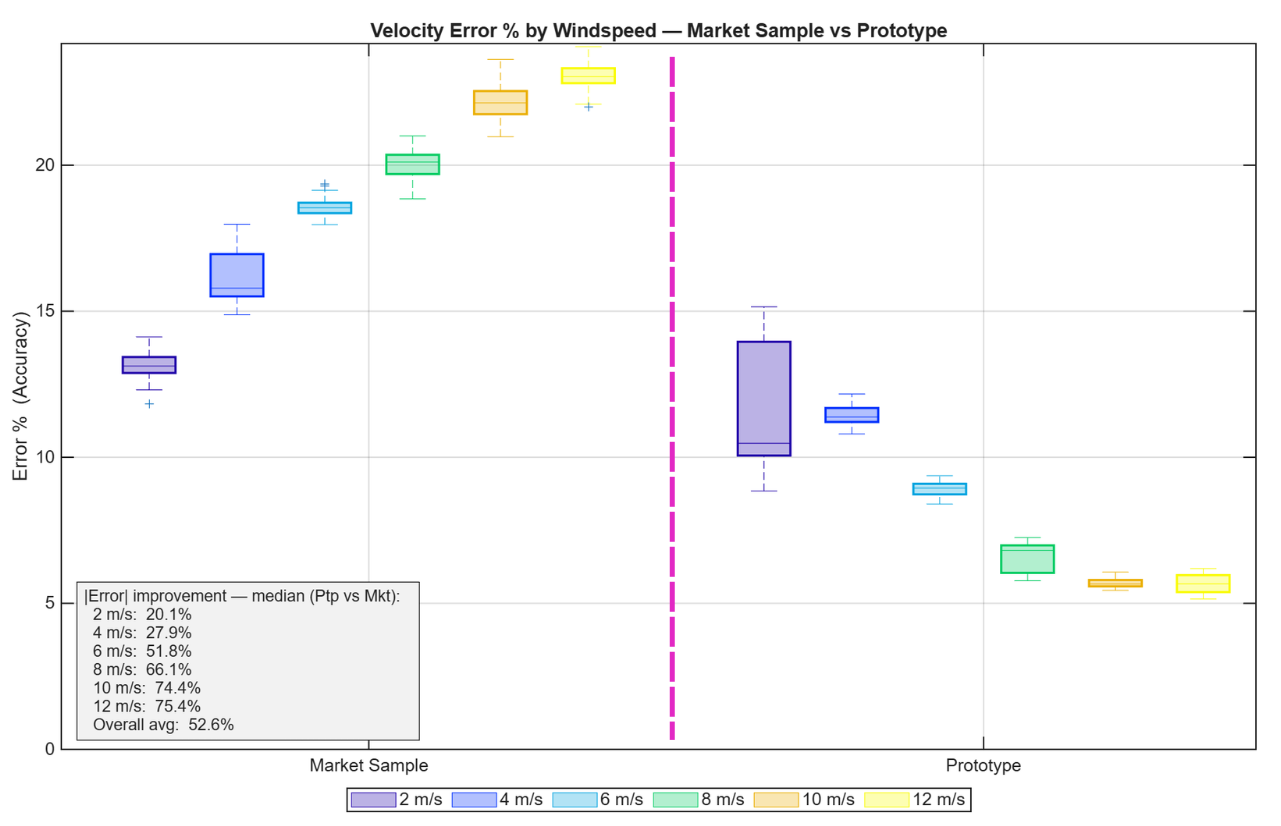
Fig 5 : Sensor Accuracy

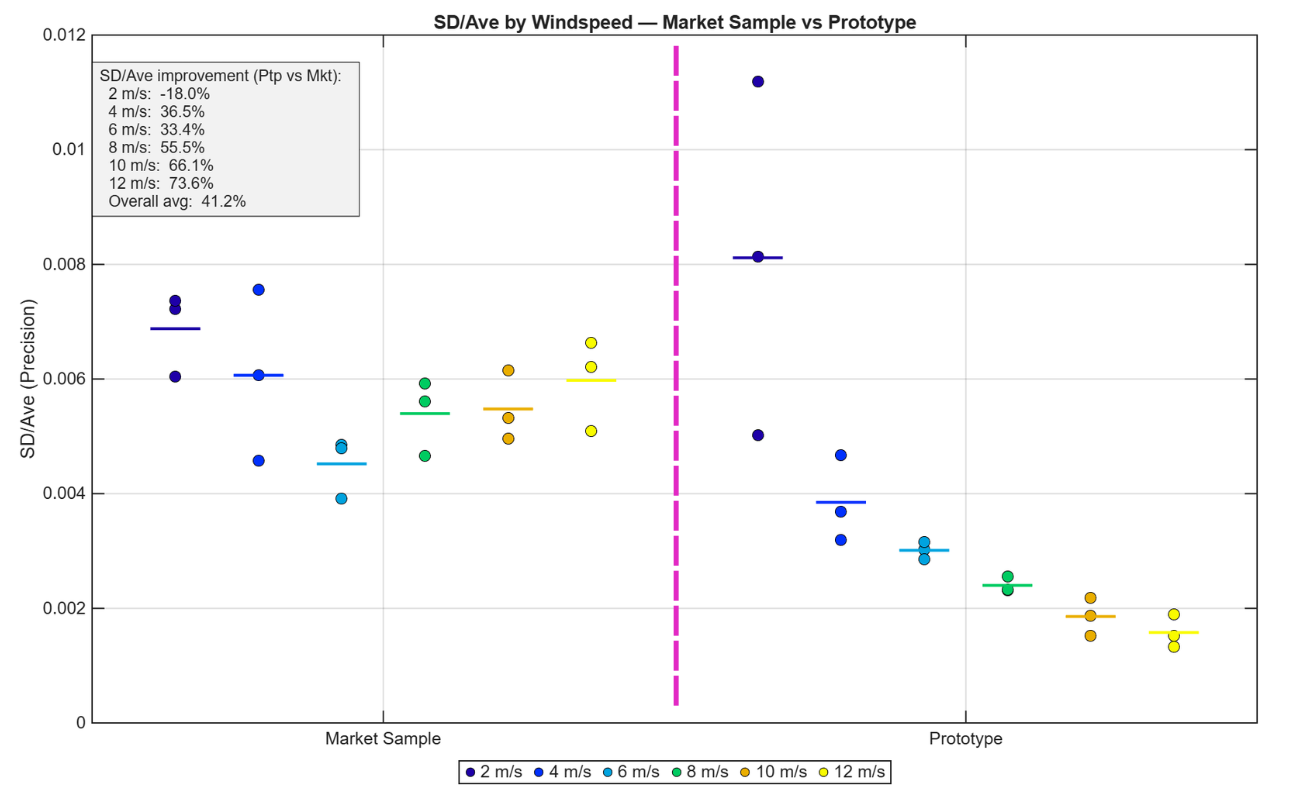
Fig 6 : Precision

Wind tunnel testing successfully validates the CFD predictions, demonstrating EvoFlow’s reliable measurement accuracy suitable for real world HVAC applications

Connected System Architecture : 

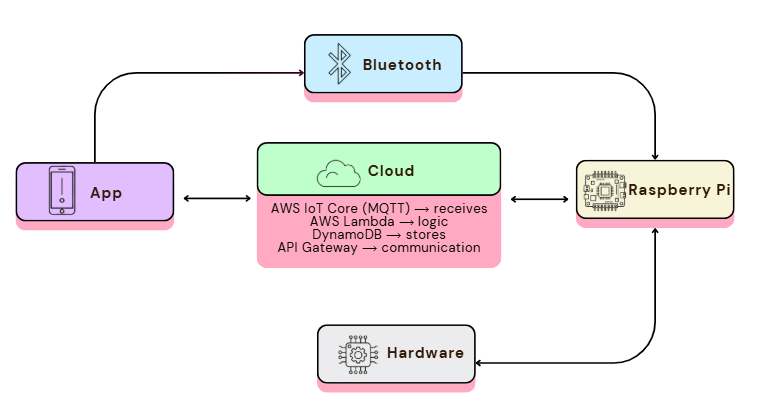
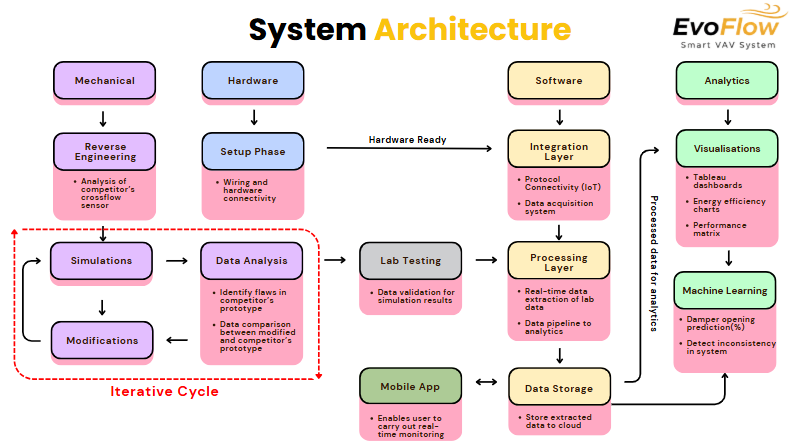
EvoFlow uses an edge-to-cloud architecture where a Raspberry Pi edge device connects directly to the VAV system’s sensors to collect real-time data such as airflow, temperature, and damper position. This data is transmitted via Bluetooth and IoT protocols to the cloud, where services like AWS IoT Core, Lambda, and DynamoDB enable processing, storage, and communication with the mobile app. The system allows continuous data collection, real-time monitoring and control, and scalable deployment across multiple units, effectively transforming a traditional VAV box into a smart, connected building device.

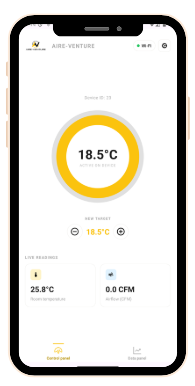
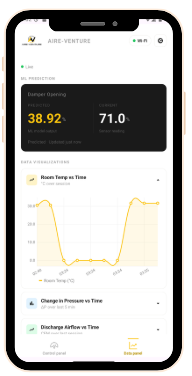
Real-Time Mobile Control & Monitoring for Smart VAV Systems

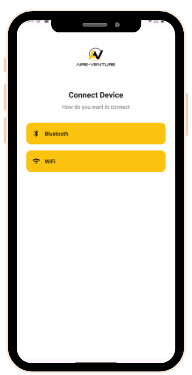
A user-friendly mobile app enables seamless control, live data tracking, and cloud-connected management of multiple VAV units from a single interface.

A/B Testing

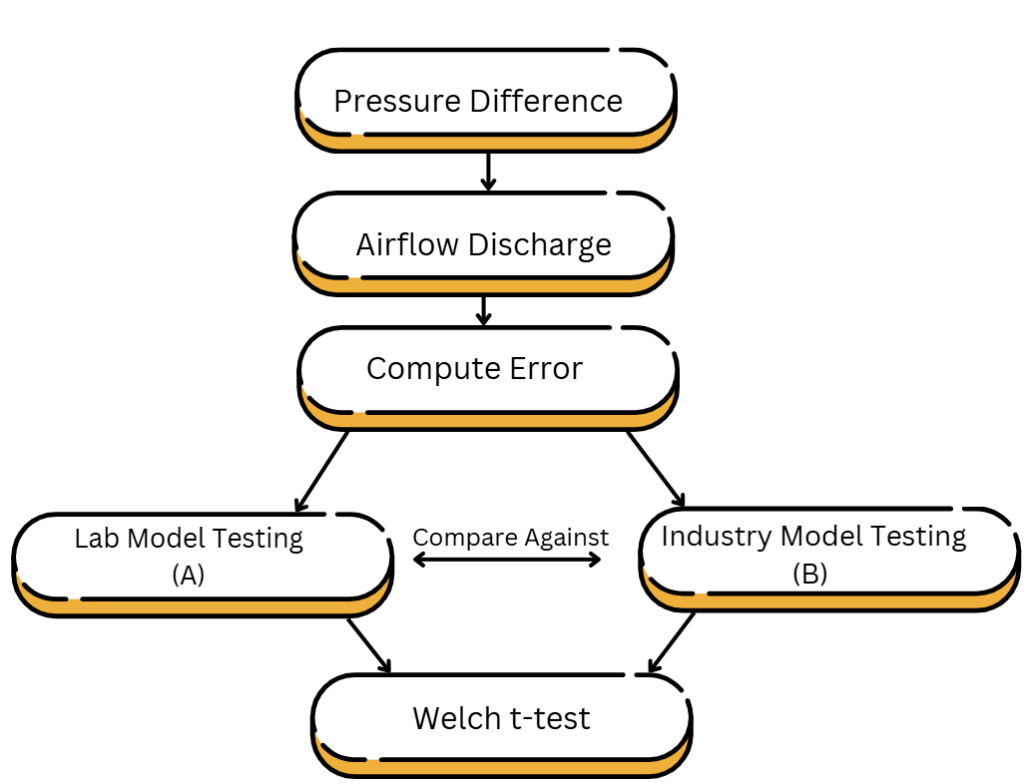
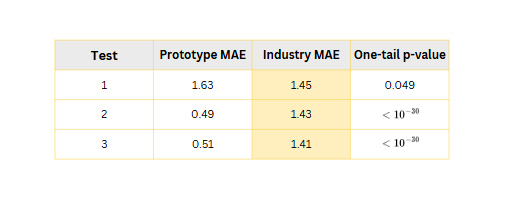
Pressure difference is first measured and converted into airflow discharge. The error is then computed as the difference between supply air and discharge air flow. This error is evaluated separately for the Lab Model Testing (A) and Industry Model Testing (B) setups, and the two sets of results are compared using a Welch t-test to determine whether the prototype performs significantly better than the existing solution. 

A/B Testing Results

The results tell us that our prototype performs better (lower error) in 2 out of the three tests. All 3 tests are significant, the first test carried out might have some configurations issues that lead to a slightly higher error in the prototype 

Anomaly Detection

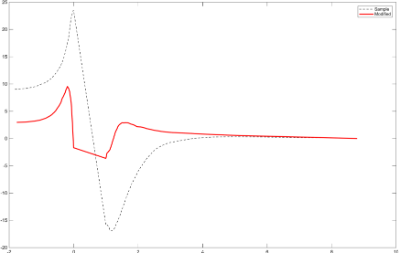
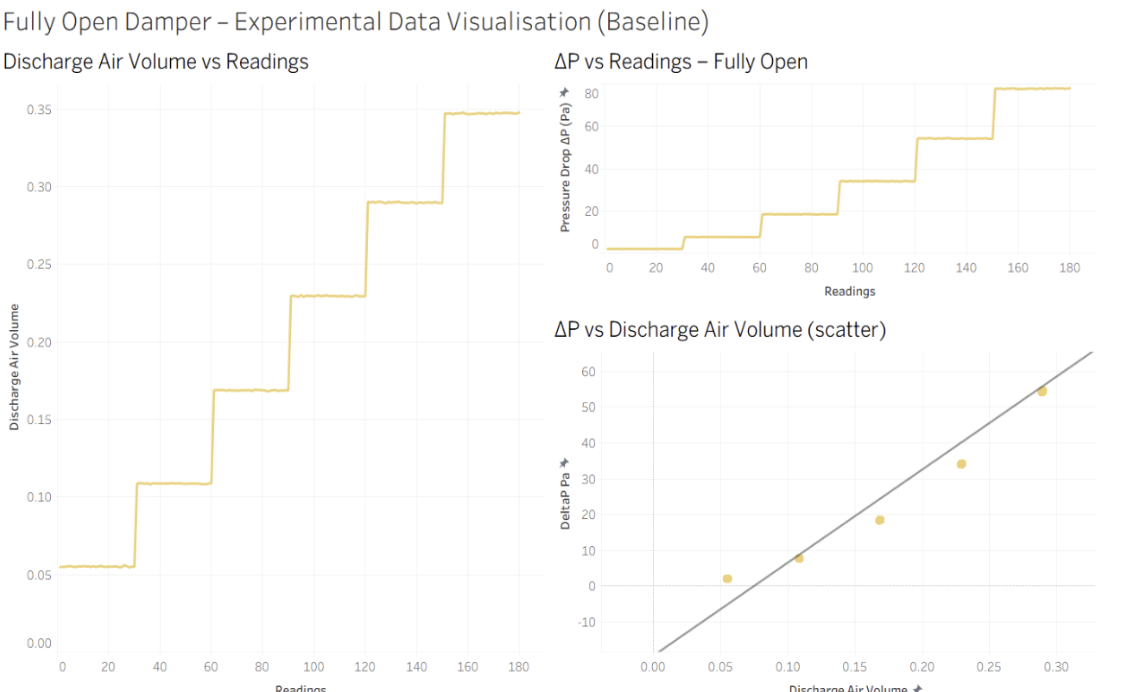
Fig 7 : Normal working conditions of the fully open damper

Data Visualization
  • Shows graphical representation of the functioning of the VAV system
  • Any deviations from normal conditions can prompt the user to check the system to detect issues and resolve them 

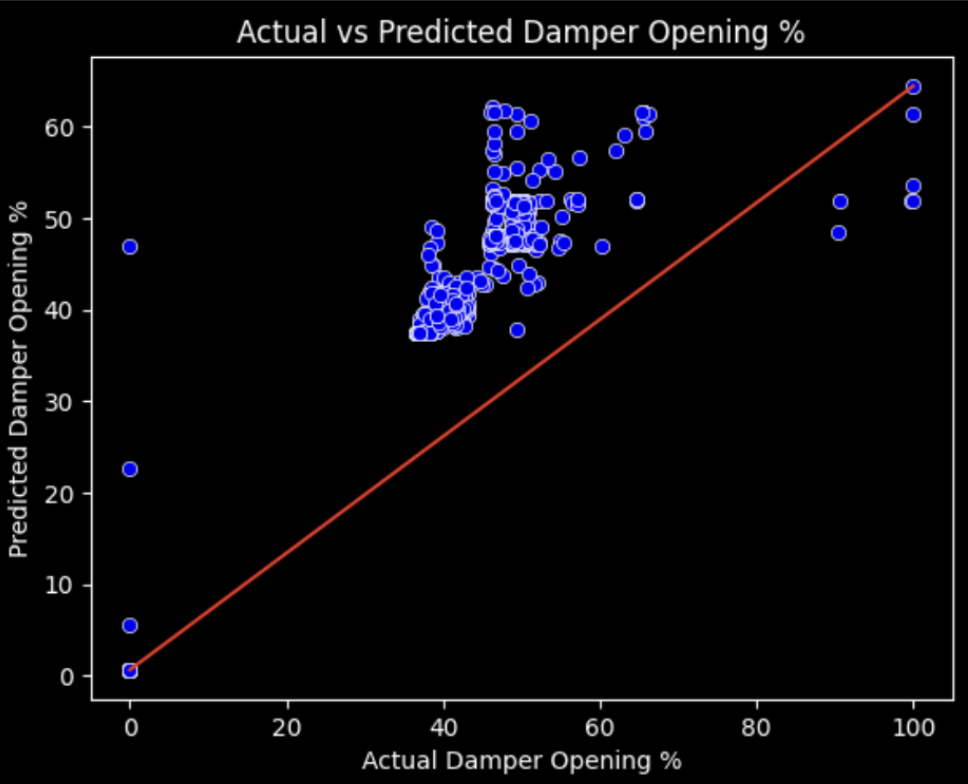
Fig 8 : Testing the model, showing the difference between actual and predicted values

Machine Learning 
  • Neural Networks are used to predict damper opening based on room air supply demand and discharge air flow  
  • If the predicted damper opening % compared to the actual damper opening is off by more than 15% for example, then there might be some issues in the system that need to be checked on.  

Overall System Architecture

In partnership with :

Supported by :

Acknowledgements

We express our sincere gratitude to our industry mentor, Mr. Yoon Loong, Founder of Aire-Venture, for his invaluable guidance and industry insights that grounded our work in real-world HVAC challenges.

We also thank our capstone faculty mentors, Dr. Wai Lee Chan and Dr. Na Zhao, Singapore University of Technology and Design, for their expert support in mechanical design, CFD validation, control systems, machine learning, and system integration. Their guidance was instrumental throughout our journey.

Our appreciation extends to Ms. Pek Har Belinda Seet and Mr. Dominic Edmund Kim San Quah from the Center of Writing Resources, SUTD, for their support in refining our technical narrative and presentation.

Finally, we thank our team members Anay Shastri, Bishmit Rout, Foo Yu Qian Erika, Janya Mali, Lai Shi Jie Keith, and Shruti Kunder, for their dedication and collaboration. This project reflects the collective effort of our SUTD community and industry partners.

Menu

ornament-menu