Project Roadmap
Microlaryngeal surgery is a key ENT technique for treating vocal cord polyps, growths, tumours and cancers. It focuses on removing pathologies while carefully preserving the patient’s voice quality.
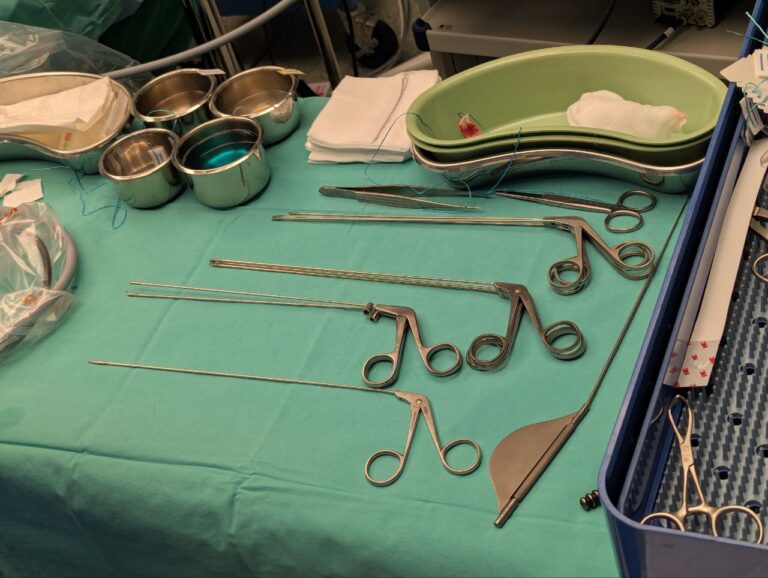
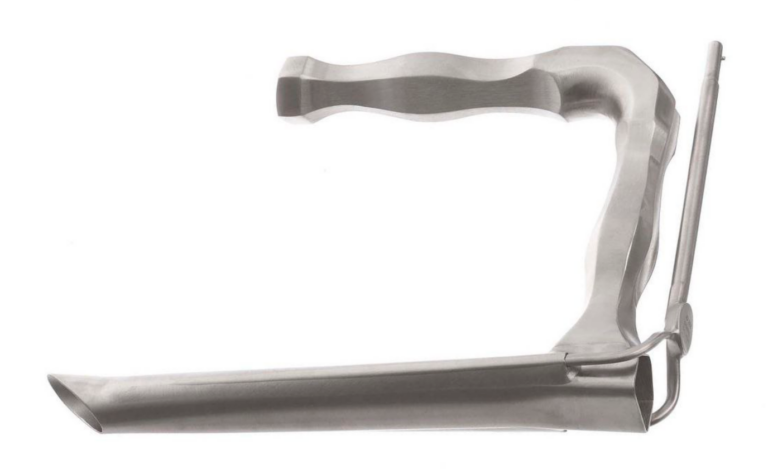
Surgeons operate through a laryngoscope, a rigid tube that creates a very narrow workspace. This setup limits visibility and requires long, straight tools that are difficult to move.
The confined space demands high precision to avoid tissue trauma within tight tolerances. Every maneuver requires exceptional skill due to the severely restricted range of motion.
The Dedo laryngoscope restricts surgeons to just two tools within a very narrow workspace. Current straight instruments lack the flexibility for ideal incisions, significantly increasing the complexity of each procedure.
Without articulation, surgeons must constantly swap between various fixed-angle tools to navigate anatomy. These frequent interruptions break the surgical workflow and unnecessarily prolong the time spent in the operating room.
Repeated tool changes increase the risk of tissue trauma and can reduce overall success rates. The current reliance on multiple rigid instruments is an inefficient workaround rather than a truly adaptive surgical solution.
Problem Statement:
How can we improve the flexibility and usability of laryngeal surgical tools while retaining their minimally invasive properties?
We aim to develop a tool that improves stability and tension control for removing lesions in hard-to-reach areas. This design enables one-handed operation to excise tissue in a single piece, which is critical for accurate biopsy results.
Our solution integrates into current surgical workflows without the need for bulky or hazardous electronics. By focusing on mechanical precision, we ensure the tool remains streamlined and safe for the operating environment.
To support adoption, we are building an extended reality simulation platform for surgeon training. This allows practitioners to master the new hand movements and controls before ever entering the operating room.
MicroKiap: Pull It Near, Make It Clear
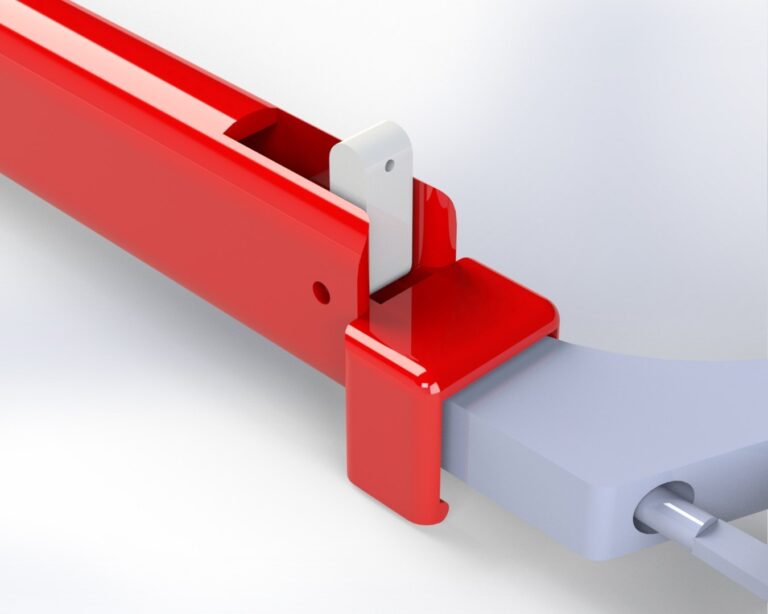
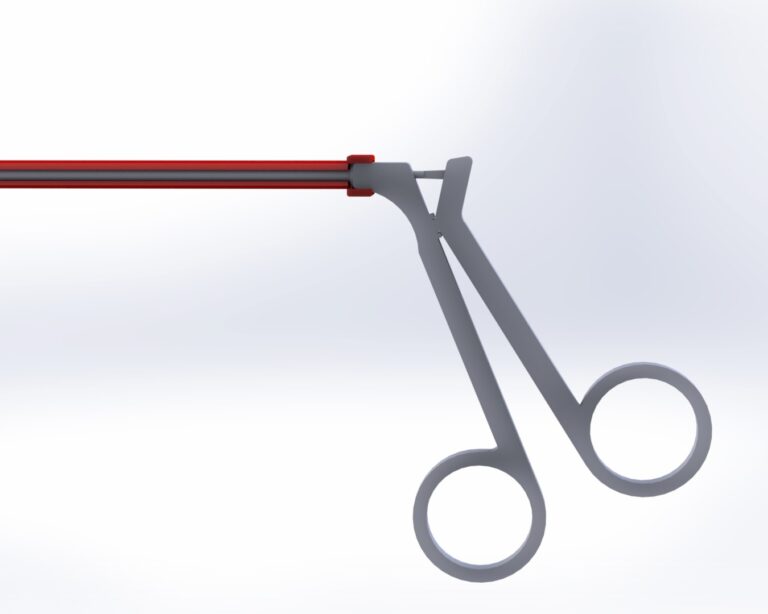
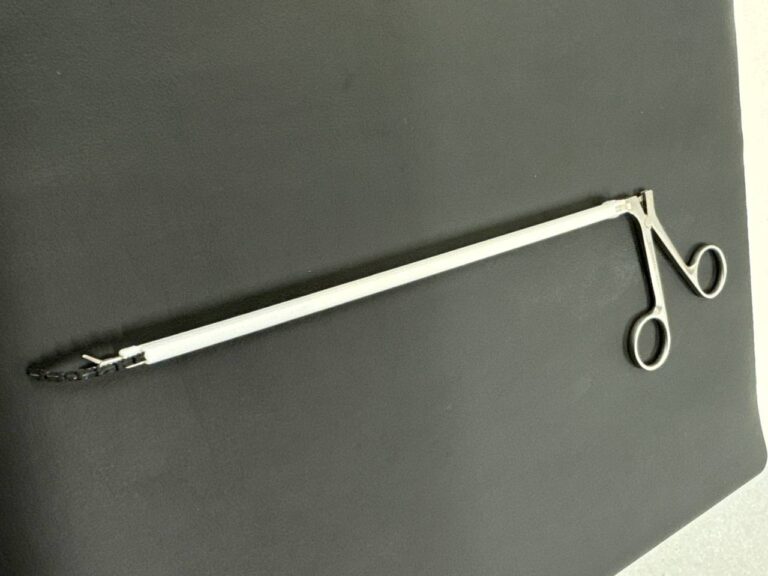
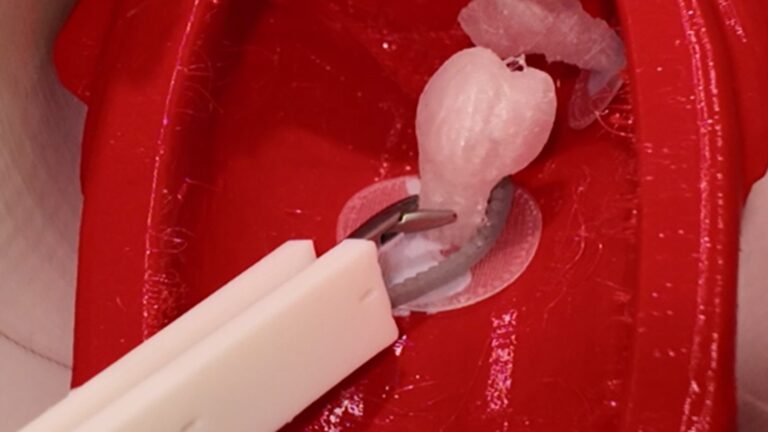
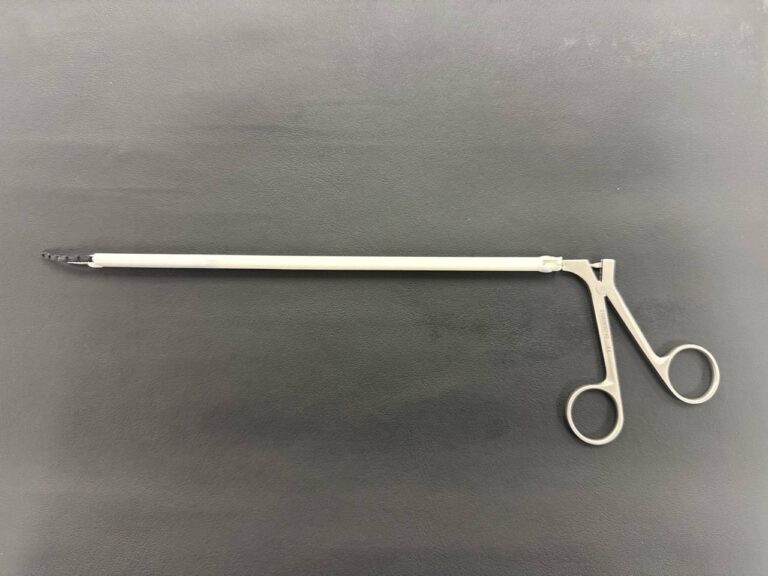
MicroKiap is a clip-on attachment designed for use with existing microlaryngeal scissors and forceps. It features a soft, flexible tip with a thread-based mechanism that forms a gentle hook to help draw throat lesions closer to the instrument during ENT biopsy procedures. Designed for one-handed operation and versatility, MicroKiap is compatible with the majority of current microlaryngeal tools. Its fully mechanical design eliminates bulky or dangerous electronics, ensuring safe integration into existing surgical workflows.
Working Principle
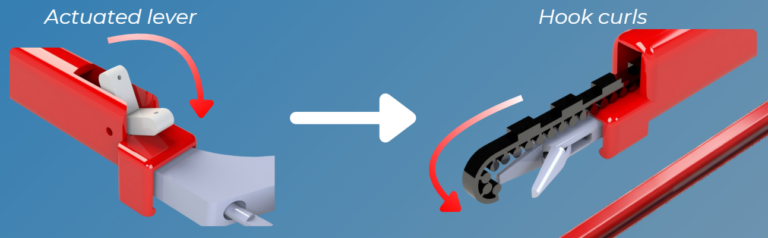
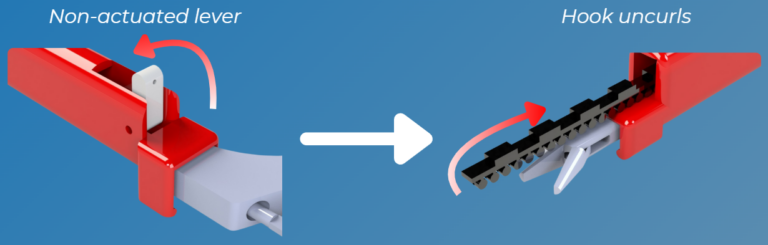
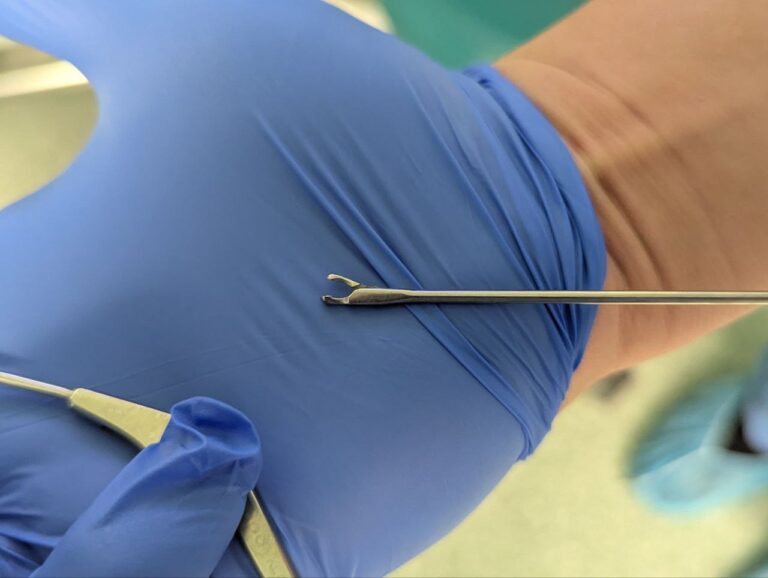
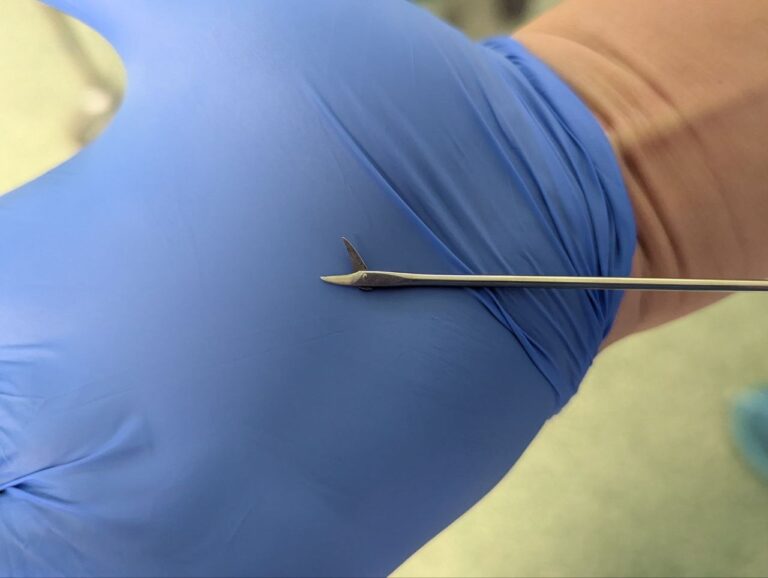
Its hook design allows surgeons to hold onto the lesion for precise removal in one piece. Using two threads, controlling the hook is as simple as pulling a lever. The lever at the back pulls and curls the hook, pulling the thread to bend the tip and draw the lesion toward the scissors or forceps. By bringing the lever back to its original position, the hook returns to its rest state.
Product Showcase
Switch ON
Hook Curls
Switch
The switch on the side of MicroKiap allows for easy access to the actuation mechanism.
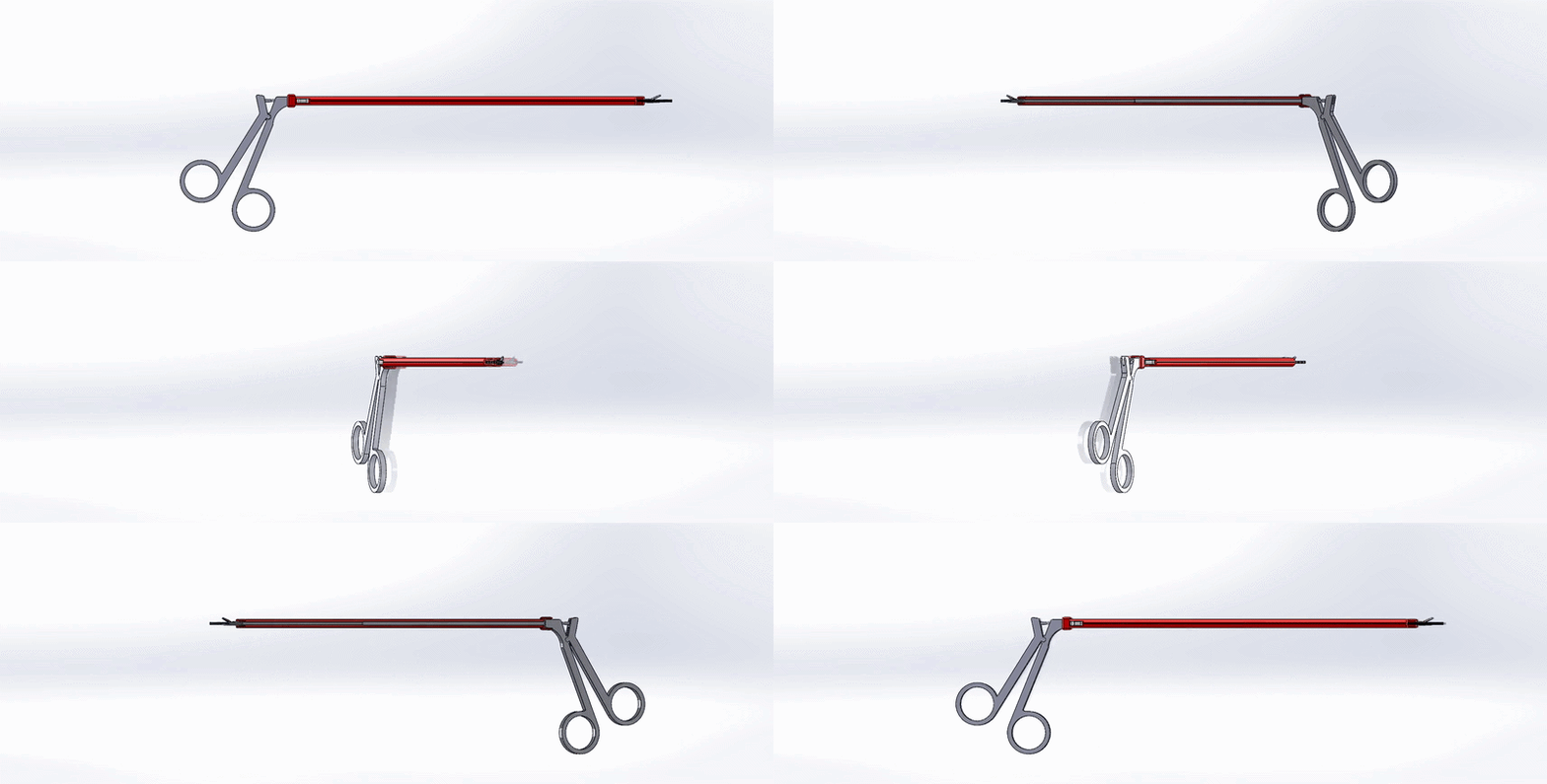
Switch OFF
Hook Relaxes
Thread
Two set of threads connected to the hook in the front and the switch at the back. Changing the state of the switch tensions one thread and relaxes the other allowing the hook to curl/uncurl.

Body Development
The body of MicroKiap is designed to be universal, to be able to be easily attached to most microlaryngeal scissors and microlaryngeal forceps on the market. To achieve this, the attachment mechanism needed to be refined over multiple iterations.
The design requirements of the body is that it is supposed to fit alongside the current microlaryngeal scissors while still working within the small space constraints of the laryngoscope. As such, the designed body should not be too big but still large enough to fit the inner mechanisms of the hook.
The body was also designed with ergonomics in mind. With no sharp edges or corners, it minimises the risk of injury while the tool is within the patient.
Attachment to the tool itself is also an important aspect of the body’s design. It should be secure enough such that it will not move once attached to the microlaryngeal tool, at the same time, the attachment to the body of the tool should not be too tight so that it is easy to attach and detach MicroKiap as needed. Hence, the final design is a snap-fit design. To attach MicroKiap to any microlaryngeal scissors or forceps, the user will only need to align the attachment point to the tool’s body and “snap” it in place. It will be fully secured until the user decides to remove it, at that point, the user can simply pull on MicroKiap with their hands to remove it.
Hook Development
The development of MicroKiap involved multiple prototyping cycles, each refining the thread‑based actuation mechanism and ergonomic lever placement. The central innovation is the hook attachment, which enhances tool control, extends tool reach, and improves lesion stability.
The final design of MicroKiap features a controllable mechanical arm that hooks around the lesion, holding and stabilizing it for easier removal. A thread-based mechanism curls the hook when pulled, making control as simple as operating a lever.
A manual lever is used to control the thread tension, enabling precise, one-handed operation during the procedure.
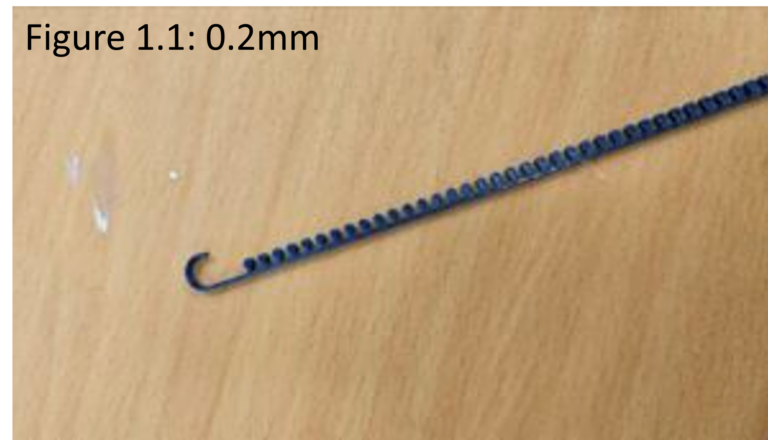
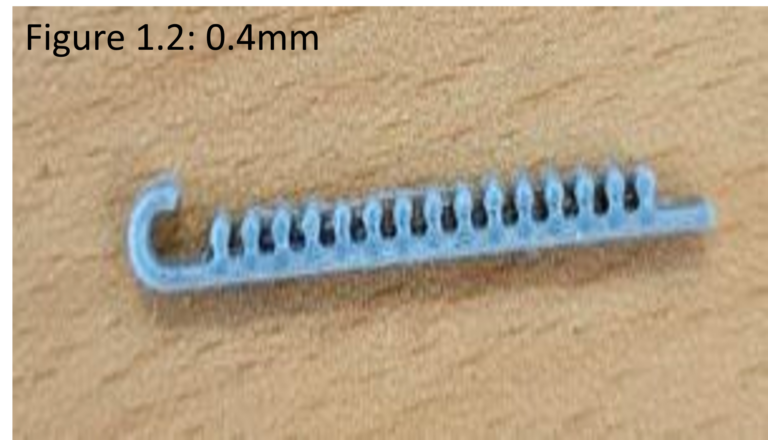
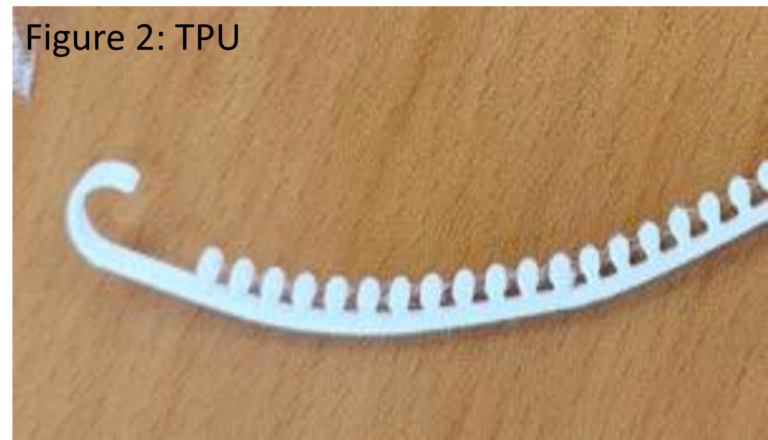
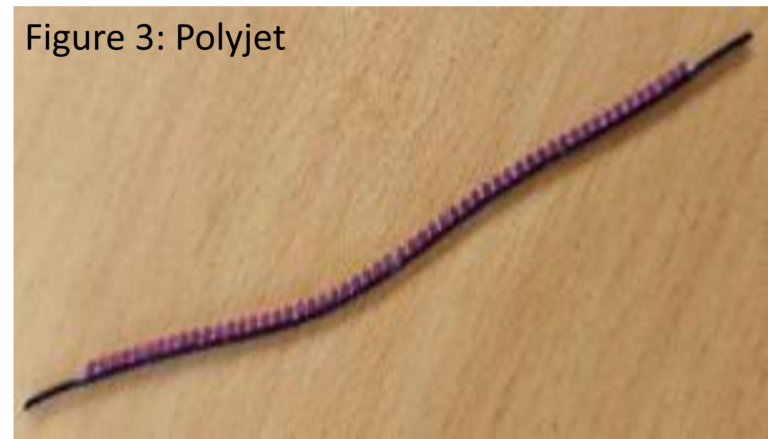
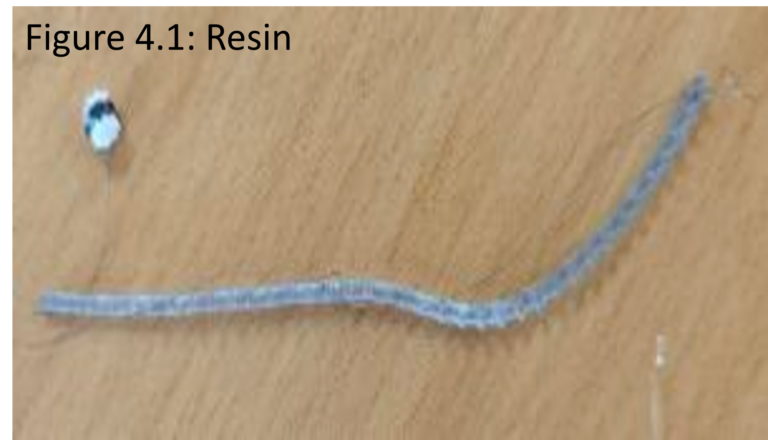
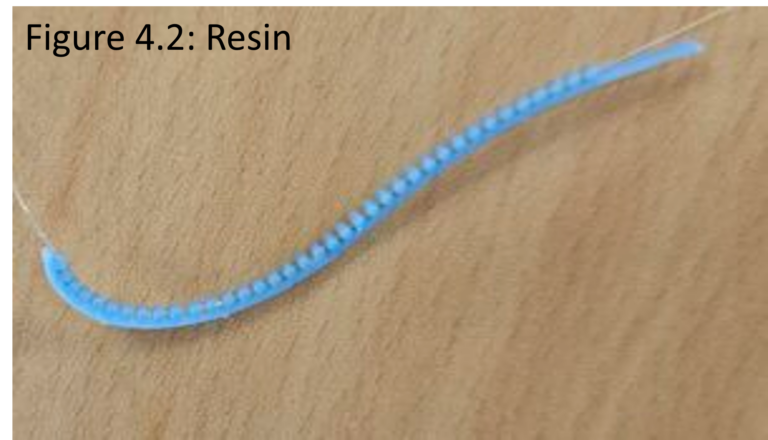
Various fabrication methods and materials were investigated throughout development. We explored different 3D printing methods, such as FDM printing, Polyjet printing, and Resin printing. (Figures 1-4)
The final design of the hook is manufactured through 3D printing with Thermoplastic Elastomer (TPE).
Training & Education
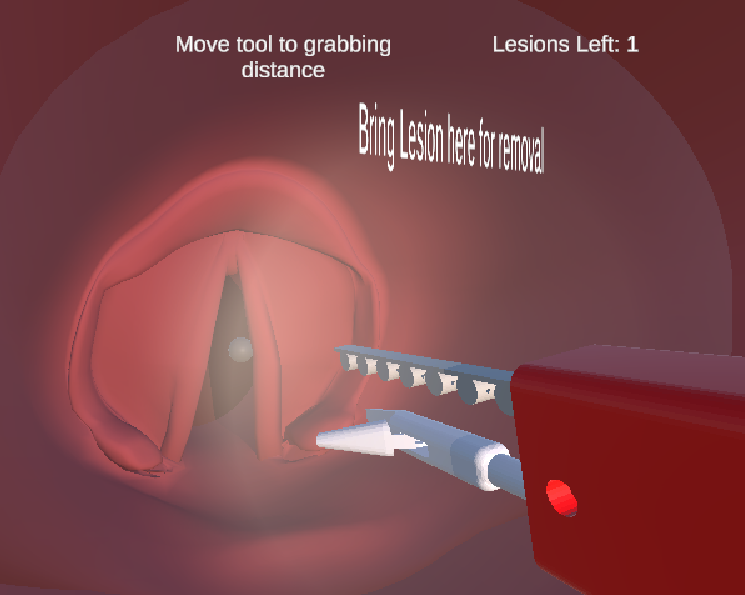
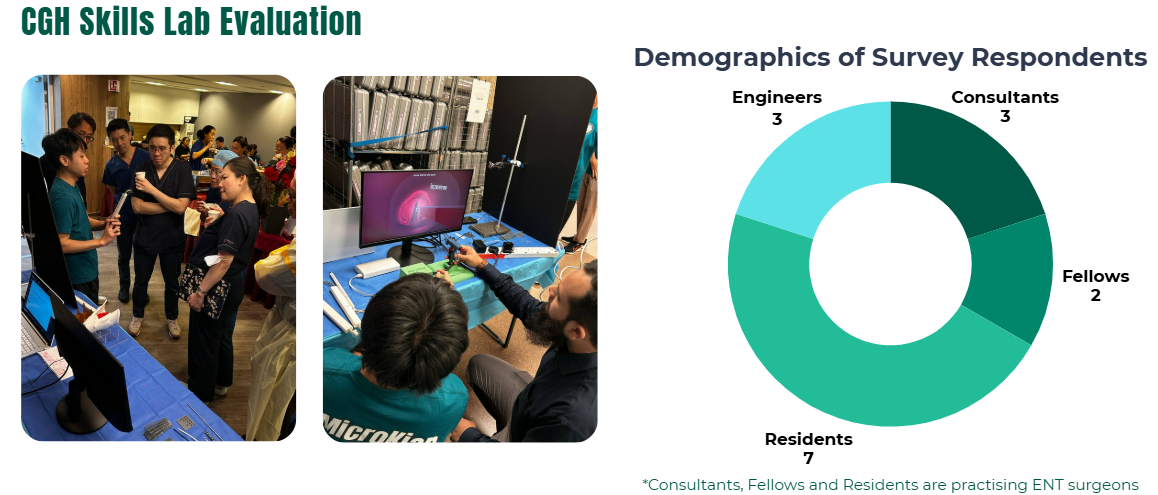
To support adoption and proper technique, a virtual simulation platform has been developed alongside the physical device. This immersive extended reality environment allows surgeons to familiarise themselves with MicroKiap’s hand movements and controls before entering the operating room. Users can practise extending and retracting the hook, drawing lesions toward the instrument, and coordinating the attachment with standard microlaryngeal tools all within a realistic surgical setting.
Developed in Unity software, the virtual simulation provides a realistic digital environment where surgeons can practise using MicroKiap without requiring a physical prototype or cadaver tissue. Users can visualise the attachment working alongside standard microlaryngeal tools within an accurate model of the larynx. The simulation supports multiple control schemes, compatible with both the physical mockup controller and standard keyboard inputs, allowing for flexible testing and training setups. It tracks user inputs and provides real-time feedback on hook positioning and lesion extraction, enabling repeated practice until proficiency is achieved.
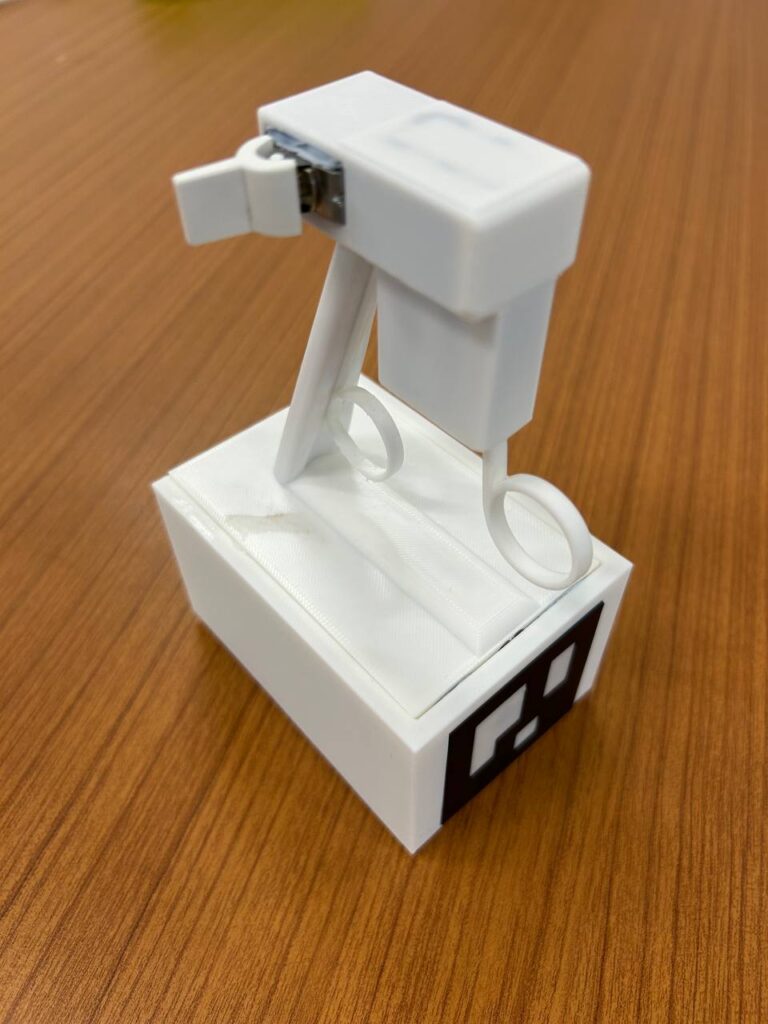
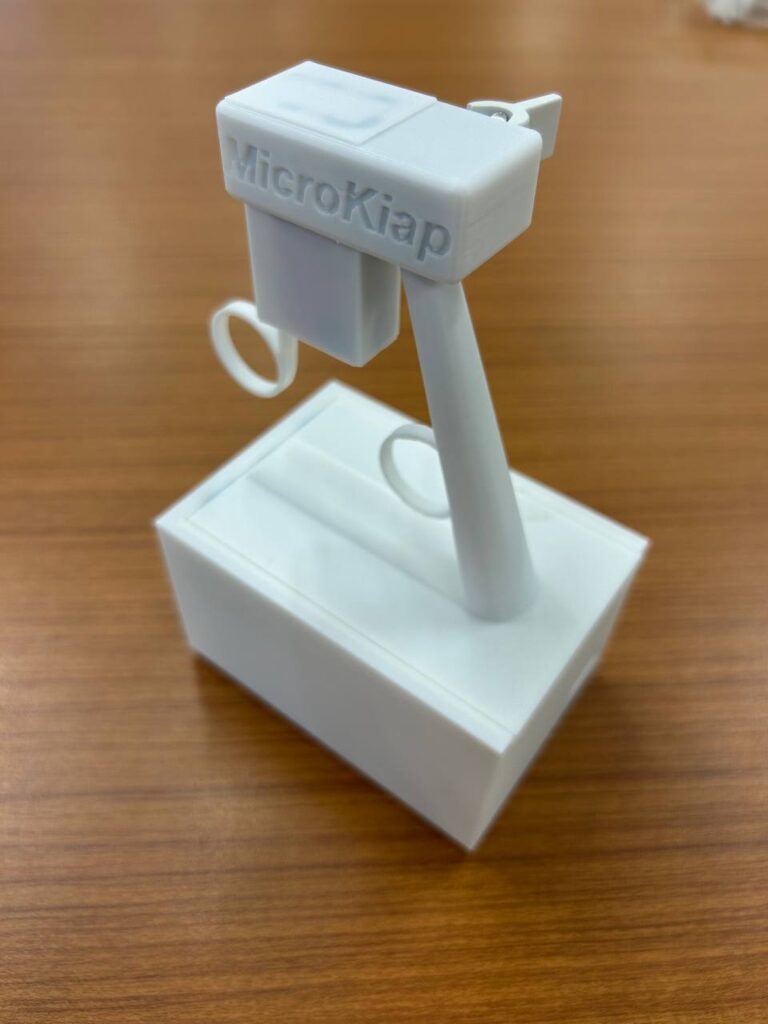
To bridge the digital and physical experience, a mockup control interface replicates the look and feel of MicroKiap’s button mechanism.
It features an extended reality setup to provide a more immersive experience, where the look and feel of MicroKiap can be followed more closely. This will better allow the users to familiarise themselves with the operations of MicroKiap. This extended reality uses computer vision and motion tracking to track the user’s tool position in 3D space in real-time. Users hold and operate this floating controller while interacting with the virtual environment, allowing them to build muscle memory for the button activated hook extension and release.
Evaluation Results
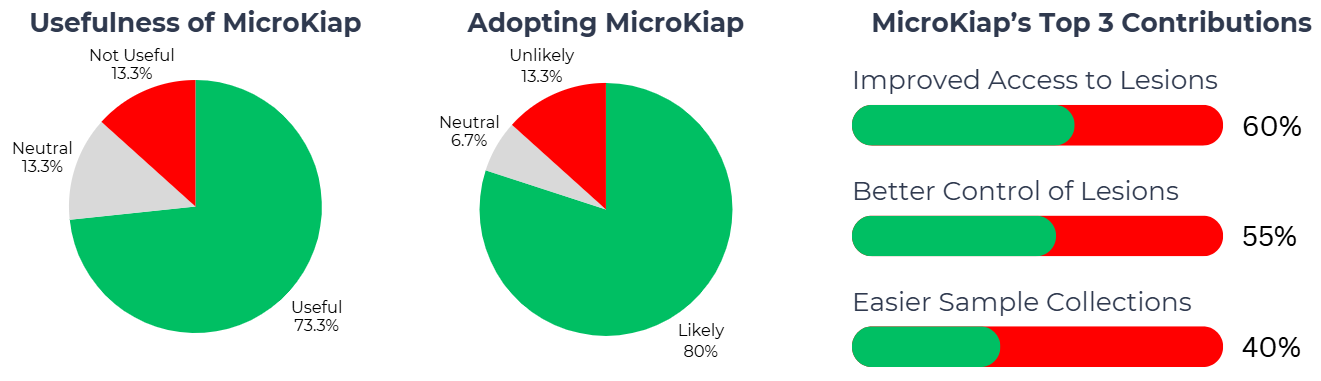
What Did Stakeholders Think of MicroKiap?
Don't just hear it from us!! Hear it from our testimonials!!
“It’s a very good idea. It will help the patient as well as the doctor, especially in the field of laryngology.”
ENT Consultant, 11-20 Years of Experience
“Training idea is a cool idea, fantastic. Good tool, hope you can manufacture it as it will be useful in other areas too“
ENT Resident, 6-10 Years of Experience