



Project S04

CROCS X SUTD

PerceptIQ is a quality control system that utilizes Aritificial Intelligence (AI) to determine the accuracy of a product’s colour. Utilising an adjustable lightbox with high resolution cameras, PerceptIQ can be easily integrated onto conveyor belts to analyse products for colour defects in seconds, reducing long man-hours and subjectivity in colour analysis.

Team members

Long Raphael James (ISTD), Chua Shan Yang Oliver (ESD), Edison Ang (ISTD), Kiatkongchayin Akrapong (ASD), Jahnvi Kaushik (DAI), Edrick Wilbert Ang (EPD), Lindero Dianthe Marithe Lumagui (ISTD)

Instructors:

  • Dorien Herremans

Writing Instructors:

  • Susan Wong

Project Roadmap

Define

We began by understanding the challenges of colour quality control in footwear manufacturing. Through research and industry collaboration, we identified key pain points such as inconsistent human inspection, lack of scalability, and sensitivity to environmental conditions. This phase established the foundation for a system that prioritises objectivity, repeatability, and seamless integration into production workflows.
Ideate

With a clear problem space, we explored a range of solutions across hardware and software. Multiple approaches were evaluated, from traditional pixel-based methods to machine learning models and hybrid systems. In parallel, we designed concepts for controlled lighting, automated image capture, and multi-angle inspection. This iterative exploration allowed us to converge on a solution that balances accuracy, efficiency, and practicality.
Prototype

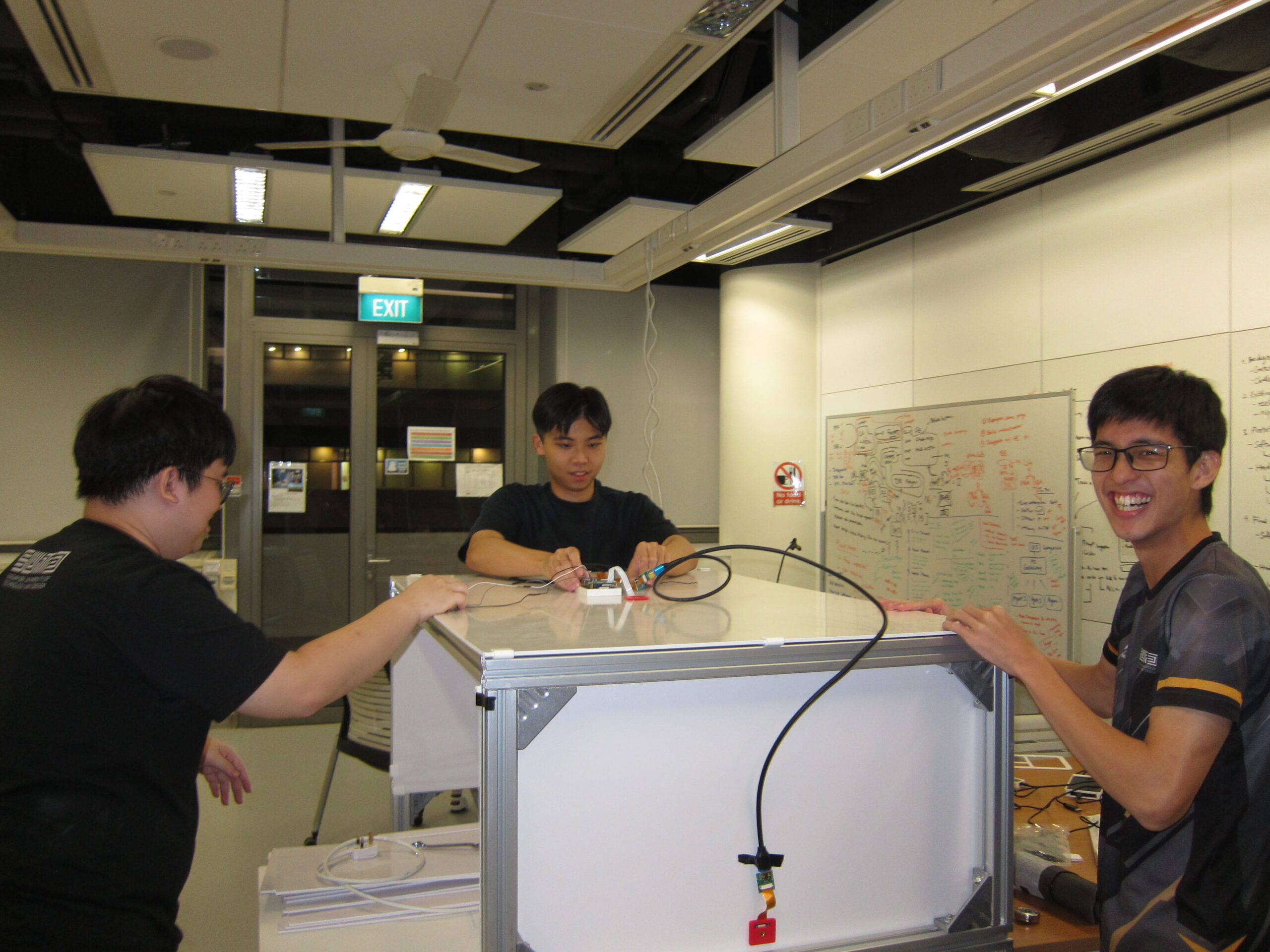
The final phase focused on bringing the system to life through an integrated prototype. A custom lightbox, multi-camera setup, and laser-triggered capture system were developed to ensure consistent data acquisition. On the software side, segmentation and reference-based colour analysis enabled reliable ΔE evaluation against industry standards. The result is a working system capable of near real-time, automated quality control in a controlled environment.

How PerceptIQ Works

1. Detection & Triggering

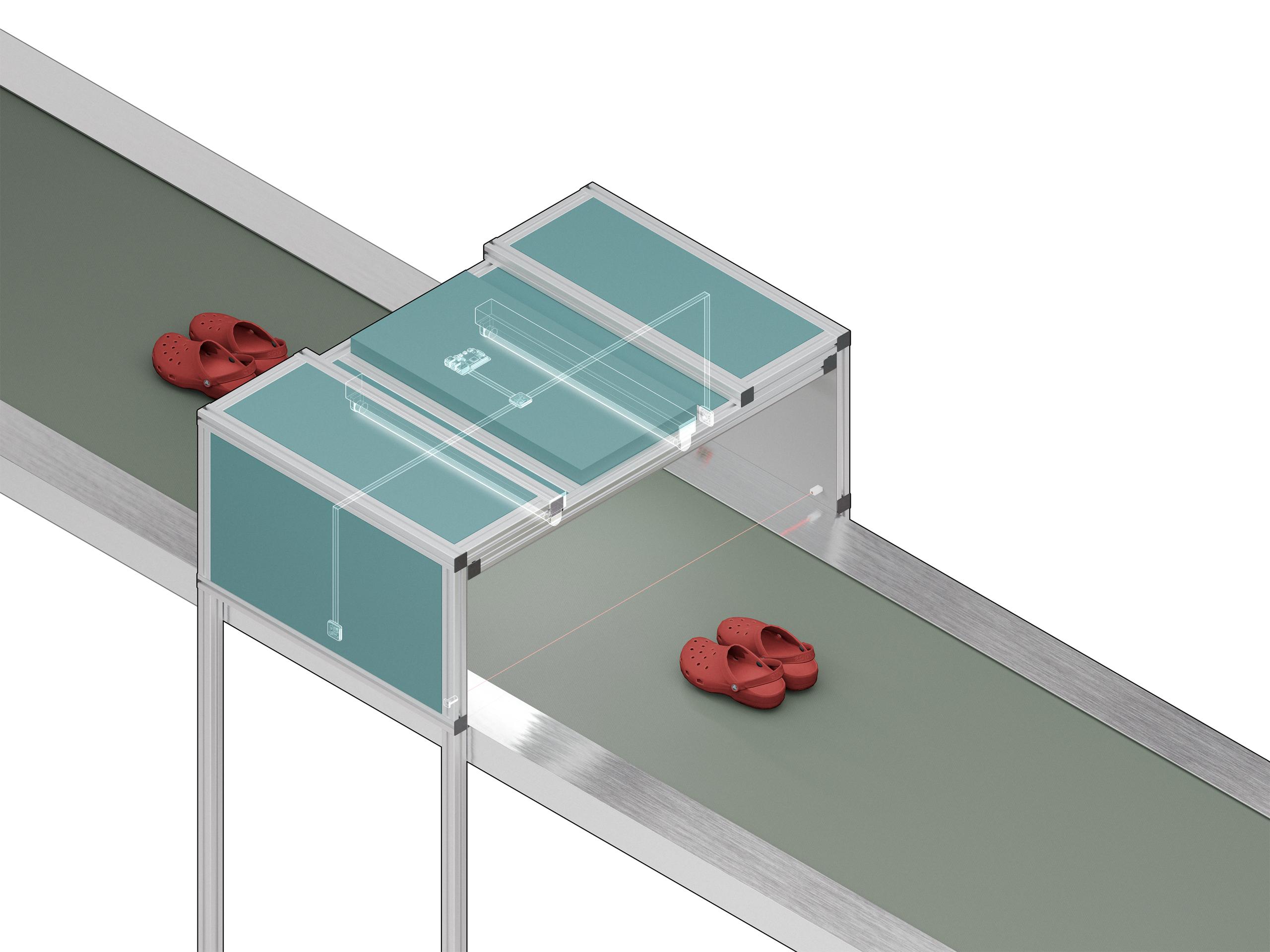
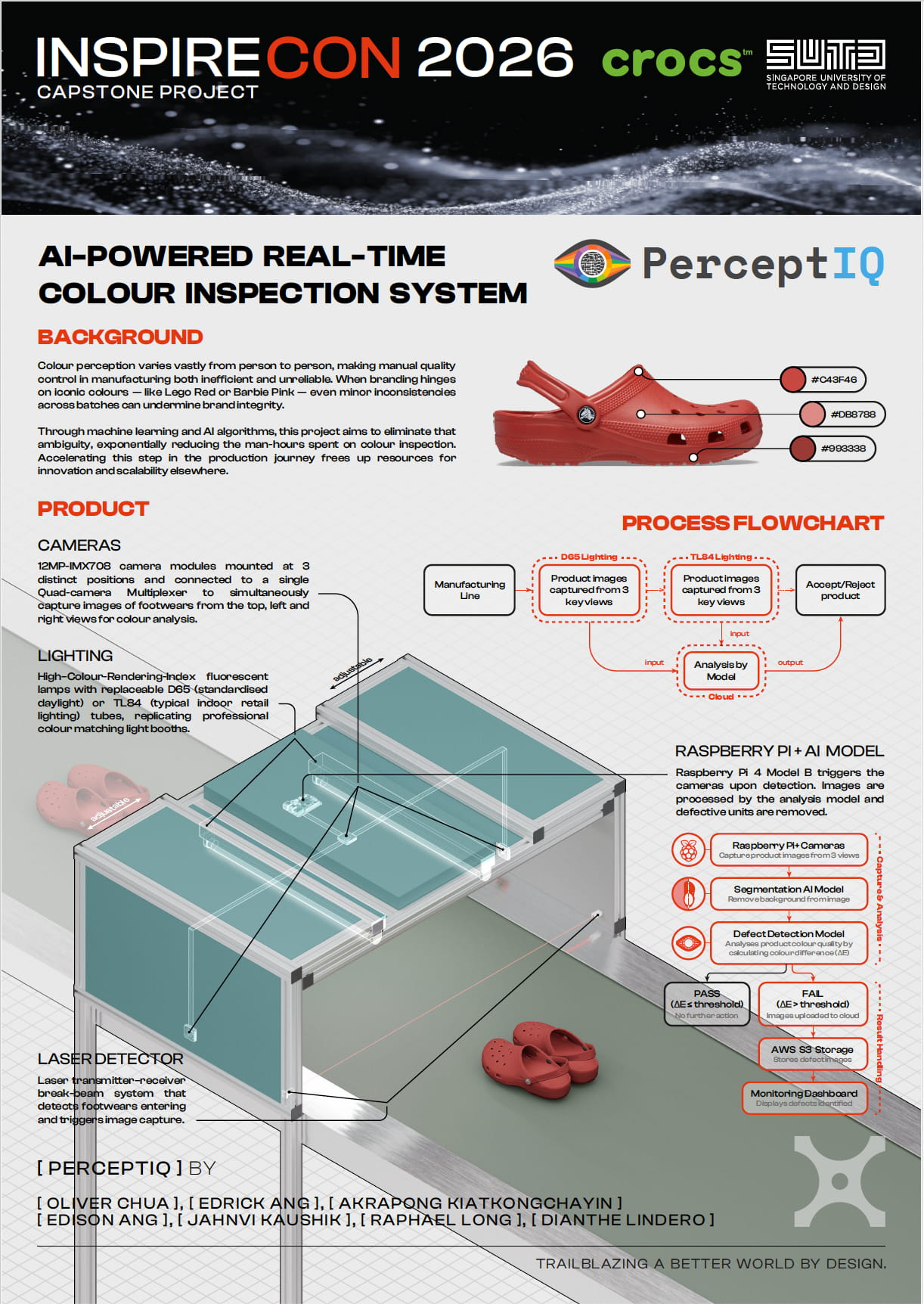
A laser-based detection system identifies when a product enters the inspection zone. This automatically triggers the system, ensuring every item is captured without manual intervention.


2. Multi-View Image Capture

High-resolution cameras capture images from multiple angles under controlled lighting conditions. Standardised lighting (D65 and TL84) ensures colour is measured consistently across environments.


3. AI-Powered Analysis

Captured images are processed by an AI model that removes background noise and evaluates colour accuracy by calculating colour difference (ΔE). This enables objective, quantitative assessment instead of human judgement.


4. Decision & Monitoring

The system classifies each product as pass or fail based on predefined thresholds. Defective items are flagged, stored in the cloud, and visualised through a monitoring dashboard for real-time quality tracking.

PerceptIQ's Technical Pipeline

Multi-Angle Automated Capture
Controlled Lighting Calibration
Reference-Based Colour Intelligence

PerceptIQ enables fully automated image acquisition through a synchronised multi-camera system designed for production-line integration. As each shoe passes through the inspection zone, a laser tripwire precisely detects its position and triggers simultaneous image capture across multiple viewpoints (top, left, and right). This ensures comprehensive visual coverage of complex geometries and curved surfaces in a single pass. By eliminating manual handling and standardising capture timing and positioning, the system produces consistent, high-quality input data while maintaining real-time throughput on conveyor systems.

Accurate colour evaluation requires strict control over environmental conditions. PerceptIQ addresses this through a custom-built lightbox that replicates industry-standard lighting environments using D65 (daylight) and TL84 (retail) fluorescent sources. These high-CRI light sources are configured to provide uniform, top-down illumination, minimising shadows, reflections, and colour distortion. The enclosed setup, enhanced with blackout curtains, isolates the system from ambient light interference, ensuring that captured images remain consistent across time and deployment locations. This controlled calibration is critical for producing reliable and repeatable colour measurements.

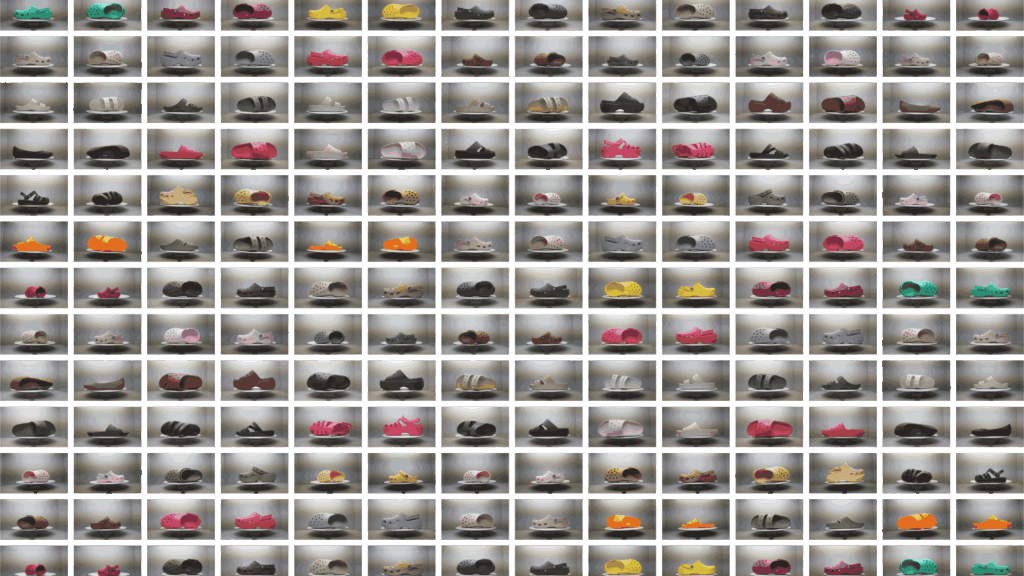
At the core of the pipeline is a robust, interpretable colour analysis framework grounded in colour science. The system first applies a trained segmentation model to isolate the shoe region at pixel-level precision, removing background noise and ensuring accurate colour extraction. It then computes the mean L*, a*, b* values of the segmented region and compares them against a reference standard using the ΔE metric, which quantifies perceptual colour difference. By directly measuring deviation rather than relying solely on learned predictions, this approach provides stable, explainable pass/fail decisions aligned with industrial tolerances, while maintaining near real-time performance.
Impact of PerceptIQ

PerceptIQ transforms colour quality control from a subjective, labour-intensive process into a consistent, data-driven system. By automating inspection directly on production lines, it reduces reliance on manual judgement and eliminates variability between inspectors, enabling more reliable and scalable quality assurance.

The system’s ability to perform real-time, full-product inspection allows manufacturers to move beyond traditional spot-checking, significantly improving defect detection rates and overall product consistency. This not only enhances brand reliability but also reduces costly rework, waste, and downstream quality issues.

Beyond immediate operational gains, PerceptIQ establishes a foundation for smarter manufacturing. By generating structured inspection data, it enables traceability, continuous process improvement, and future integration with AI-driven analytics — supporting the transition towards fully automated, intelligent production systems.

In partnership with :

Supported by :

Acknowledgements

Team PerceptIQ would like to express our sincere gratitude to our Capstone instructors: Dr Dorien Herremans, Dr Rakesh Nagi, Dr Lee Young, and Dr Susan Wong for their invaluable guidance and support throughout the project. Their insights and feedback were instrumental in shaping the direction and success of our work.

We would also like to thank our industry partner, Crocs, for providing us with the opportunity to work on a real-world problem and for their continuous support, resources, and feedback during the development of our solution.

Finally, we extend our appreciation to the Singapore University of Technology and Design (SUTD) for providing the facilities and environment that enabled us to bring PerceptIQ to life.

Menu

ornament-menu