The Evoflow Solution
EvoFlow delivers a comprehensive solution through three integrated innovations that address airflow inaccuracies, enable predictive optimization, and provide scalable building control.Â
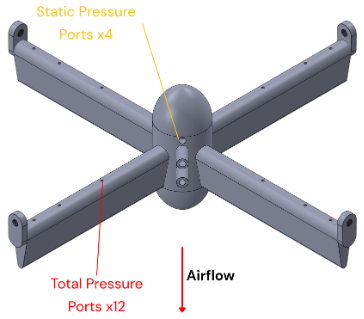
Designed with Computational Fluid Dynamics (CFD) and validated by wind tunnel testing, the prototype has three key features:Â
- Streamlined hub and spar geometry for reduced turbulence and pressure lossÂ
- Repositioned and enlarged Static Pressure PortsÂ
- Retention of ASHRAE-111 standard Total Pressure Port configurationÂ
Â
More Accurate , More Precise , Low Energy Consumption
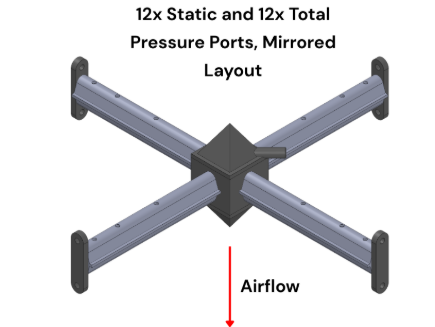
Comparison between market alternatives and our product

Fig 1 : Market Alternative

Fig 2 : EvoFlow Product
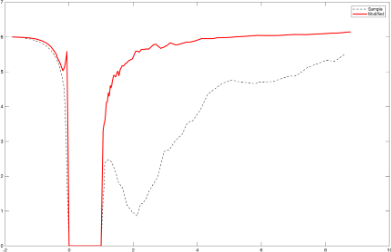
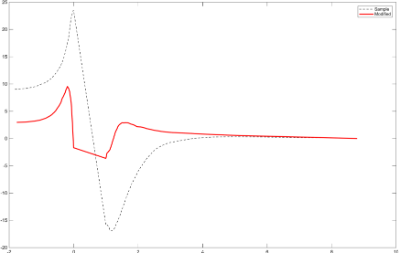
CFD Simulation Results

Fig 3 : Velocity

Fig 4 : Pressure
Simulated results show that the redesigned sensor delivers more uniform and consistent airflow with significantly lower pressure drop, demonstrating better performance compared to conventional solutions. Â
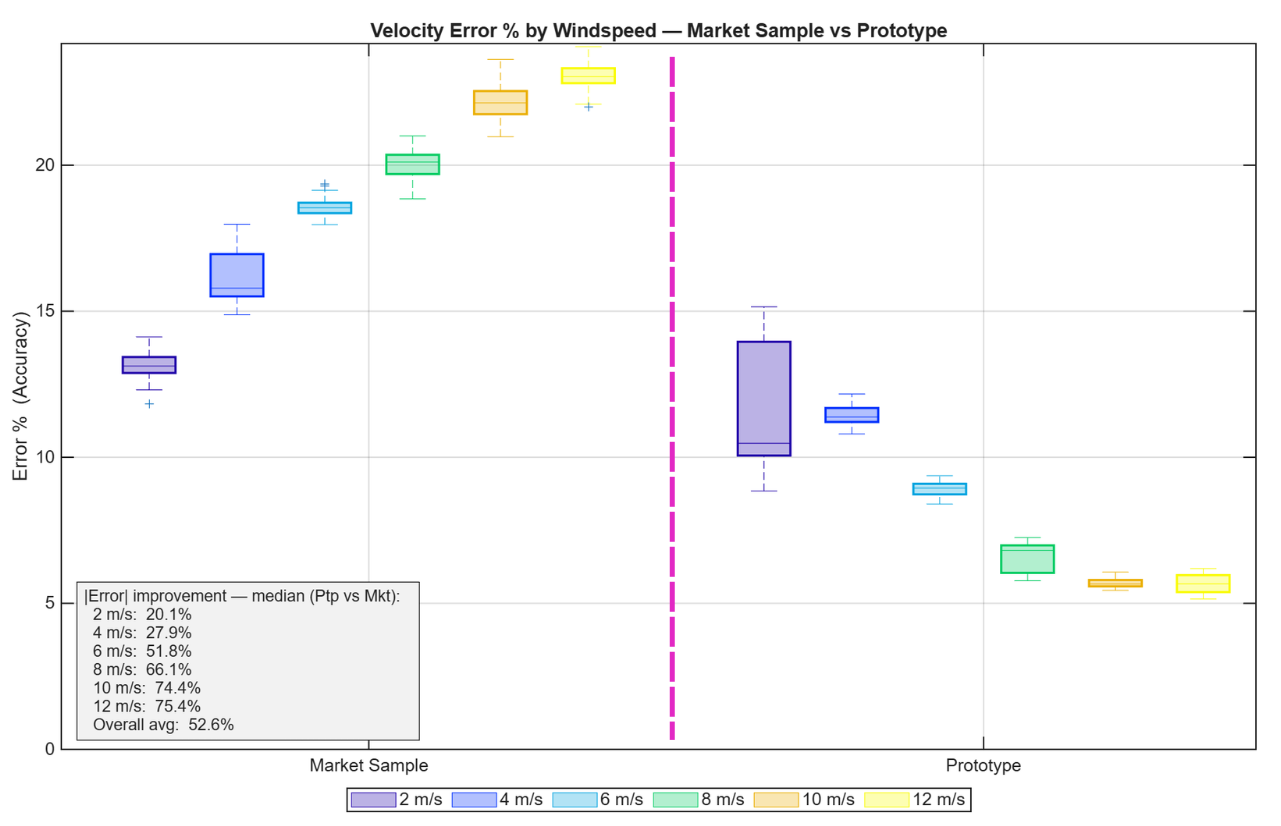
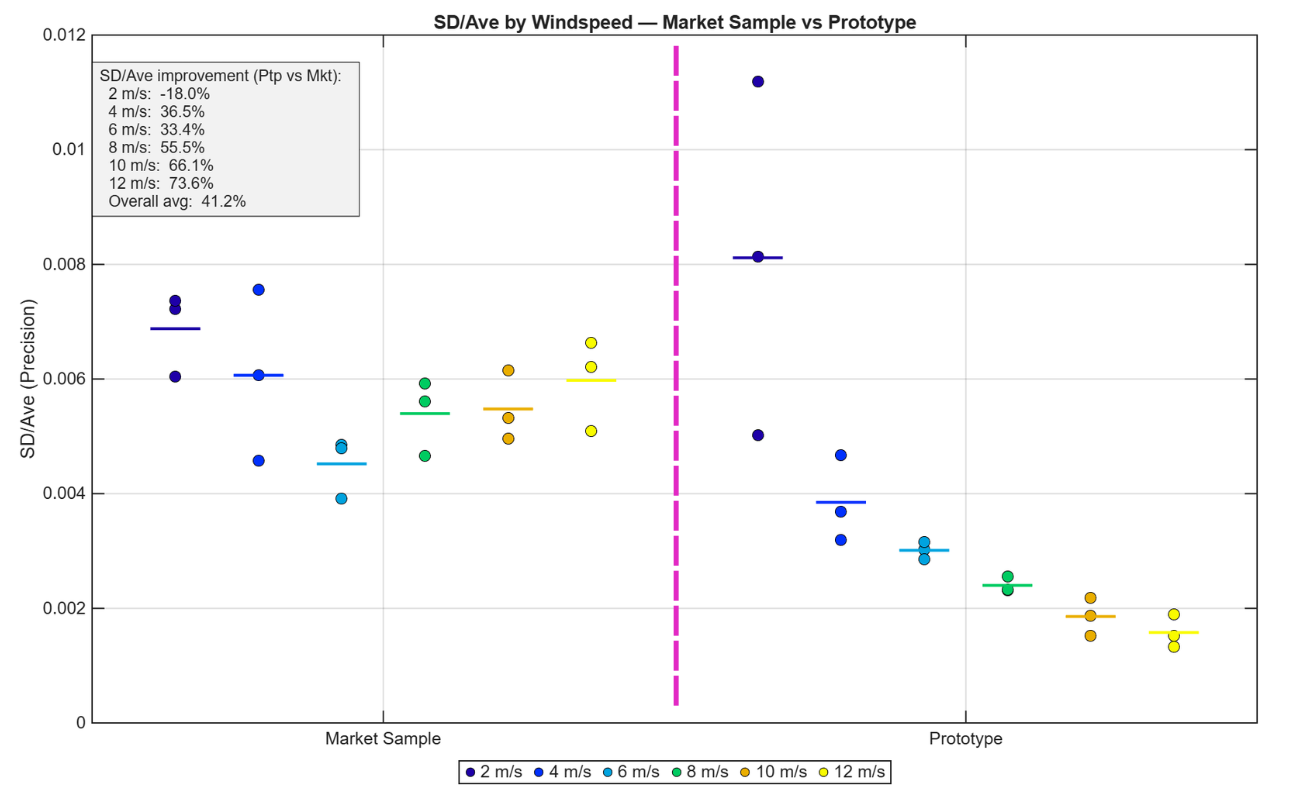
Wind Tunnel Validation Results

Fig 5 : Sensor Accuracy

Fig 6 : Precision
Wind tunnel testing successfully validates the CFD predictions, demonstrating EvoFlow’s reliable measurement accuracy suitable for real world HVAC applications
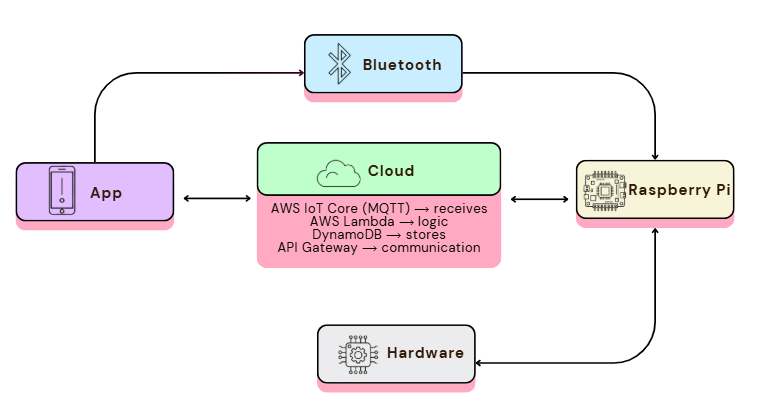
Connected System Architecture :Â
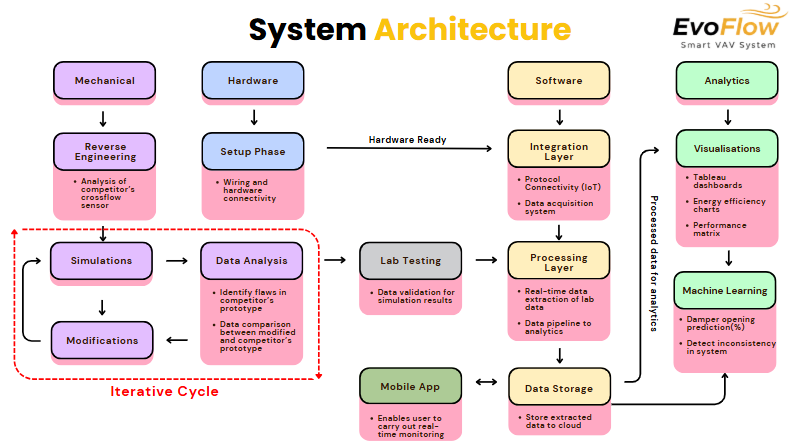
EvoFlow uses an edge-to-cloud architecture where a Raspberry Pi edge device connects directly to the VAV system’s sensors to collect real-time data such as airflow, temperature, and damper position. This data is transmitted via Bluetooth and IoT protocols to the cloud, where services like AWS IoT Core, Lambda, and DynamoDB enable processing, storage, and communication with the mobile app. The system allows continuous data collection, real-time monitoring and control, and scalable deployment across multiple units, effectively transforming a traditional VAV box into a smart, connected building device.
Real-Time Mobile Control & Monitoring for Smart VAV Systems
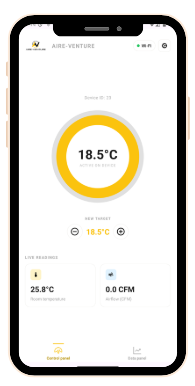
A user-friendly mobile app enables seamless control, live data tracking, and cloud-connected management of multiple VAV units from a single interface.
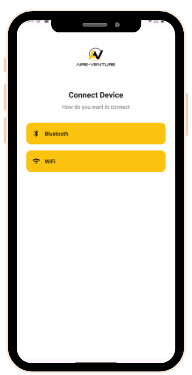
Dual-Mode IoT Connectivity
Bluetooth and Wi-Fi support for flexible local and remote control.
Closed-Loop Temperature Control
User-defined temperature with real-time updates on the device.
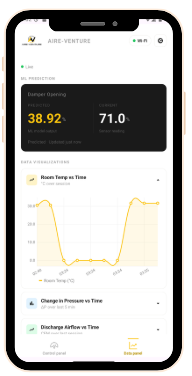
ML Prediction and Data Visualization
Real-time ML predictions and live sensor charts for smarter management
A/B Testing
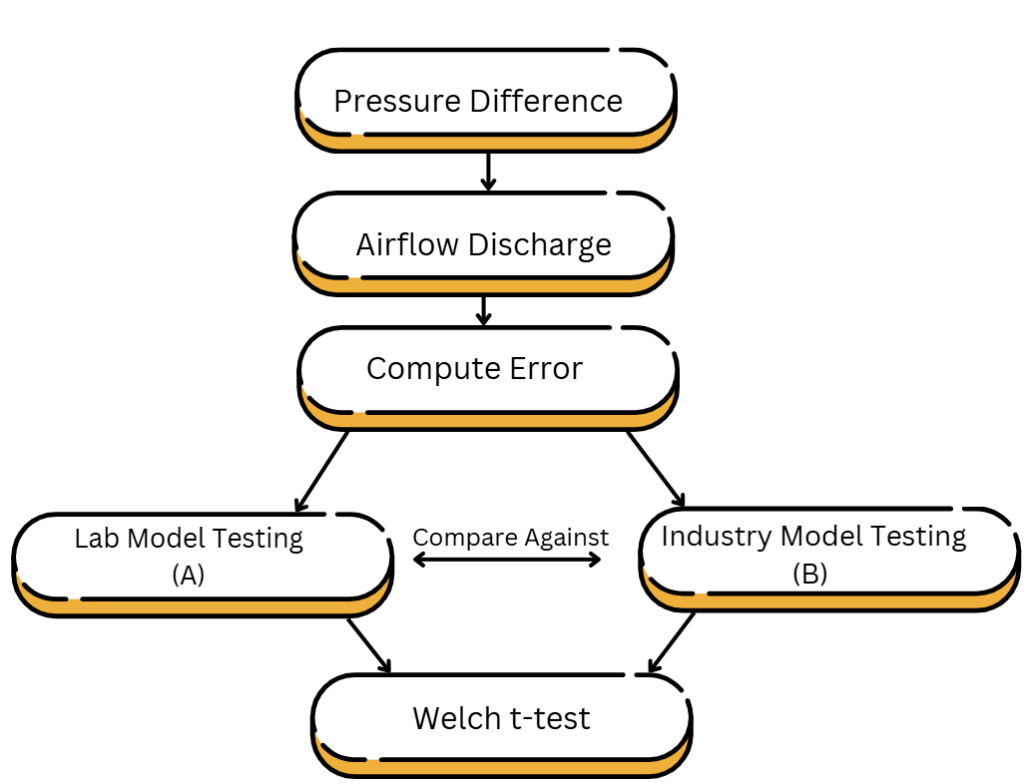
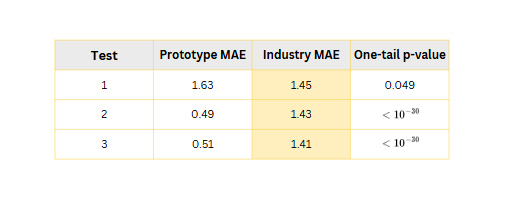
Pressure difference is first measured and converted into airflow discharge. The error is then computed as the difference between supply air and discharge air flow. This error is evaluated separately for the Lab Model Testing (A) and Industry Model Testing (B) setups, and the two sets of results are compared using a Welch t-test to determine whether the prototype performs significantly better than the existing solution.Â
A/B Testing Results
The results tell us that our prototype performs better (lower error) in 2 out of the three tests. All 3 tests are significant, the first test carried out might have some configurations issues that lead to a slightly higher error in the prototypeÂ
Anomaly Detection

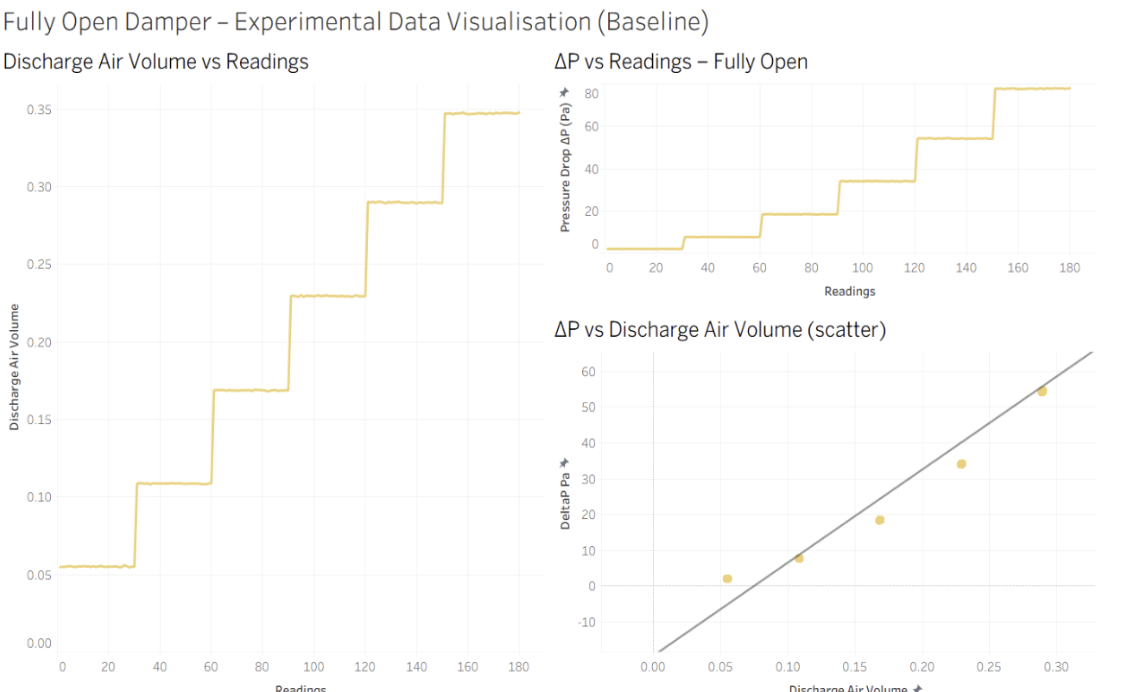
Fig 7 : Normal working conditions of the fully open damper
Data Visualization
- Shows graphical representation of the functioning of the VAV system
- Any deviations from normal conditions can prompt the user to check the system to detect issues and resolve themÂ

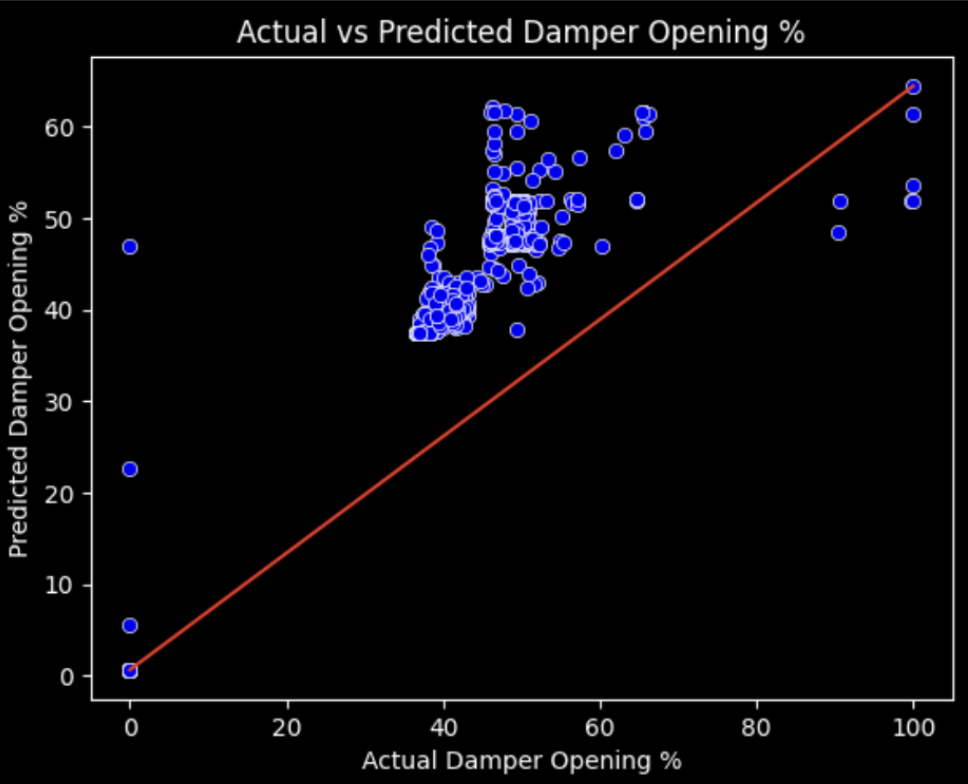
Fig 8 : Testing the model, showing the difference between actual and predicted values
Machine LearningÂ
- Neural Networks are used to predict damper opening based on room air supply demand and discharge air flow Â
- If the predicted damper opening % compared to the actual damper opening is off by more than 15% for example, then there might be some issues in the system that need to be checked on. Â
Overall System Architecture