Proj S22 – SimTech – Enhancement of Adaptive Robotic Systems

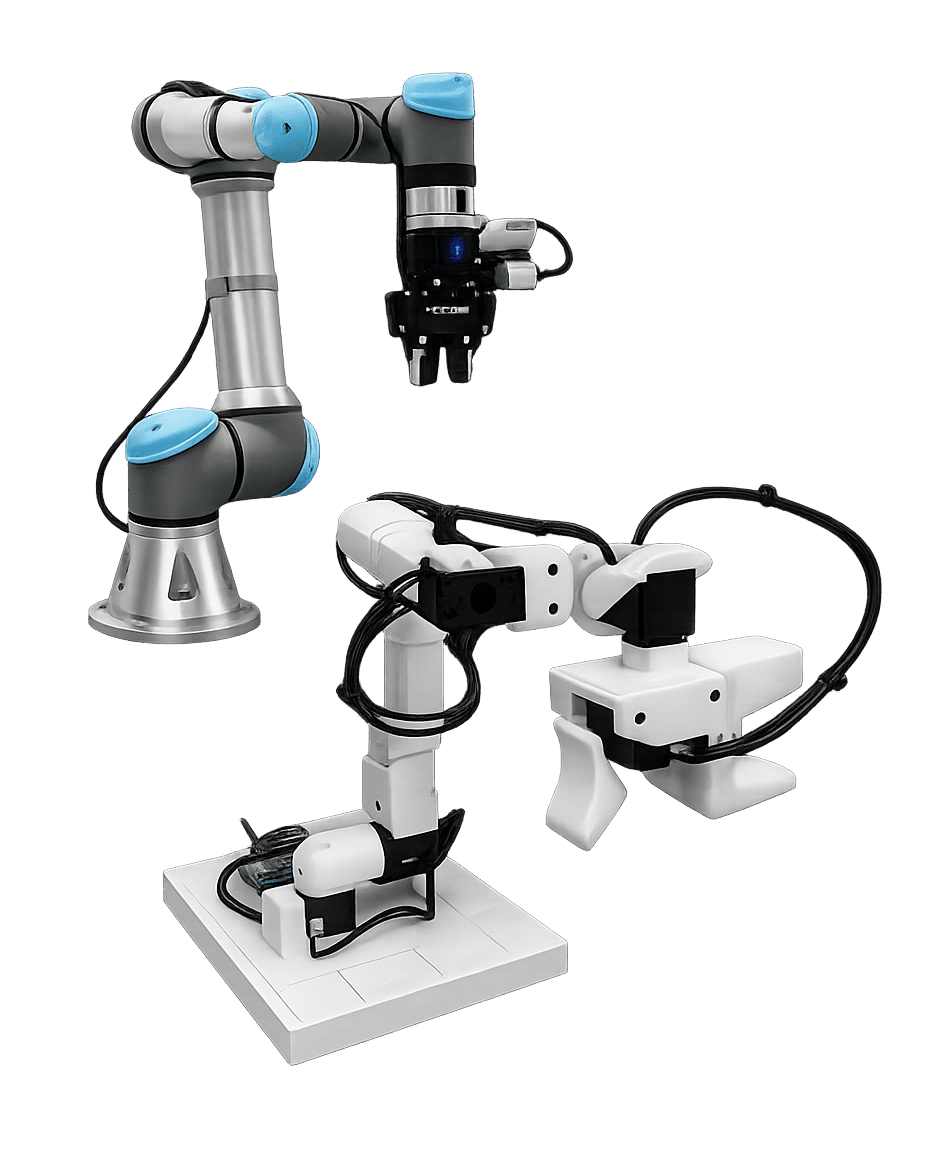
A teleoperation system that uses a General, Low-Cost and Intuitive Teleoperation (GELLO) framework with force feedback implementation. The system provides an intuitive way for human operator to remotely control a robotic platform while receiving real-time haptic feedback from the environment. By closing the feedback loop, it enhances manipulation precision, operational safety and situational awareness during manipulations.

Team members

Loh Jun Siang (ESD), Ngo Seng Kiat (EPD), Muthu Ramaswamy (ISTD), Balraj Singh Dhaliwal (ISTD), Phua Wei En (EPD), Thirunavukkarasu Karthikeyan (EPD)

Instructors:

  • Sumbul Khan

  • Anariba Franklin Edwin

  • Belinda Seet

Writing Instructors:

  • Belinda Seet

GELLO

GELLO is a low-cost, 6 degrees of freedom robotic interface designed for seamless integration with Universal Robots (UR) systems. Built with 3D-printed components, its arm geometry follows Denavit-Hartenberg (DH) parameters to ensure accurate kinematic modeling and control.

This systems improves on the existing GELLO by:

Support different grippers
Robotiq and EHPS parallel grippers
Bidirectional communication
Receive force-torque feedback on top of transmitting positions to UR arms
Brackets and Washers
Improve rigidity for accurate force feedback

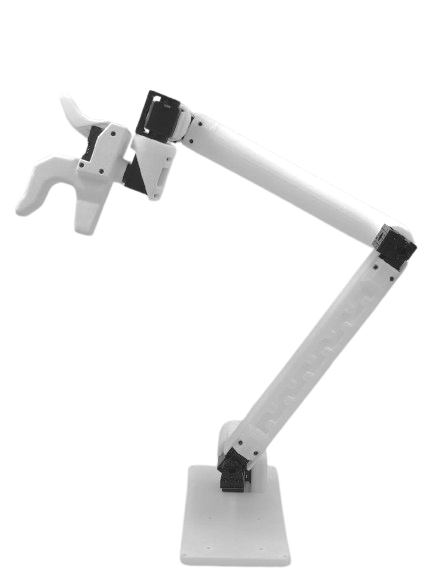
Physical Components

Gripper

Precise grip control

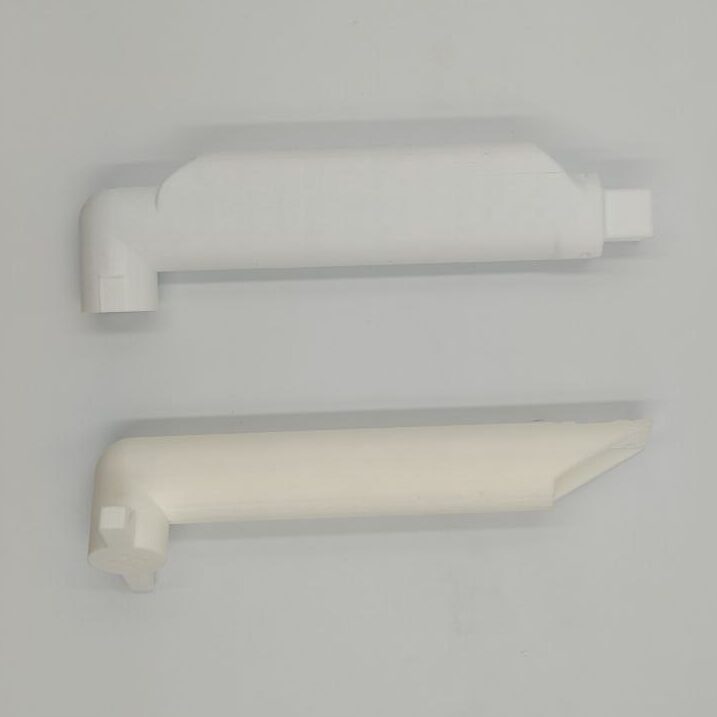
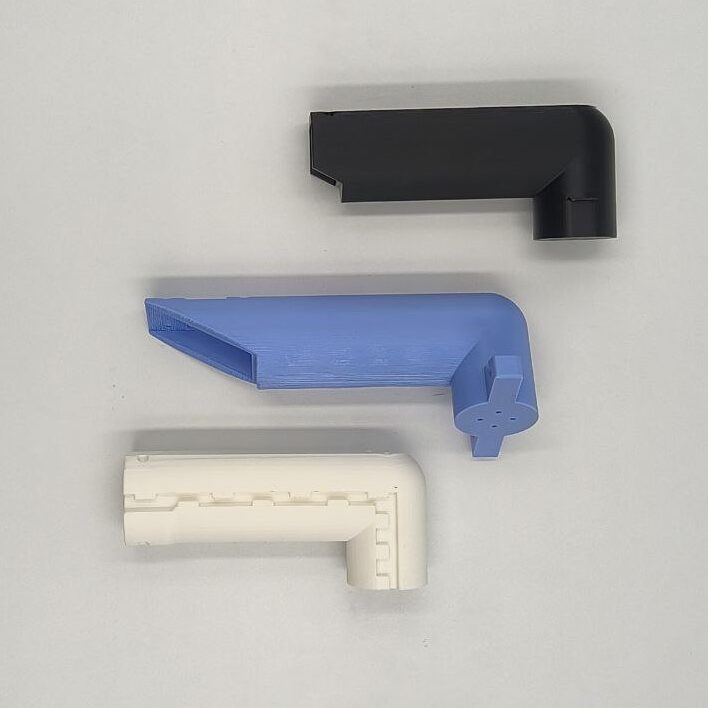
Arm link

3D-printed
Based on scaled-down Denavit–Hartenberg (DH) parameters

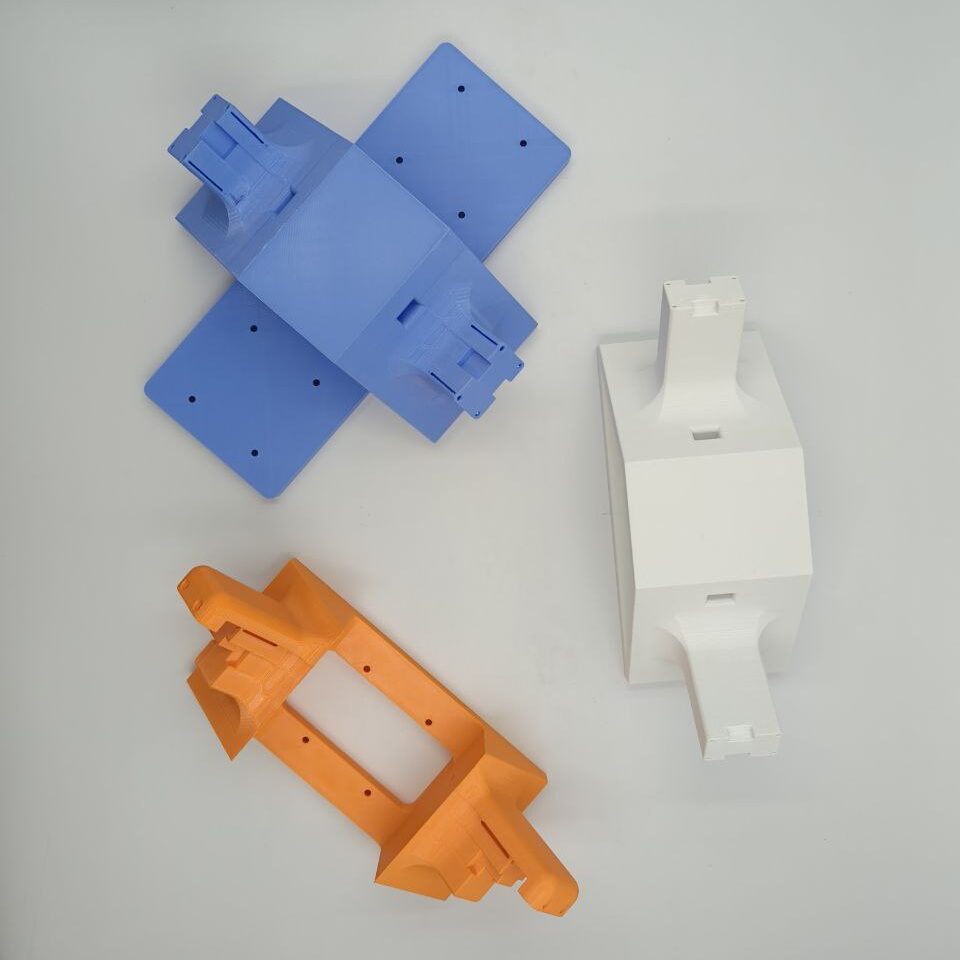
Base (UR5e)

Support the master arm
Dynamixel motor

Position encoding
Position and Current modes

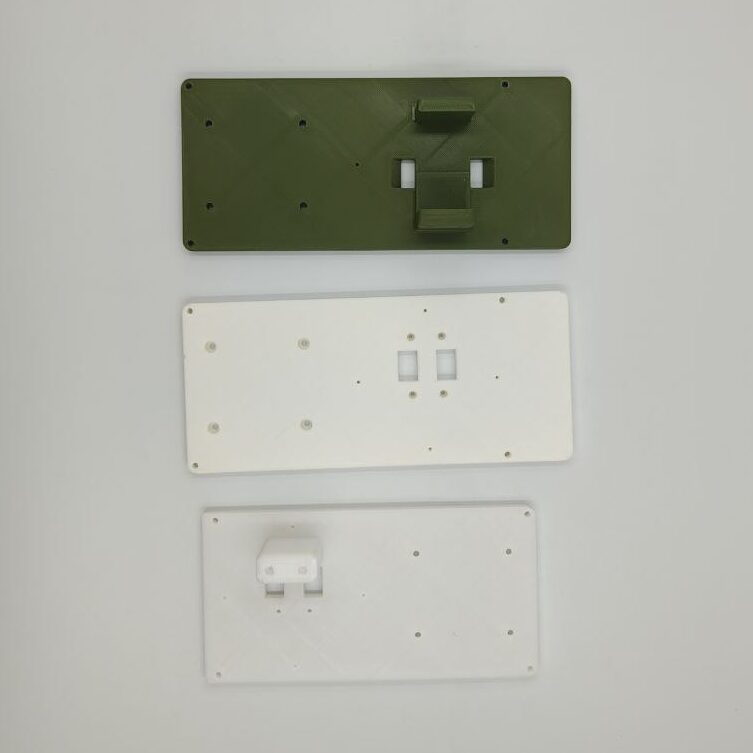
Brackets and Washers

Improve rigidity for force feedback

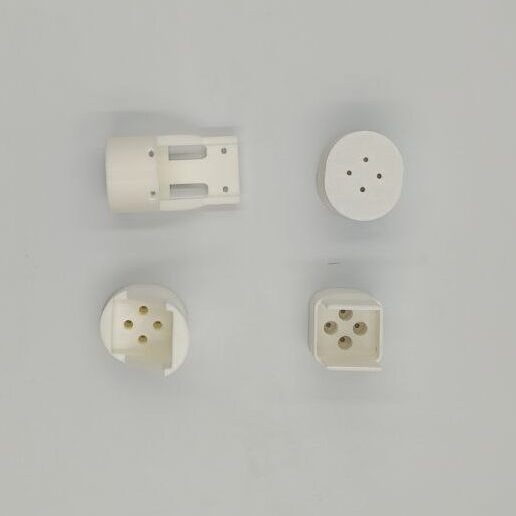
U2D2 board

Power and communication interface
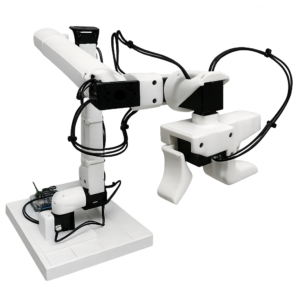
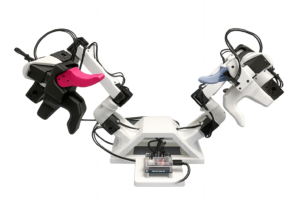
Single arm
Prototype

Bimanual arm
Prototype

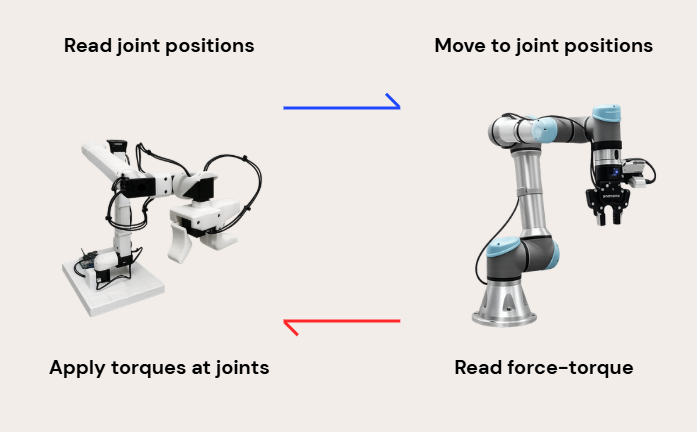
Control Flow

GELLO >> UR arm

Joint positions θ from Dynamixel encoders transmitted to UR arm

UR arm >> GELLO

Force-torque sensor measures interaction forces F at end effector and calculates corresponding torques to apply at each Dyanixels

Feedback Enhancements

Kalman Filter

Reduces sensor noise and produces smoother and stable force feedback

Increase Frequency

Increase baud rate to improve communication speed and reduces latency

Force Scaling

Eliminates unstable rotational torque components and downscale forces

Admittance Control

Remove motor induced current to reflect true external interaction forces

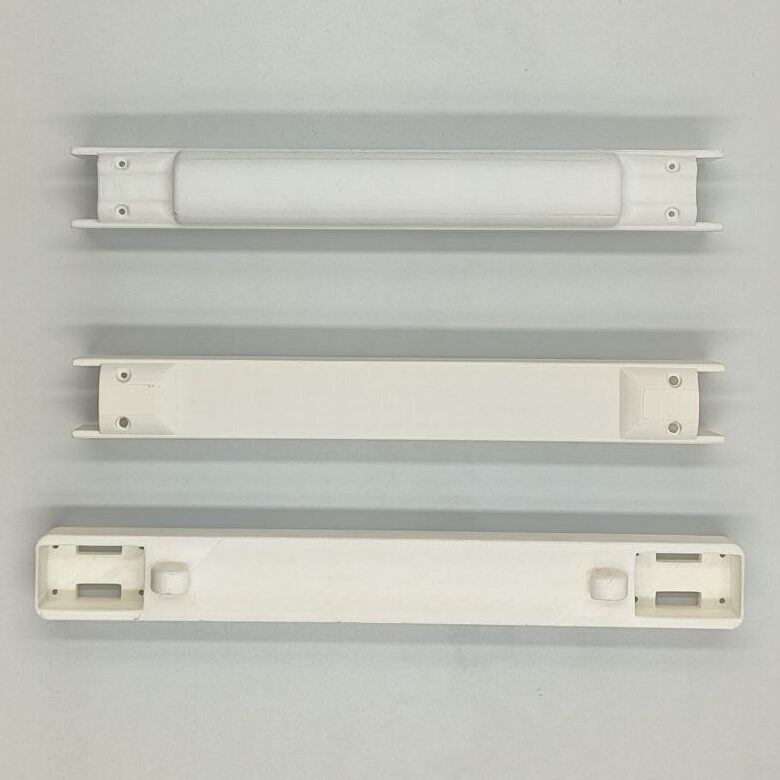
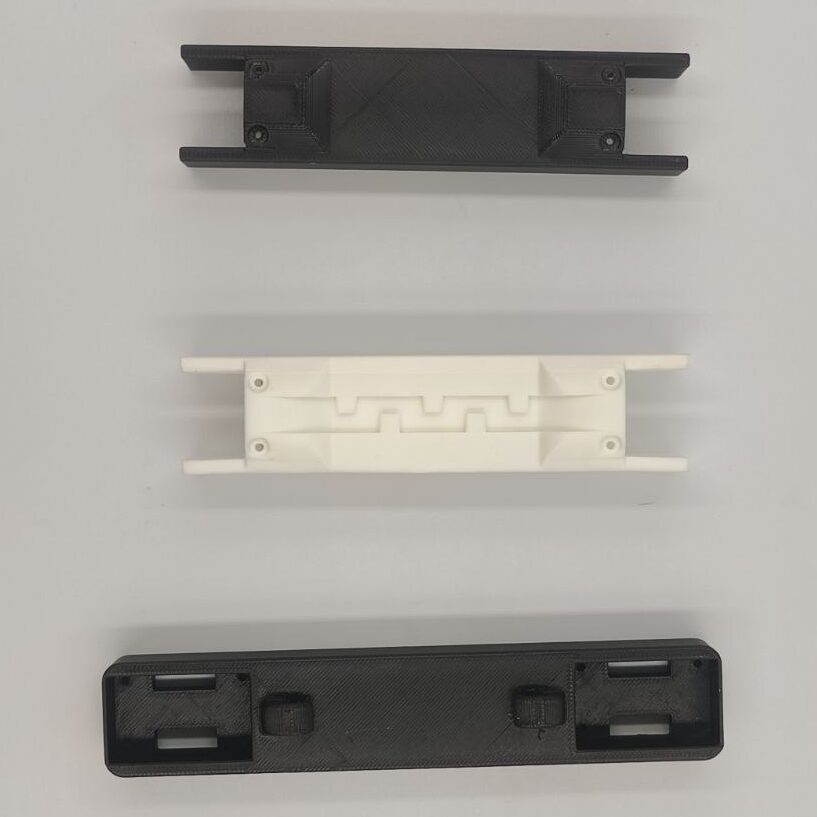
GELLO Build Guide

User Test

For our user testing, we recruited 5 participants from our industry partner company. Each participant completed 3 tasks using our GELLO prototype.

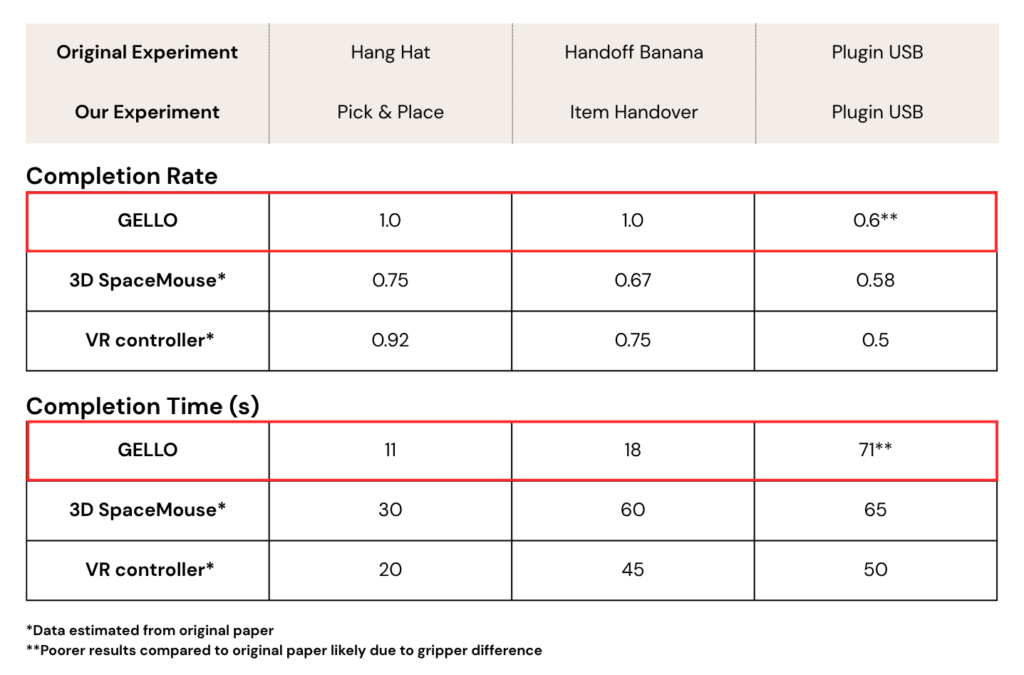
The tasks are adapted from the original paper, and performance is evaluated using the following metrics:

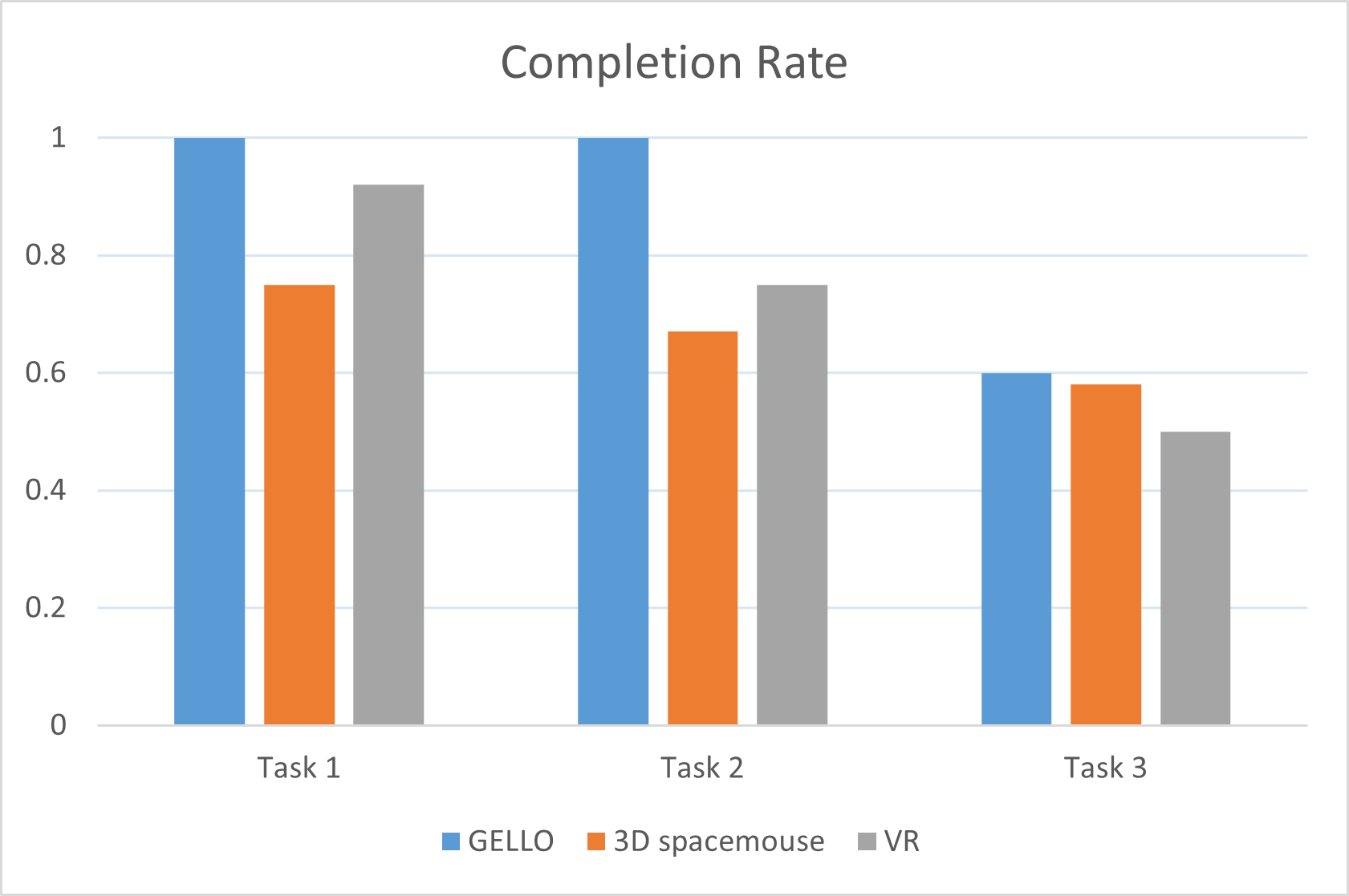
  • Completion rate
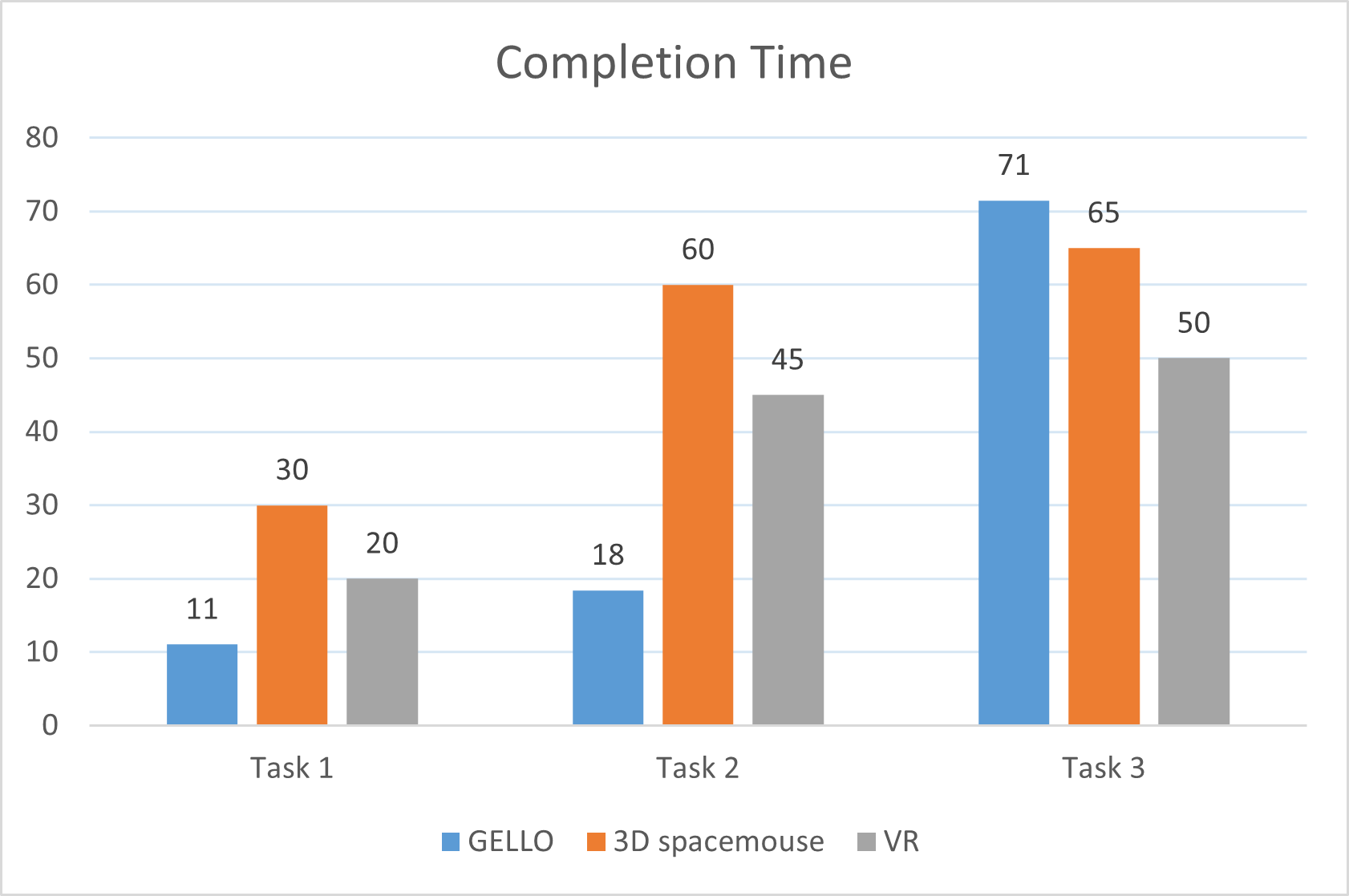
  • Time taken to complete

Results are compared against other teleoperation devices from the paper, namely the 3D SpaceMouse and VR.

Tasks

  • Task 1: Pick & Place
  • Task 2: Item Handover
  • Task 3: USB Insertion

Procedure

  • Each participant is given 3 minutes to familiarise themselves with both single-arm and bimanual GELLO operation.
  • Task 1 : 45 seconds, performed using single-arm control.
  • Task 2 : 90 seconds, performed using bimanual control.
  • Task 3 : 90 seconds, performed using bimanual control.

Results

  • Completion Rate
    • GELLO is better across all 3 tasks
  • Completion Time
    • GELLO is better in Tasks 1 and 2, underperforms for Task 3 (due to different physical setup)

Acknowledgements

Team S22 would like to thank our capstone instructors, Dr. Sumbul Khan, Dr. Perry Lam, and Professor Franklin Anariba, for their valuable advice and guidance. We are also grateful to Belinda from the Centre for Writing and Rhetoric (CWR) for her assistance with our presentation and report.

We would also like to extend our thanks to our industry mentor, Dr. Zhu Hai Yue, Senior Scientist in Robotics at A*STAR, for his guidance and support throughout our project.

Menu

ornament-menu